

 dyton mupawaenda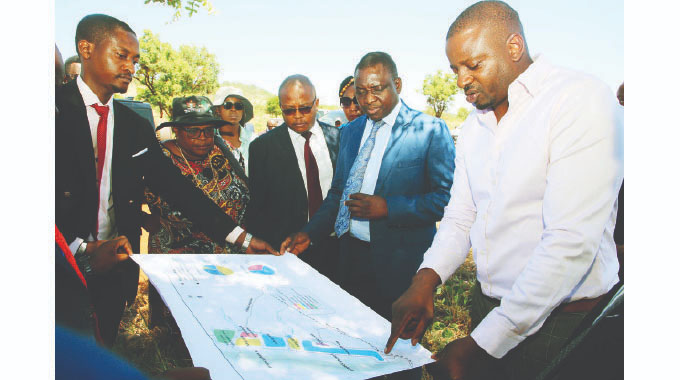
The new mines-to-energy industrial park at Mapinga, about 60km north-west of Harare on the highway to Chirundu, should be opening its first phase, a lithium salts processing plant, in the middle of this year.
This is important as lithium mining continues to expand rapidly, but with most mines unable to process their ores very much, or at least not much beyond concentrating the two basic mineral rocks, which is a start but hardly adding the real value of full processing.
Lithium metal, a very soft grey metal, is highly reactive, bursting into flame in the presence of water or even moisture.
The preferred trade in lithium, and the way lithium users such as battery manufacturers want the product, is in the form of lithium salts, usually lithium carbonate although lithium hydroxide is moving forward.
These are exceptionally stable products that can be stored and moved around without any danger, although the hydroxide salt is a very powerful alkali, and hence global trade is in these products.
But end users like to see 99 percent plus purity and have this properly certificated. So Zimbabwe gets real value for its lithium exports only when all trade is in pure salts.
When battery manufacture starts in Zimbabwe, as is being talked about, the Zimbabwean factory will also want its lithium supplies in the appropriate very pure salt, rather than as chunks of rock.
While one major mining group is building its own refinery to take the ores to the salts, most mines are simply concentrating their ores in the initial first step of processing and will need access to a lithium salt processing plant to get to the final stage. This is what Mapinga is designed to offer.
Industrial processing of mineral products is normally most cost effective when there are large volumes, and when the inflow of the basic raw materials is fairly continuous into the processing plant so it does not lie idle, while the workforce is continued to be paid, waiting for the next convoy of trucks.
So most miners will be interested in a commercial processing plant that is efficient enough to keep the processing charges within reason, that is below the gap in price between concentrated ores and final salts, so that they win by local processing before shipping out their products.
The Mapinga Industrial Park is planned to expand to many other operations, as the 500ha, 5 square kilometres, assigned to the park suggests. Many other operations are also mineral processing with nickel and chrome smelters lined up in the plans, along with a nickel sulphate plant.
These will add to the existing smelters that are already doing a lot to add value to Zimbabwean ores before the metals are shipped, at higher value obviously.
The stress on value addition by the Second Republic, and this stress is built into tax regimes.
For a start, the royalties are on the value of the actual metal or final product, regardless of the level of processing and refining. So the more processing done locally, and therefore the higher the value of the exported product, the lower the percentage of the value that is paid in the fixed royalty tax.
The tax regime also has extra taxes for unrefined exports, taxes that are usually not charged as miners can get exemptions so long as they are making significant progress in building or upgrading local processing plants. It is there as an incentive rather than a revenue measure.
The value addition benefits Zimbabwe in several ways.
First of all, the export is significantly more valuable, so the export earnings are higher.
When we consider that minerals provide around 80 percent of Zimbabwe’s exports by value already, it is easy to see that even modest percentage value addition has a major effect on our economy, bringing in more foreign currency to buy needed imports.
The value addition also adds to the value of the economy, the gross domestic product. And the extra value is distributed fairly widely. Much of the cost of value addition is the payroll at the processing plants, that is the new jobs created, and this employment creation in what amounts to industrial jobs is important.
Finally getting the minerals into the pure forms provides more raw material for the next stage of Zimbabwe’s industrial growth, a much larger industrial base and one that needs to have a large primary industry, rather than the near pure concentration of secondary industry we now see.
Having an ever greater range of raw materials should see the manufacturing sector growing as well.
Mapinga is also planned to have a coking plant, that is converting coal to coke, and a pair of 300MW coal thermal power stations.
Building these at Mapinga rather than Hwange, where all our coal is presently mined, suggests that far closer coal fields will be exploited.
These exist, since almost 10 percent of Zimbabwe lies on top of a coal field. So somewhere a new coal mine is required before Mapinga becomes a major energy producer.
The Government is buying into the industrial park, taking up some of the shares, although private investors will be important and critical for its success. But because of the way the processing is being separated from the mining, it is possible for the Government to become a shareholder, backing the miners with an extra service.
There seems to be other aspects that must be sorted out. Mapinga, for those who race past, is a little village with a dubious reputation as a truckers’ stopover.
The investment into the industrial park will also need investment into housing, water supply, which should be easy at that location from existing dams, and sewage disposal.
Zvimba Rural District Council cannot do this alone, but needs to be roped in by the investors since it will be responsible for the resulting town and this needs to be developed properly from the beginning.
An industrial town between Harare and Chinhoyi seems a good complement to the mines and agricultural processing towns already growing along the Harare-Chirundu corridor.



 Online Reporter