

 admin
admin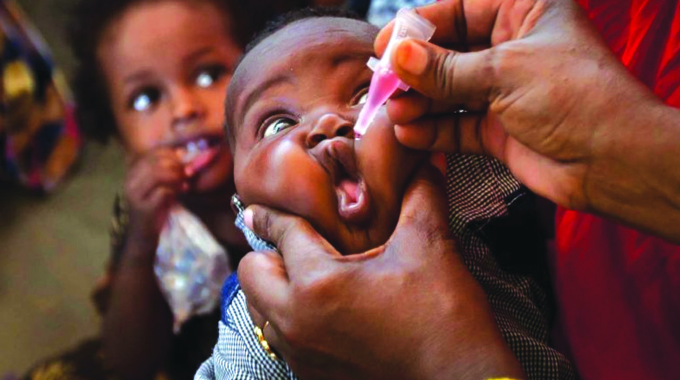
Containing the recent measles outbreak successfully and stopping the disease spreading was an outstanding achievement by the Ministry of Health and Child Care, and especially its Manicaland teams and the community health workers who did so much in the most affected province.
The way the major vaccination drive was successful, with 95 percent of children in the required age groups being vaccinated in the most affected districts, was in many ways even more remarkable, overcoming inertia, apathy and most critically the opposition to vaccination by some religious groups and circulating fake science, or at least finding ways around these problems.
It worked, as Manicaland Provincial Medical Director Munyaradzi Mukuzunga explained, because the Health Ministry recognising the extreme danger of a fresh measles outbreak in a partially-vaccinated population started with the decision to vaccinate all young children.
That seems a simple enough decision and programme, but it was not. A lot of different methods had to be created and used, but the core of the programme was to ensure that what communities and individual parents wanted was laid on.
The methods were never set in stone, the health workers just building on what worked; the objective of mass vaccination was what was set in stone, to make sure all children were vaccinated.
Zimbabwe has regularised universal vaccination, especially of young children, within the formal medical system. It is routine at all clinics and hospitals in the normal post-natal and child care programmes with the staff in place and the logistics to get the vaccines to the clinics and the teams well-established.
These days most children get a wide range of protection against a swathe of disease that used to kill and maim. There might be areas where clinics are somewhat far apart, and the Government both central and local is working on increasing the density of coverage, to ensure the World Health Organisation’s recommendation that no one should live more than 8km from a clinic, even in the more sparsely populated districts.
But with modest effort by families everyone now has access to medical care. A new mass vaccination, such as for the measles outbreak where the public health experts wanted every child done, either as a booster or for the first time, and what we have seen more recently with the precautionary polio vaccination blitz after outbreaks in Mozambique and Malawi, fits into this formal system.
We had the same with adults, and then teenagers, with Covid-19 as the vaccines became available. The same systems that delivered the vaccines to the children, the same clinics, the same cold stores, cooler bags and staff, were mobilised for Covid-19.
It requires planning and effort, but in a sense is totally routine and an exercise in staff deployment and logistics following established procedures rather than breaking new ground.
And all this should be fine, except for the fact that we are dealing with people, and people in a diverse and multi-faceted society with zero regimentation and with all the beliefs and drives that vary so much between individuals. Here we can face a lot of extra difficulties.
Even when vaccination is readily available, and where mobile teams can fill gaps in clinic coverage, we still need to have those who need the vaccinations to come to the clinics and the teams and get the vaccine. You can have the teams deployed and ready, and no one coming, or too few coming.
The final step in so many campaigns is to connect the readily-available service with the people who need it, in this case to get parents to line up with their children at a clinic or at the place where the mobile team was visiting.
One point of vaccination is that it works best when everyone is vaccinated, or at least enough to give what is termed herd immunity.
In a small minority of vaccinations the vaccine does not take. Then we always have someone who just will not come, and there are all sorts of reasons why.
So the public health officers want the vaccination rate to be sufficiently high that there can be no chain of infection. If someone is not protected they are very unlikely to meet anyone who is also unprotected, so even if someone does become infected they cannot pass on the infection.
Dr Mukuzunga, while not minimising that pyramid of formal health structures he heads, and the efforts of traditional, religious and other leadership, showered particular praise on a group that is often overlooked, and sometimes even looked down on, the community health workers.
He sees that it was this group that made much of the difference, from the first reports they made of the outbreak alerting the formal structure early, and then the remarkable efforts they made to bring almost everyone to a vaccination team.
He not just admires them, he listened to them. There were parents who wanted to come to a clinic or team before the opening time, or drift in after it closed.
He laid that on, without wanting details of why, but wanting to ensure the vaccinations were done. There were requests for special mobile teams, more normal in many ways, and those were arranged.
And all the time these community health workers were working within their communities, in some cases one person at a time, to achieve the goal, and a 95 percent vaccination rate is their outstanding achievement and their victory. Compare it to the Covid-19 vaccination rate if you like.
Yet with all vaccination the same sort of fake science circulates, the same religion-based discouragement exists, the same apathy keeps people way. Yet the same formal health system is in place with the same staff and the same logistics. So what is the difference?
The main difference is that recognition that communities are not monolithic rigid structures, but made up of people who are all different, and that it is possible to deal with them as people and it is possible to use the community in a positive way, and persuade people that they do not, and should not, just sit back when disease strikes.
A lot was made of the fact that some Apostolic congregations, and this religious tradition is not a monolithic structure, are as opposed to vaccination as to other formal health care.
This sort of congregational problem has the added dimension that unvaccinated children are likely to be with other unvaccinated children at church.
Well this can be dealt with if approached in the right way, and obviously the right way was found to save the lives of all those children at risk of measles. Again it appears that the personal interaction of the community health workers was a significant factor.
But finally we must recognise that individual people, like those community health workers, can make a difference with their friends, their neighbours, the people they live among and the people they work among. We should all take note, since there are many other areas where people perhaps need to act more positively. It is possible.



 Online Reporter