

 admin
admin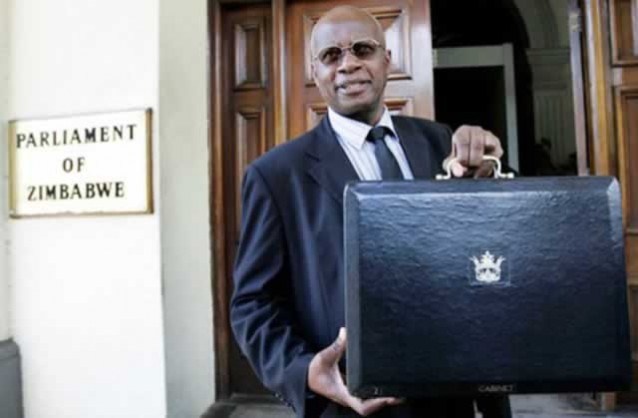
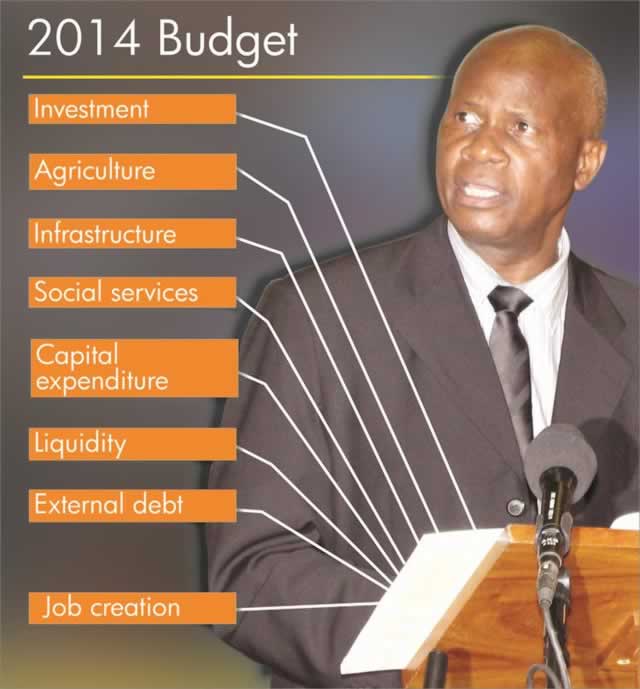
STAKEHOLDERS in the economy eagerly await the announcement of the 2014 National Budget by Finance Minister Patrick Chinamasa scheduled for next month. Much is expected from the Bill, the first in the wake of Zanu-PF’s resounding victory in the harmonised elections.
There is also a weight of expectation as the budget is expected to bring to fruition the ruling party’s winning manifesto which has since been synthesised into the economic blueprint, the Zimbabwe Agenda for Sustainable Socio-Economic Transformation (Zim Asset), which is expected to drive socio-economic revival over the next five years.
All sectors of the economy and ordinary Zimbabweans in the formal and informal settings, anticipate policy direction that will set the tone and path that the economy will take over the next 12 months. The slowdown in growth experienced since the beginning of the year is largely expected to ease off in 2014.
Much hope is naturally pinned on Minister Chinamasa’s briefcase. He has no other option but to ensure that the economy embarks on a firm recovery path. Sustained growth in the three years to 2012 must return to take the country to the next level on the global economic ladder.
In recent weeks there have been snippets of Government’s current pre-occupation as far as the economy is concerned. Economic empowerment is obviously at the centre of things while efforts are being made to resuscitate agriculture, recapitalise firms, upgrade infrastructure and attract investment, among other initiatives.
The anticipated generation of jobs and subsequent creation of wealth draw from initiatives that will be buttressed in the national budget.
It will obviously not be a stroll for Minister Chinamasa but he will draw from previous experiences as acting finance minister in 2009 and before. In fact he is the man who ushered this country into the multi-currency regime in January 2009.
All stakeholders are also expected to present their thoughts to Minister Chinamasa as he finalises the budget statement.
It is against this backdrop that we expect much from the Parliamentarians, who converge in Victoria Falls today for a pre-budget seminar whose deliberations are expected to feed into the fiscal policy.
These men and women who were recently elected into office, should use this opportunity to demonstrate their worth.
The national budget, despite all its terminologies and technicalities, is about bread and butter issues. These are the very reasons why the MPs and senators are in office.
This retreat is no holiday at all and should not be viewed as such if anything of substance is to emerge out of the gathering. Gone are the days when MPs were there for window dressing. It is now all about hard work and commitment to duty.
We, therefore, expect the legislators to be up to speed with issues concerning their respective constituencies while also exhibiting familiarity with current economic dictates. Consequently, we hope they will recommend practical measures to prop the economy and usher the nation into prosperity.
The Parliamentarians need to be accountable to their constituencies and must justify the need for such a retreat.
Of course much of their work has already been done under Zim Asset, but what is critical now is to operationalise the document while highlighting those targets that should be achieved in 2014.
The policy is quite clear on the four clusters that should propel the economy: Food Security and Nutrition; Social Services and Poverty Eradication: Infrastructure and Utilities, and Value Addition and Beneficiation.
President Mugabe’s words in the new policy’s document are instructive.
“Zim Asset was crafted to achieve sustainable development and social equity anchored on indigenisation, empowerment and employment creation which will be largely propelled by the judicious exploitation of the country’s abundant natural and human resources,” reads part of his statement.
This should inform Minister Chinamasa and other stakeholders as they feed into the national budget.
His consultations should extend to business, labour and civil society so they can weigh in with their advice as the nation collectively seeks to alleviate challenges constricting the economy.
Zimbabwe’s economy is certainly not beyond redemption but requires men and women who will honestly and earnestly devote their time and energy towards fostering real growth.
While the world economy is still preoccupied with the effects and tremors of the global financial crisis, Zimbabwe needs to find its place as one of the strongest economies in the region and in Africa at large.
The natural and human resources are here in abundance. Furthermore, the fact that Zimbabwe can now trade diamonds via Antwerp and the attendant benefits should give impetus to the economy.
The growing interest in this economy and confessions, even from traditional arch-enemies in the West that this economy has a bright future, should inject the requisite energy to facilitate a sustainable growth trajectory.
If we all work in concert Zimbabwe will certainly become the land of milk and honey sooner rather than later.



 Online Reporter