admin
admin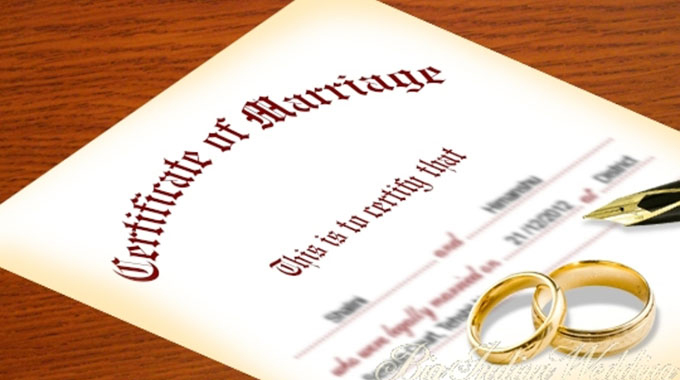
THE new Marriages Act now in force is a major advance on the old totally-divided systems and brings the law into line with the way so many now regard marriage, with the single marriage register and the legal option for monogamous couples who want to be married under customary law, civil law and very probably church law, to be able to have this quite openly at long last.
The Act is also couple-centric, making it clear that it is the adult man and adult woman, and both have to be 18 or over, who both have to give their formal and legal consent, even in customary marriages where the bride’s family are partly involved.
This implies that customary marriage negotiations now have to include the bridegroom at some stage to give his explicit and witnessed consent, which while very common now, has not been a requirement in the past.
Regardless of the path followed, all marriages recognised by Zimbabwean law are now in effect a contract between the couple, although the option remains through the licensing of ministers of religion for a couple to have a civil law marriage recognised within their church, but not in the courts, as a sacramental union as well.
This is made clear in the clause that declares all marriages, regardless of the legal path followed, completely equal, with the couple having full equality of rights within the marriage, something that was not the case in the old Roman-Dutch civil marriage a century ago or the customary marriage in most communities until the post-Independence legal reforms that created equality for women within all legal systems. This is important. A fair amount of practical equality came through in the major reforms of the 1980s. Besides the Legal Age of Majority Act, the divorce law was reformed with a single Act for all marriages. This created the no fault divorce law and untangling the property rights, that assets created during the existence of the marriage are divided on its dissolution.
Other legal reforms, some pushed by the courts first, made it clear that custody and guardianship of children were to be in the best interests of the child, rather than based on blame or assumed rights of one parent.
This is now stressed in the Marriages Act which even includes the property division provision for what are termed civil partnerships, a couple living together without any legal or implied marriage.
The inheritance law was changed for all marriages so that even if there was a will disinheriting a spouse, the surviving spouse had rights to retain the matrimonial home, or an agreed equivalent, plus anyone supported by the deceased person would remain supported by the estate.
One of the major changes in the new Act is the significant upgrading of a customary marriage and a determined attempt to have these registered and so their existence certified and legally unassailable. The old, and now repealed, Customary Marriages Act was little changed from early colonial times when the British South Africa Company, and then the settler regimes, were forced by British colonial policy to protect customary civil law.
Basically when a couple entered a customary union, the husband was expected to go to the native commissioner, renamed the district commissioner later, and register the marriage, with at least the munyayi (go between) and the tete (aunt) going along as well to certify that it had met the customary requirements.
There was what was then a steep fine, although this was inflated out of existence, if the bridegroom did not do that and the bride’s family objected.
Basically the customary law was for “them” and was kept totally separate from the evolving civil law for “us”. The law carefully stated that “non-Africans” could not use the old Act, which created problems at times for the local wives of settler descent.
Independence saw the renaming of the African Marriages Act and the transfer of registration responsibility to the new district administrators, but that was all.
Because of the locked in wall between customary and civil marriages, district administrators soon found few people came forward to register.
The book of registration forms was retained, but at most district offices this became old, yellow and with curled pages because it was not used, and hardly any customary unions were ever registered, so there was no legal record that the marriages existed, although couples did not keep them secret.
One reason for the near universal adoption of the unregistered customary union was a desire by many couples to be married in church as well, sometimes some years later, and these were all civil law marriages.
Registering a customary union barred any future civil marriage, although churches could bless and recognise the customary marriage.
The wall was so complete that until fairly recently it was quite easy for a person, usually a man, to dump the customary wife in an unregistered union and marry someone else before a magistrate in a civil law union. It was even possible to keep a wife or wives in customary unregistered customary unions and have a civil law marriage with someone else.
That was finally blocked with the codification of criminal law and a new definition of bigamy that included the need to properly dissolve the customary union first. The new Act moves the customary marriage significantly upwards, with the general need to solemnise this before a proper marriage officer, generally the local chief.
This produces the ceremony that was lacking in customary marriages. Even the unregistered unions are now to be registered, but with the Registrar of Marriages, although there is no enforcement of the provision laid down. At the same time the wall between the two routes to marriage has been torn down. A monogamous couple can convert a customary marriage to a civil law marriage by going through the second ceremony.
This removes the main obstacle to registering a customary marriage since so many want both, and we should start seeing in the cases where a monogamous couple want both then having a double formal ceremony.
The question of lobola did cause argument as the Act went through Parliament, with the Government wanting it to be optional to satisfy the Constitutional requirement that an adult couple could get married without impediments, and the chiefs wanting lobola to be a requirement for a valid customary marriage.
While lobola is near universal in all customary marriages, there are couples who do not want the financial burden and there are now some women who see it as demeaning, translating the term inaccurately as “bride price”.
Under the agreement reached, a marriage officer solemnising a customary marriage has to ask about lobola, “if any”, but since the same officer has to be satisfied that all customary marriage requirements are met, that means in practice that lobola has to be agreed in these cases, although no sums or details are laid down in the Act.
The registrar for an unregistered and unsolemnised customary marriage simple has to record the details of lobola, “if any” but there is no requirement that they have to agree that this meets any standard, only that witnesses state a customary marriage took place.
In any case there is no lobola paid in civil law marriages, so that remains an option. Customs are, in any case, changing with a growing number of families in effect returning the lobola as a wedding present, or even assigning it to their daughter or grandchildren. Customs are living so they can be modified.



 Online Reporter