admin
admin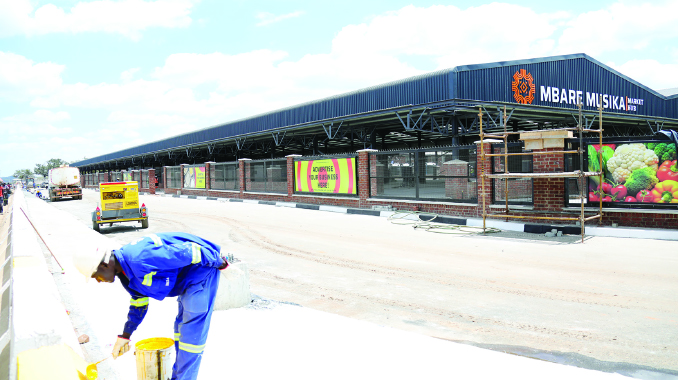
As can have been expected, those running mafia style protection rackets in Mbare are already latching onto the traders who lost almost everything in last year’s major fire and will soon be moving into a properly-built temporary market while the new giant shelter is being constructed.
These “space barons” running the protection racket are demanding US$10 from traders to get them on the allocation list, and as up to 2 000 traders will be accommodated in the temporary market, the final number depending on how much space each trader needs, the criminals are looking at US$20 000, if their schemes mature.
That is an incredible sum of money and highlights the corruption that has bedevilled Harare City Council for some years, that the space barons can at least get people to think that they can control how councillors and council staff will allocate the spaces for traders. We know that in both legal and illegal markets, this has happened in the past and is still going on in some markets to this day.
Fortunately the Government, which has already fulfilled its promises to have the burned down market reopened in temporary premises, is aware of what is going on. When a team of Ministers visited the new temporary market, now 99 percent complete with its ablution and administration facilities, and so about to open, they made it clear that they would be vetting the whole process and making sure that real traders were allocated stalls and that the names would be published in the press, so everyone knew.
While Harare City Council is drawing up the lists, Government officials are standing behind them, making sure that the allocations are done properly on the laid down criteria, which do not include bribes to councillors, council officials or the local criminal gangs.
The Government wants the whole process to be totally transparent, that is conducted in the open and using the previously agreed criteria, so that those who are supposed to benefit, the traders whose stalls and the stock they held was destroyed in the fire, can get back into business and earn their living.
Even the temporary traders market is a considerable advance on what burned down, and now that it is finished, work can start on the new main market, on the old site, which will be a three-storey structure capable of accommodating up to 10 000 traders, again depending on how large a stall each trader wants.
But even the smaller temporary market maintains Mbare’s dominance of a large chunk of the informal sector and allows the careful conversion of these traders into formalised businesses.
We would hope that a simple system of market fees and taxes will be introduced, preferably using a small joint daily payment that is affordable, but which brings the traders into the formal system.
The markets, both the temporary market and when operating the new market, will need far better policing to make sure that criminals cannot gain a foothold.
Several traders have made it clear that they want a system that when some outsider, who is not on the list, comes forward to try and grab an allocated stall or demand a protection money payment, they can simply make the report and watch the criminal disappear in handcuffs.
At the same time it would be useful if the police could track down those already operating and demanding US$10 payments and take them into custody as well, dampening the enthusiasm some have for living off the hard work of others.
The attempt to get payments from people who will in any case be allocated stalls, and then if the traders fears are justified, and they have seen this before, going round the stalls and demanding further protection money must now be stopped permanently.
This is how organised crime operates.
The criminals make both promises and threats, promises that they can corrupt officials and threats that something will happen to the stall and the stock if they are not paid off.
We are about to see up to 2 000 honest people being allocated stalls in a defined single building, the temporary market, with adequate ablutions and a proper administrative centre, so we have opened a new chapter in just how this sort of market can operate. Everything can be on record, and remember the names of the allocated traders will be published.
At the same time we can have a simple, clean and effective administration that keeps the criminals out, and the Government may well have to maintain some sort of presence to make sure the council has such an administration.
The fire, in many ways, created a clean slate and President Mnangagwa, in the declaration of disaster after the fire, thus allowing the Government to take action in what would otherwise be a pure municipal affair, made it clear that he wants something that fits into the Vision2030.
He does not want a reconstruction of a colonial or early independence market, and certainly excluding the criminal gangs that have grown up over the last couple of decades, backed by corruption in the city council.
The temporary market is already a major advance, and we think it could probably be converted into perhaps a bulk market after the new permanent three-storey market is complete. But a lot will depend on having a proper administration and security, which has been missing at council facilities in the past, and this must be in place as the traders move in so the criminals can be excluded, forever.



 Online Reporter