admin
admin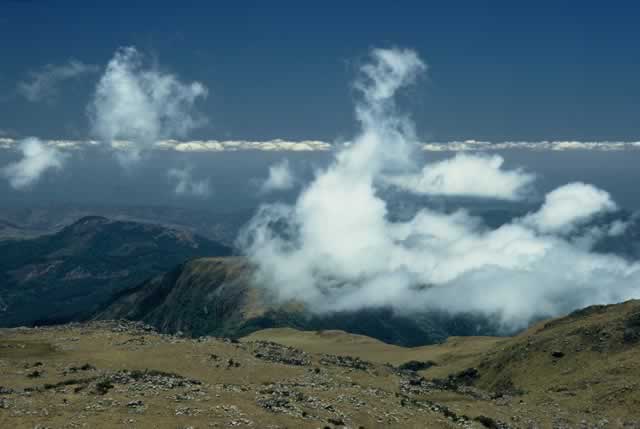
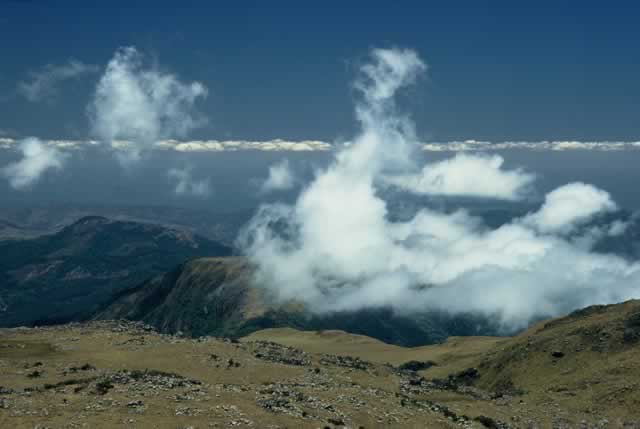
Yet another person has disappeared on Mt Nyangani, and could now be unfortunately dead, with his body at the bottom of one of the many deep ravines on this mountain.Mt Nayangani is deceptive. The walk to the summit can be done by young children in half a day, and by a reasonably fit adult in well under three hours.
The western routes, which almost everyone uses, are through pleasant grassland and light mountain scrub. Yet straying from the path can be dangerous. The tourist path up the western side of the mountain follows the Nyamuziwa River, and is a very attractive walk, with the little river and its waterfalls to the north of the path.
But as anyone who has strayed to refill a water bottle or just to have a look can tell you, there are a lot of very deep narrow cuts in the ground near this river.
Even in daylight it can be dangerous if the rock is wet from the spray from the falls. And at night, or when that fog suddenly descends as a cloud collides with the mountain, it is easy to understand how people can disappear, swallowed up by the ground. National Parks do a lot.
People are warned, and warned repeatedly, not to stray from the path and not to try and rush down if they cannot see. There are notices telling you not to ascend after certain times, because you cannot get down in daylight.
Fencing off the path so that walkers are kept away from all danger would destroy the joy of the climb to the plateau. So perhaps National Parks need to mount a display of photographs showing the ravines and holes, and making it clear that it is remarkably easy to slip and fall down one.
Generally, people have to understand that wild places are safe only if visitors follow sensible rules and heed the advice of the experts. Most do, sticking to the well-marked path and, if they want to move off for a rest and a sit-down, simply having company and keeping a good look-out where they are going.
Most know that if they are suddenly trapped by rain or fog they need to sit tight and wait for a group who know what they are doing, or even for Parks staff on a search or on routine patrols.
Most know that if they do stray and are lost, to again sit tight and shout. The worst that will happen is that they are lectured on safety when Parks staff find them.
Some people are protected by superstition. They do not wander alone. But even the most hardened rationalist knows that superstitions about dangers, and Mount Nyangani has a lot of these, usually have some rational base and every Zimbabwean knows that people do occasionally disappear on this particular mountain.
The physical dangers presented by the mountain to the unwary explain all. Care is needed; tragedies will continue to hit those who do not take care.
And this applies everywhere, not just Mt Nyangani.



 Online Reporter