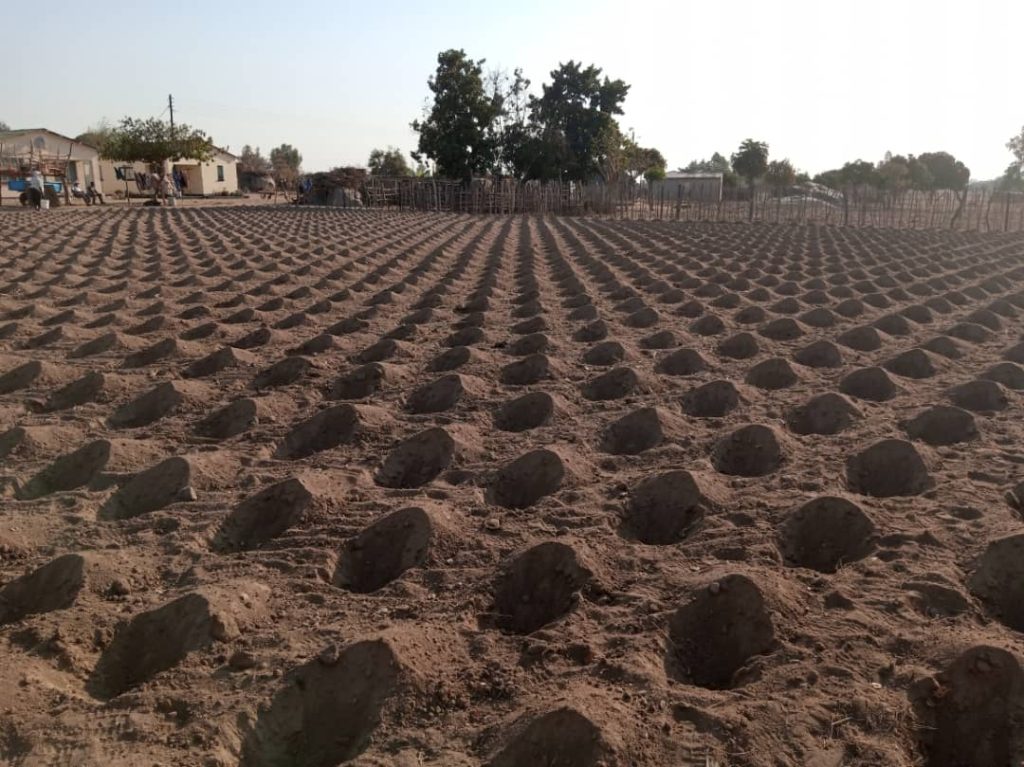
AS we brace for another challenging agricultural season amid forecasts of an El Niño-induced drought, the importance of the Pfumvudza/Intwasa Programme cannot be overstated.
The climate is becoming increasingly unpredictable, and traditional farming methods, particularly in communal and resettlement areas, are no longer sufficient to guarantee meaningful harvests. At a time when food security hangs in the balance for millions of households, farmers must fully embrace conservation agriculture practices promoted under Pfumvudza/Intwasa to maximise yields, safeguard livelihoods and ensure national food self-sufficiency.
Pfumvudza/Intwasa has, over the years, demonstrated its effectiveness in enhancing productivity through the efficient use of land, moisture and inputs. The programme is built on simple, but proven principles such as minimum soil disturbance, mulching and timely farming operations. These techniques help conserve precious soil moisture, improve fertility and increase resilience against dry spells.
For communal and resettlement farmers who often rely on rain-fed agriculture, the programme presents a practical solution to the harsh realities posed by climate change.
Experience has shown that crops grown under properly managed Pfumvudza plots can withstand erratic rainfall better than those planted using conventional methods. In seasons characterised by below-normal rainfall, farmers who religiously follow recommended farming practices generally harvest better yields than those who ignore them.
The impending El Niño phenomenon should therefore serve as a wake-up call rather than a source of despair.
Forecasts of drought must not discourage production efforts. Instead, they should inspire farmers to adopt climate-smart agricultural techniques that improve the chances of obtaining reasonable harvests even under difficult conditions.
Every planting station prepared on time, every handful of mulch applied, and every farming activity undertaken according to the recommended calendar increases the likelihood of success.
Government and development partners continue to invest substantial resources into the programme through the provision of inputs including seed and fertiliser. These are not handouts meant for abuse. They are strategic investments intended to empower vulnerable households and strengthen the country’s food security architecture.
Farmers who receive these inputs have a responsibility to utilise them for their intended purpose and to ensure that every seed planted contributes towards national production.
Unfortunately, the success of this noble initiative is being undermined by unscrupulous individuals who view the programme as an opportunity for personal enrichment. Reports of input theft and the illegal sale of Government-distributed farming inputs continue to surface in some areas. Such practices are not merely acts of dishonesty; they amount to economic sabotage.
When inputs meant for genuine beneficiaries are diverted onto the black market, deserving farmers are deprived of the opportunity to produce food for their families and communities. The consequences extend far beyond individual households.
Reduced agricultural productivity threatens local food supplies, increases dependence on food aid and undermines national efforts to achieve self-sufficiency.
Those who steal or illegally sell Pfumvudza inputs are, in essence, sabotaging a programme designed to cushion vulnerable communities against hunger. Their actions threaten the welfare of entire districts and weaken the effectiveness of public investments made using taxpayers’ money.
This is why law enforcement agencies must adopt a zero-tolerance approach towards such criminal activities.
Individuals caught stealing, diverting or selling programme inputs should face the full weight of the law. Strong deterrent measures are necessary to send a clear message that agricultural support programmes are not avenues for corruption and profiteering.
At the same time, local leadership structures, including traditional leaders, village heads, community committees and agricultural extension officers, must strengthen oversight mechanisms. Communities themselves have an important role to play in protecting agricultural inputs from theft and abuse. Residents are often the first to notice suspicious activities and should not hesitate to report offenders to the relevant authorities.
Transparency and accountability in the distribution process are equally important. Comprehensive beneficiary registers, regular audits and community monitoring can help close loopholes that opportunists exploit for personal gain. Every bag of fertiliser and every packet of seed must reach its intended destination.
As the nation prepares for the forthcoming agricultural season, the message to farmers is clear: embrace Pfumvudza/Intwasa wholeheartedly and implement its principles diligently. Success will not come from merely receiving inputs but from faithfully applying recommended farming practices from land preparation to harvesting.
The message to criminals who target the programme is equally clear: there should be no hiding place for those who undermine national food security. Zimbabwe cannot afford acts of sabotage at a time when every grain counts.
The fight against drought requires a collective effort.
Farmers must commit to productive farming methods, communities must safeguard agricultural resources, and law enforcement agencies must deal decisively with programme saboteurs. Through discipline, vigilance and commitment, Pfumvudza/Intwasa can once again prove to be a powerful tool in securing the nation’s food future, even in the face of a potentially severe El Niño-induced drought.
EDITORIAL COMMENT: Pfumvudza: A lifeline against El Nino-induced drought