

 admin
admin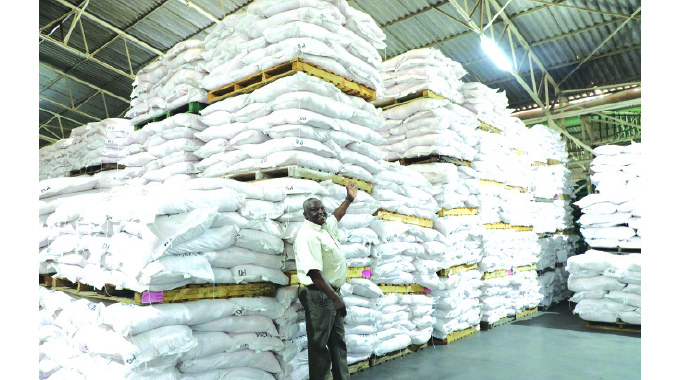
IT beggars belief that a farmer who has spent weeks digging their Pfumvudza/Intwasa plots for Grain Marketing Board or Cottco free inputs will then sell off the fertiliser for a pittance to a dealer drifting around, instead of growing the crops and making a lot more money.
But it is happening. There was that group based in Tynwald that was buying up bags of fertiliser, mixing it with anthill particles, having fake bags labelled as tobacco fertiliser made and printed in Mbare, and then selling this very sub-standard and useless product to tobacco farmers thinking they were getting a bargain, rather than something that would grow nothing.
Cottco has issued a statement urging farmers not to sell their inputs, and in that statement thanks those who have used the Cottco hotlines to turn in neighbours who are engaged in what looks like very suspicious behaviour.
Cottco did not give any indication of the extent of the problem, but has publicised an assortment of hot-lines and WhatsApp numbers, and promised to investigate all reports. So that sort of effort implies it is not just a one-off. Then there was that group of three middle-aged women in Plumtree caught loading onto a bus 88 bags of Compound D (4,4 tonnes), they had bought off local farmers.
They were taking the fertiliser to Harare for sale, but by the time they had offered the discount to the buyer, paid the transport costs in the Plumtree area and for the bus, and taken their profit, the farmers selling could not have been given very much money.
While Pfumvudza inputs are free, in the sense that people do not have to pay cash for them, or for the transport into their ward, they are not just dished out to everyone regardless of their capacity to use them.
The schemes both for the grain, oilseed and legume crops administered through the Grain Marketing Board and the extension to cotton through Cottco require a serious practical commitment from farmers.
They have to undergo the basic training run by Agritex, which involves instruction on how to dig the holes required in conservation farming plus how to keep basic business records so they can track how well they are doing and keep improving.
Then comes the more serious commitment, digging the plots which involves digging a lot of planting holes and gathering the required mulch and stacking it up next to the plot.
Their local Agritex officer will need to see both the holes, dug properly or recycled from the previous season with the required cleaning and re-cutting where necessary, plus the laid down quantities of required mulch. That requires a lot of backbreaking labour, not something you can do over a weekend. Only when you are signed off can you get on the lists for inputs.
And even then during the growing season the Agritex officer on a motorbike will be coming around now and again to check your fields and offer advice, and if you have not planted, or if it is obvious you planted without fertiliser or enough fertiliser, this will be very noticeable.
Agritex need to keep their eyes open for this, even if it is just one farmer in a ward. Past inputs schemes had been plagued with corruption, with big shots stealing fertiliser and seed at depots, and with casual farmers, those derisorily called weekend farmers, simply selling inputs without bothering to prepare land, let alone plant.
The Second Republic changed the whole system, largely to ensure that every dollar allocated in the budget actually grew decent crops and the small-scale farmers could grow their own food and then make some good money selling surpluses and cash crops. While this required large investments into seed and fertiliser, it actually worked out as one of the cheapest ways to ensure rapid rural development and lift millions of families out of poverty.
The savings alone from emergency food schemes, still needed, but far less than before, would pay a good chunk.
While the farmers themselves would be covered by the tax-free bracket, since their own farm-grown food is not counted as income, and in any case all their tools and equipment and work clothes are tax deductible, others along the value chain would be paying taxes, starting with the seed and fertiliser companies and ending with the millers, oil expressers and the shopkeepers who sell the final processed products.
There would also be some extra VAT and company tax from those who make and sell goods to farmers with money in their pockets. So what was left over was easily one of the most efficient ways to develop rural areas.
This system was built on farmers showing commitment, Agritex confirming the commitment and confirming the inputs were being properly used, the auditing of the GMB and Cottco depots and lists, primarily to ensure the depots received what they needed to pass on to the approved farmers, but with the useful by-product of ensuring there was no cheating at that level. It was almost foolproof.
But what we have seen is that it is just “almost”. There were a few people in the first year creating phantom farmers and grabbing the inputs.
That was blocked and arrests made, largely because it was so easy to check that real farmers on real farms were qualifying for inputs.
Then we had a few people going back to the old days and allocating themselves inputs, again easy to block since every bag of seed or fertiliser has to be matched to a farmer, and so gaps just shine forth in an audit so simple that it just needs to match lists with quantities allocated.
Now we have a few farmers, despite the efforts they have made to get training, dig holes and gather mulch, chickening out at the end and selling their fertiliser for a quick buck.
When almost 3 million people are involved, even 99,9 percent compliance will throw up 3000 cheats. The easy way to solve that is to bar those cheats from receiving any more assistance, and hopefully they can hand their land over to a family member who wants to farm, or even lease it out if they are so desperate for cash.
And as Cottco has found, we should not ignore the fact that the honest majority dislike cheating intensely. These odd instances of cheating and corruption should not discourage anyone.
The records needed to make the system work, from the files and notebooks strapped on the back of Agritex motorbikes, the lists kept by those extended ward distribution committees, with their independent community members like school heads to avoid collusion, and the depot records make it easy to spot any anomalies.
We hardly need an army of auditors, just supervising officials spending a couple of hours a week checking the records and then weeding out the cheats and calling in the cops. Fraud is a crime.



 Online Reporter