

 admin
admin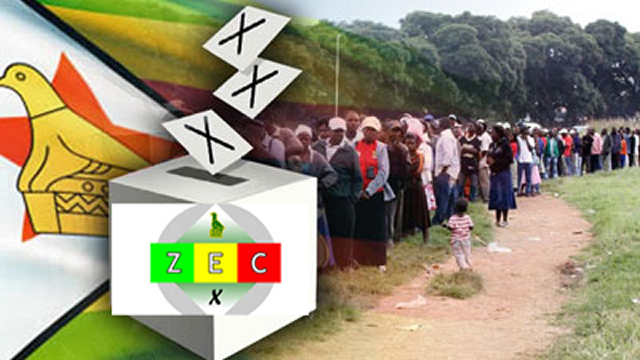
Zimbabweans are remaining commendably peaceful after last week’s elections and the results announced over the weekend, despite some inflammatory messages on social media and the comment sections of some web sites.
Life continues as normal in all parts of the country, and the Ministry of Primary and Secondary Education was startled to find some people were wondering if schools would reopen at the start of the third term on Monday.
The Ministry then did issue a straight-forward confirmation that schools would reopen on Monday with boarders going back on Sunday.
It took the same opportunity for its routine reminder to all schools that any change in fees needs to be approved by the Ministry, and that until this approval is given the last set of fees approved are the only legal fees.
The deadline for making election petitions for Parliamentary and Presidential elections is approaching, but there is still time for any aggrieved candidate who thinks they have some factual evidence or some point of law in their favour to make such a petition, and courts are where anyone who thinks rules were broken should go.
Most of those issuing the inflammatory messages are not worried about the legalities. They are just angry or disappointed that a majority of Zimbabwean voters decided not to support the candidates these message writers wanted. They need to accept that the majority decides who are the winners.
Zimbabwe, admittedly, is not alone with holdouts who refuse to accept the results of an election. The United States, which regards itself as a champion of democracy throughout the world, had this problem in 2020 when the sitting President, Donald Trump, made it clear that he could not accept any result that found he had lost the election.
He lost dozens of petitions in numerous state courts and then found that the Supreme Court of America, several of whose judges he had appointed, could see no point in even hearing an appeal from these lower state courts, since there was zero evidence.
Even now he refuses to admit he came second, although no one in authority in the Unites States is listening and the number of supporters who agree with him is diminishing, and in any case they still obey the laws and act peacefully, even if they mutter a bit in private.
The United States even had a very violent procession and demonstration at the US Capitol, that saw several police officers killed, by groups that wanted to block the formal count of the state results in the electoral college, the system used by the United States to decide who won.
Those who did attack the Capitol have been arrested, brought to court and jailed after fair trials. No democracy can tolerate violent attempts to overthrow the results of an election.
But if this sort of violence had occurred in Africa, along with the denial of the result by one of the two major candidates, there would be reports and articles from quite respectable media floating around discussing the “disputed result” of the American election and raising queries about the legitimacy of the present American President.
They don’t, and for the good reason is that he won.
We would agree that the American result was free and fair, despite the words of the losers, but are still curious that different standards tend to apply when looking at anyone else’s results unless there is some solid evidence, and so far that has not been presented in the Zimbabwean elections and despite some determined efforts in the 2020 US election could not be found there either.
This comparison with the United States is not just trying to show that similar standards should apply in all elections, but also because the American law that set up sanctions against Zimbabwe tends to suggest that a decisive test of a free and fair election is that the opposition wins and takes office.
This is not a fair test, since voters in Zimbabwe make the choice, but in any case the Americans would be horrified if that test was applied to their elections, since politicians there spend a lot of money and time when seeking a new term.
This rather weird test, that they opposition party must win to prove an election is free and fair, tends to be applied by others as well.
Just because someone would not vote for the winner of the Zimbabwean elections does not mean that a majority of Zimbabweans did not.
There is no narrow line between being disappointed in an election result, and we can safely assume that the 44 percent of Zimbabweans who voted for Mr Nelson Chamisa are disappointed that another six percent did not join them, and threatening violence.
The line is in fact a chasm, between natural feelings and lawful behaviour on one side and criminal activity on the other.
The police have been investigating some of these social media messages and have found a reasonable percentage originate outside Zimbabwe.
They are tracking down the local originators, because incitement to violence is a crime here, but cannot do much if the person is writing from another country, and not really caring if someone gets hurt in the violence they seek because they will be safe wherever they are.
The police say they have adequate extra motorised and foot patrols out in this post-election period. Well, they are certainly not being heavy handed about it.
There are certainly no groups of armed police circulating and no stop and searches and the like. It looks remarkably normal.
There have always been cops on the beat in Zimbabwe, and if there are more now out and about most Zimbabweans will be happier, since there is a degree of pressure on the police to do more patrol work, as this can be an effective way of suppressing crime.
Most thieves and muggers do not commit their crimes in front of a police officer.
It might even be a good idea if whoever compiles the police statistics checks the crime totals during any period of increased deployment and compares these to more normal deployments.
If crime drops then there are stronger arguments for seeking the required resources to have more cops on the beat.
We hope that the prevailing peace is maintained, and that those excited about the results because their candidates won celebrate soberly and within the law, and those who are disappointed also remain within the law and perhaps figure out how they can do better next time.



 Online Reporter