

 admin
admin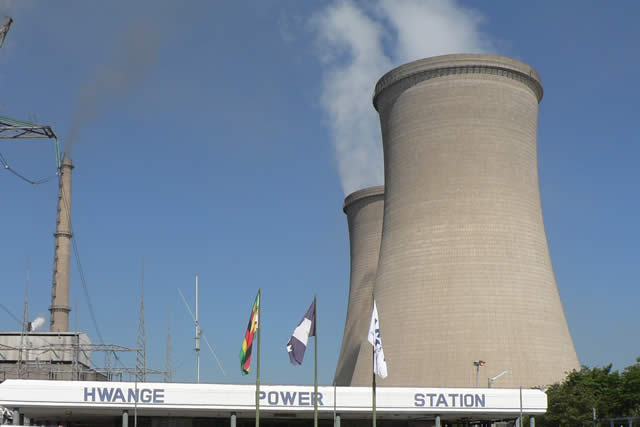
THE last week or two has seen a dramatic improvement in the supply of electricity by the Zesa distribution subsidiary, largely because Hwange Thermal Power Station has put its new unit 7 on line full time and is now accelerating the tests on its unit 8.
In addition, the rising daily water rations at Lake Kariba have allowed more use of Kariba South. The net result is that the lights are on for most consumers most of the time, what should be normality but which for around six months has been some distance from that.
But what this shows is that Zesa can set new standards, and it is in the nature of things that consumers will expect Zesa to maintain new standards and, even more importantly, push hard to increase the generation capacity within Zimbabwe.
The two new giant units at Hwange, and at 300MW each, they are easily the largest in Zimbabwe, have seen a major jump in capacity, although the bringing onto line of unit 7 and all the required tests and checks, shows that unit 8 is also likely to see some brief withdrawals from service while engineers open it up to make sure everything was running right in the last test.
The advantage of an identical pair of units was obviously that a lot of what was learned on bringing unit 7 up to speed and synchronised on the grid could be applied to unit 8 and so have a lot of work done a lot quicker.
But while Zesa should shortly have these two units full time on the grid, perhaps just coming down in slack periods when the maintenance needs to be done with a proper maintenance cycle now essential so we do not get breakdowns, we need to be building the capacity as quickly as possible.
What we basically have right now is enough power to keep everything ticking over, yet daily we have news and business reports that someone is developing a new mine, or expanding a mine, or that someone has built or is building a new factory or that farmers have expanded the area under irrigation and have had their required power supplies for the pumps guaranteed.
In other words the rapidly expanding economy, with the expansion centred on production which in turn requires a lot more electricity than the few bulbs and computers a new shop might need.
There are two fairly quick ways of getting a reasonable amount of extra generation capacity on the grid fairly quickly. First there are a number of private solar stations, some largely for a large single customer while some are designed to sell surplus to Zesa. In both cases Zesa has been fitting the new dual-use meters, allowing a customer generating a surplus at any particular time to sell that to Zesa and in return buy grid power when there is not much solar.
This helps get around the problem that banks of solar cells produce all their output when the sun is shining, and produce most of it when the sun is more than a few degrees above the horizon.
While residential and smaller commercial installations, largely built to supply a single building or complex, are likely to have storage batteries included so they can power the building 24/7, those generating power for sale, or with a high sale component, are likely to find batteries add a lot to cost and that Zesa offers an alternative.
Lake Kariba is the world’s largest hydro-power reservoir. The Zambezi has a very variable flow between high-water and low-water, and needs to store the annual floods, which mostly flow in the second quarter of the year. The Zambezi River Authority then gives both Zesa and Zesco of Zambia a ration. Generally speaking with normal rainfall in the upper watershed, the two can be given an allocation that allows them to generate around 600MW each.
Both have installed generation capacity of a little over 1000MW, not out of wishful thinking since they both know the long-term output from the dam, but as easily the cheapest and most effective way of coping with surges and peaks in demand. If Zesa is on a 600MW ration, for example, it can easily push its output to 1000MW for a couple of hours early in the evening and then move down the ladder to around 200MW in the early hours of the morning when demand is low and Hwange anyway can take the burden.
This double of an oversized power station coupled to a large lake also means Zesa has in effect a power storage capacity. If there are stations generating say in total 1 000MW of solar in the middle of the day, that is enough to cope with extra demand, plus a decent block of what would normally come from Kariba South. Zesa can just keep a Kariba unit ticking over and the day’s water ration in the lake, and then as the sun starts going down and the solar supply sinks towards zero, Kariba South can go flat out. Lake Kariba is in effect the largest and the cheapest storage battery in the world, as well as a major power station.
At the same time as we start pushing those solar commitments made by a number of investors, Zesa itself needs to move rapidly in the six older units at Hwange. A fair amount of finance has been secured for the rehabilitation of the six, with the work ranging from complete replacement of some modules in some units to almost routine maintenance on other modules. Generally more work is needed at the dirty end of each unit, the coal feed and boiler.
This is scheduled for two years and should restore the old two phases back to a total of 920MW, and with the 600MW of the two new units that takes Hwange up to just over 1 500MW. Admittedly if the station is run properly we might have, quite often, one of the eight units undergoing maintenance since everyone hopes that once all eight are fixed up, a proper maintenance cycle will be maintained.
We now have hopes for our first gas station. Coalbed methane has been proven in the Matabeleland North coal fields, and commercial exploitation could be as early as next year. Gas power stations can be built and commissioned relatively quickly, far more quickly than coal-thermals and big-dam hydro stations.
Besides the coalbed methane, where flow rates and the like are likely to be proven first, we also have the natural gas deposits at Muzarabani, and a gas station is one of the planned investments once the numbers have been firmed up to the levels required by a power-station investor.
So we can with Hwange upgrades, solar and gas move fast to build up our generation capacity to keep ahead and to make sure that the growing energy demands are met. But it does mean that we cannot relax for a moment as we bring Hwange units 7 and 8 onto the grid. They simply fill the gap we allowed to develop and now we need to make sure that the gap never reopens.


 Online Reporter