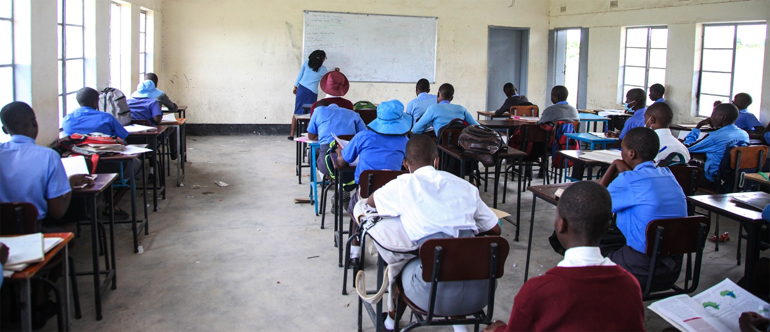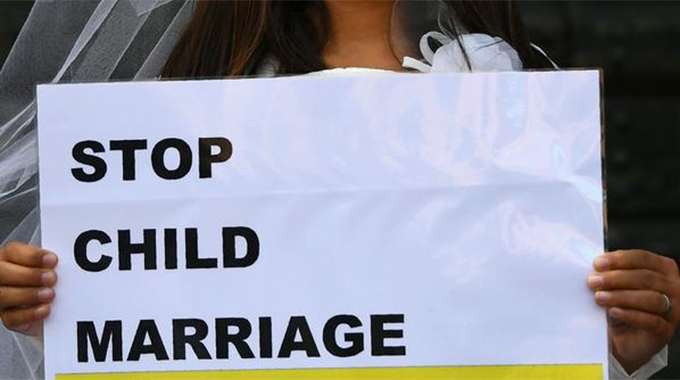
The plight of the girlchild has not gone unnoticed, but we still have a long way to go as a country, as churches, as communities, as families and as individuals to protect girls, and keep them in school, college, university or vocational training so that they can fulfil their potential.
This has come out as we reflected over the weekend on the International Day of the Girl, and concentrated not so much on how far Zimbabwe has come, and it has come a long way on the right lines, but more on what we still need to do.
Child marriages are illegal in Zimbabwe, under the Marriage Act now in conformity to the Constitution.
There are not many teen boys who get married before their twenties, but a large minority of teenage girls are married off before the legal age of marriage, which is 18.
Estimates vary, as a lot of people go to some lengths in their refusal to give information or simply lie. But there is little doubt that the child marriage rate is somewhere between a low of almost one in five and a high of around one in three.
Statistics also vary depending on whether all women and girls are included, so we have grandmothers and great grandmothers married off when they were in their teens, or whether we are just counting present day teenagers.
An extra statistic, not often brought up although it ought to be, is that since there are so few under-age boys getting married, the vast majority of underage girls being married off must be handed over to older men, and these are legally adults and adults preying on underage girls at that.
All marriages involving underage girls must be unregistered customary unions. Both civil marriages and properly registered and solemnised marriages under customary law can no longer take place, even with parental consent for any underage girls or boys.
Even the unregistered customary unions have been condemned by chiefs and other traditional leaders if they involve an underage person, as chiefs go beyond their legal duty to simply refuse to solemnise an underage marriage.
So who is involved in setting up these child marriages?
The principal persons, the ones whose permission and active involvement is necessary even under a perversion of customary law, are the parents of the girl, or the relatives who stand in for the parents.
There are also, besides the bridegroom, his companion and an aunt on the bride’s side. So there is a modest group of adults deliberately flouting the law. All these adults are technically subject to prosecution for abetting a breach of the law, or plotting a breach of the law, but we are yet to start the arrests.
One important point, infrequently stressed, is that these child brides are extremely unlikely to be the daughters of successful people in the middle income brackets and above.
We do not hear of teen daughters of engineers, doctors, lawyers, factory owners or even teachers and qualified mechanics or other skilled workers dropping out of school and being married off.
Regrettably the girls largely come from the poorest families.
There are of course many poor families who are proud of their daughters’ achievements and who make many sacrifices to get them through school and further education or training.
But what these families show is that poverty is not a valid excuse, just a serious challenge that they at least are meeting. And if poverty is not to move into new generations, it is a challenge that must be met by all families.
So the girl pressed into early marriage and often an illegal marriage is likely to be powerless, poor and without gaining her full potential in education and training that could give her the first step in independence.
She almost certainly lacks family support and might even see even a bad marriage as an escape.
So what can be done, in practical terms. Since independence Zimbabwe has done a great deal to open education to all, boys and girls, and the Second Republic has accelerated this progress with more practical steps to keep girls at school longer and then let them move to further education or vocation training.
We can always do more, but a lot of young women are escaping destitution.
Cultural change is obviously required. All families need to value their daughters properly and ensure they prepare them for a better future. Many do, but many do not. The cultural change needs to progress so that no one sees the natural role of a young woman being a wife and mother with no life outside the home.
Lobola in tradition was, after modest gifts of respect and affection, largely a transfer of livestock, usually in instalments, between two families.
It has become in some quarters what amounts to little more than a commercial transaction. People want to retain the custom, but however it is arranged or paid it seems necessary to think about its origins a lot more.
To be frank, we need to remove the temptation to marry off a daughter just to gain a pile of cash, however that is dressed up.
And we need to empower teenage girls, and here schools, churches and others will play a big part. Girls must understand that they do not have to wreck their lives in submission.
If we find ourselves, as a result, with a generation of young women who know their rights and are determined to press them, well, Zimbabwe will be stronger.