Flora Teckie-Bahaí Perspective
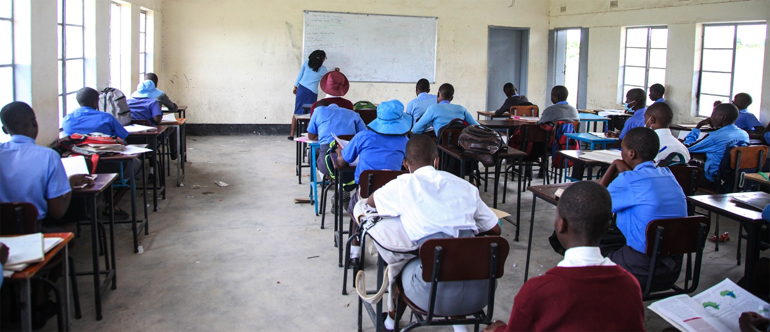
The World Teachers’ Day commemorated on October 5, 2026 was a reminder of the invaluable contribution teachers make to the education and development of learners and young people.
Their work deserves our gratitude, respect, and high esteem.
Educating and training children is a profession of great importance. In countries such as Zimbabwe, where a large proportion of the population has had access to education, much of this achievement can be attributed to the dedication of generations of teachers who have served as facilitators of such learning.
The Bahá’í Writings state: “Among the greatest of all services that can possibly be rendered by man to Almighty God is education and training of children.”
They further affirm that the “education and training of children is among the most meritorious acts of humankind and draweth down the grace and favour of the All-Merciful, for education is the indispensable foundation of all human excellence and alloweth man to work his way to the heights of abiding glory”.
Teachers have a pivotal role in the development of our children, and the teaching profession is one of the highest to which one can aspire. While teaching is a great privilege, it is also a profound and weighty responsibility.
In addition to contributing to the growth and development of individuals, teaching can become the main instrument for the transformation of society, and in the creation of harmonious, just, and peaceful communities.
Teaching is much more than transmitting information and academic knowledge. It should release inherent capacities of our children.
Bahá’u’lláh, the founder of the Bahá’í Faith states: “Regard man as a mine rich in gems of inestimable value. Education can, alone, cause it to reveal its treasures, and enable mankind to benefit therefrom”.
The aim of education, therefore, should be the discovery and perfection of the God-given potential, talents, and capacities of our children and use them in the service of humanity.
Teachers as a role models and builders of character
Teachers have an important role—not only in imparting knowledge and skills— but to also become role models and builders of character.
An education that enriches both the mind and the spirit would seek to develop moral qualities such as love, justice, truthfulness, compassion, courtesy, generosity, and trustworthiness. Acquiring these qualities will also bring about harmonious and productive families and communities and, ultimately, a more united humanity.
Service to others should also form an important part of education. Service to family, neighbours, community, and nation should be considered an essential component of educational curricula. There should be practical means for its expression in service-oriented programmes.
As the Bahá’í International Community explains: “Service to society helps individuals acquire skills and attitudes that enhance their potential to contribute to the betterment of society. This orientation towards service fosters coherence between learning and action -or, simply put, between ‘being’ and ‘doing’”.
By guiding and encouraging children to serve humanity, teachers can contribute not only to individual development, but also to the transformation of society.
Through appropriate education, teachers can help cultivate in our children “such attributes, skills, virtues and qualities as will enable them to contribute their share to the building of an ever-advancing civilisation.
True education releases capacities, develops analytical abilities, confidence, will, and goal-setting competencies, and instils the vision that will enable them to become self-motivating change agents, serving the best interests of the community”, states the Bahá’í International Community.
Preparing children to live in peace
Teachers also have an important role in preparing children to live peacefully with people of different backgrounds, cultures, and beliefs. They can cultivate tolerance, love, compassion, understanding, sacrifice, humility, and an active commitment to justice, and teach unity in diversity as the foundational principle for social integration.
Teachers should instil in our children and youths the awareness of the oneness of humanity. They should prepare them to live in peace in an atmosphere of understanding, dialogue, and respect for others.
Children must be trained to respect, appreciate, and understand diverse ideas and to settle their differences peacefully.
Although teachers are normally well-equipped to teach, there is always a great deal to continue to learn while carrying out their important responsibilities.
According to the Bahá’í International Community: “They (teachers) should form a partnership with their students in a shared learning process, demonstrating by their example that they, too, are learners.
“This can have a liberating effect on students in that it helps them see themselves as directors of their own learning and as individuals who can determine the course their lives will take”.
Teachers must have a full understanding of the role that a child’s self-esteem plays in determining school success, and should create a climate of encouragement in the classroom.
Teachers deserve our highest esteem. They must enjoy the respect and support of their communities, based on their vital services to society.
• Feedback: [email protected] or [email protected]
Website: www.bahai.org