

 admin
admin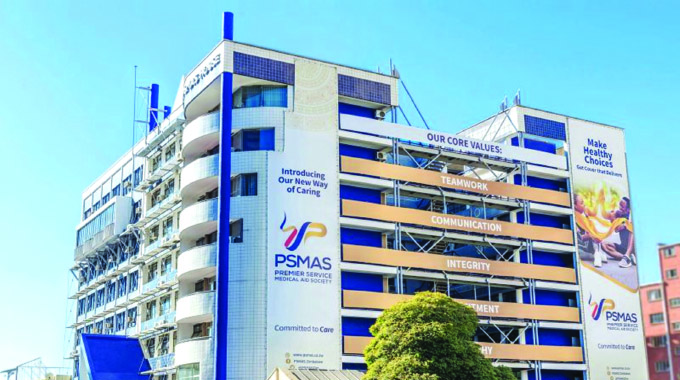
The Public Service Medical Aid Society is the largest health insurance scheme in the country and one of the cheapest, belonging to and designed for all those who work for the Government plus a range of semi-State entities plus anyone from the general public who wants to sign on.
So it needs to be run properly and fairly since so many people are reliant on this society for their health needs. Once you include all dependants the round number could be close on one million people, so we cannot have mistakes.
Last year, the employer of most members and who paid a large portion of the monthly subscription, the Government itself, ordered a forensic audit, over the objection of several worker representatives in the civil service, some of whom sat on some of the boards in the PSMAS empire.
The results are now out, and the Government is horrified. It seems to be worse than anyone thought. Between 2018 and the middle of last year US$60 million of members funds were “lost” through theft and mismanagement.
Some was lost by those within PSMAS taking the money, some of was lost by private practitioners and hospitals charging for services not given, some was lost because the management was just useless. But it all added up and the sums involved explain why PSMAS, through its wholly-owned subsidiary Public Service Medical Investments, has been closing its clinics, pharmacies and other services.
These were only put in a limited liability company to gain the advantages of a registered company, mainly the limited liability. Members should have benefited from the laws on company accounting, but do not in this case.
Others in the private sector stopped accepting PSMAS membership cards, because of delays in payment, or started charging more than the agreed rates to minimise their risk of delayed payment. The net result was that a PSMAS member could not go to their own clinic to see a doctor or nurse employed by PSMAS or an affiliate, and could not afford to see a private doctor wanting cash up front. They even had problems buying medicines.
Now the Government needs to take action. It is the regulator of all medical aid societies and of all the “for profit” medical insurance offered by some insurance companies and health providers. So it has the power to intervene regardless. But in the case of PSMAS it is the employer of most members, or the payer of the pensions of most of the rest. As part of their package civil servants and others in State service have a salary deduction, made by the Treasury when it pays their salaries, but with a large chunk added to this paid directly by Government.
For some time, the Government has gone well beyond the more normal 50:50 split common to most employers and has picked up a larger percentage of the bill.
Obviously those running the Government want a good deal for their staff, or at least ensure that their staff can get decent and affordable medical care for themselves and their families. While legally PSMAS is not part of the Government or the civil service, the Government does have the legal and moral right as regulator and employer to intervene to make sure it works, that money is not stolen or wasted and that generally members get a good deal.
PSMAS was able to keep its rates down compared to much of what is seen in the private sector during the 1990s by offering more and more in-house services. While not going the whole way to being a managed health scheme, it opened its own clinics and pharmacies in cities and larger towns, opened its own hospitals, and hired its own medical professionals.
So it was able to guarantee that those using its in-house facilities would have a zero shortfall, and that the profit motive was eliminated from the facilities so allowing costs to fall, so keeping subscriptions down.
PSMAS members were entitled to continue seeing private practitioners, but the society would not guarantee that there would no shortfalls if these charged more than the rates laid down by the association representing all medical aid societies, as is usually the case. This system was put in place after another crisis hit PSMAS. The civil servants then elected as head of the society Justice George Smith, a former Government lawyer, briefly a permanent secretary and then becoming the longest serving High Court judge.
He and the new team untangled the mess and initiated the managed health scheme, along with some other reforms, so that civil servants got a lot more for their money.
This lasted for more than two decades and had become normal, before the present crisis struck for reasons that the auditors have now unearthed and quantified.
Criminal cases have started, and we hope that the audit report will be used to initiate a lot of at lest civil action to start reclaiming money that was siphoned out, even if criminal intent cannot be proved. At least some of the money lost can be recovered, although inflation might diminish the return.
But at the same time there is obviously a need to reform the whole management of PSMAS and its subsidiaries. There are good grounds for the members to retain their ownership of their own society, but that means they have to find the right people to supervise it and to appoint a competent and honest management.
From reports that have been aired, it seems that a significant block of those on the boards and in the top ranks of management were either incompetent or were there to obtain huge perks and what amounted to large payments.
Sometimes those who are very effective in representing their colleagues in negotiations over salaries and benefits are not necessarily that good at supervising the administration of a large enterprise. The roles are quite different. We mentioned the 1990s crisis because the civil servants and other State servants of those days took a different route and went to the top of State service to find an experienced judge to chair the show, and backed him with other people who could do the supervisory function.
They in turn hired managers and staff who were competent, honest, hardworking and knew the business to run the show, under supervision.
Some of the most obvious reforms needed are to go through the services to find another effective team to perform the oversight and supervision role. At the same time that team, which is supposed to be part-time unless released from normal duty in an emergency, either should not be paid at all or only receive small allowances to cover additional expenses, such as extra transport.
Without the temptation of perks the dishonest or the weak will give the posts a miss. To be blunt we need senior civil servants or the equivalent to be willing to spend a year to two on the boards in rotation, without reward except for doing a good job.
Unless the members can find this sort of team then they might need to accept more direct Government supervision, exercised as the main employer. In any case, considering the fact that the employer provides most of the money, it might be fair that the top board does have a couple of senior employer representatives, perhaps one from the Ministry of Finance and Economic Development and one from the Ministry of Health and Child Care. When many companies had in-house schemes employees ran the society, but the employer as guarantor had someone sitting there looking on.



 Online Reporter