Online Reporter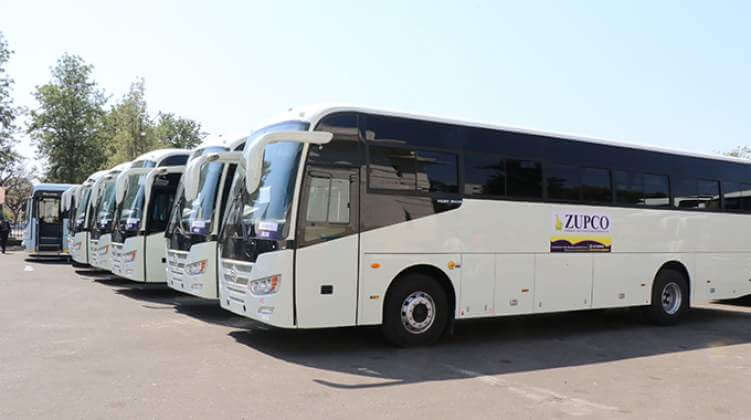
MOST people in urban Zimbabwe still rely on public transport despite the growing ownership of private motor vehicles, and will continue to do so even under universal car ownership as can be seen in many other countries.
So public transport is an essential service but one that needs to either be run under some sort of public-approved monopoly, as was once the case in most of Zimbabwe’s urban areas, or needs a strong element of regulation where private owners are allowed to provide the necessary services.
In order to ensure that people needing to use public transport can do so, Zimbabwe introduced regulations that allow privately-owned kombis and buses to be licenced for public transport along with safety conditions and special licencing of their drivers.
These replaced emergency measures that briefly allowed ordinary cars, the former pirate taxis, to be used after the collapse of the then main provider of bus-based public transport.
What we now have in urban Zimbabwe is a functioning public transport network based largely on privately-owned kombis, but made up of a mix of properly licenced vehicles allocated to specific routes and a large number of vehicles not licenced for public transport, including a significant batch of private cars that operate as pirate taxis or mushikashika.
While the system works, it is unfair in that the legally compliant elements incur extra costs to remain compliant while the “cowboys” seem to be able to operate with only modest interference.
It is also less safe for passengers, with no-compliant operators not heeding many safety regulations and not buying the extra insurance that a public service provider is supposed to buy.
Those who do not use public transport also add a lot of uninformed criticism, largely centring on the kombis that form the backbone of the system in place, and not taking into account that each kombi uses about the same amount of road as several dozen cars if we all relied on private transport. A single kombi, in its multiple daily journeys, moves more than 100 people a day to and from work.
This unclogging of roads by public transport is a principle driver of the schemes in even wealthy countries to have a decent public transport system.
The Ministry of Transport and Infrastructural Development has now launched a new enforcement programme, hopefully something that can be sustained rather than be just a temporary blitz, in collaboration with the Ministries of Home Affairs and Cultural Heritage, and Local Government and Public Works.
The enforcement efforts will focus on eliminating unregistered operators, improving traffic management and ensuring public safety. These are necessary goals for the first phases of an upgrade, keeping what we already have but making sure that all kombis and buses obey the laws and regulations, including the basic Highway Code driving standards and speed limits.
Obviously we need to make sure that all kombis and buses on the roads are properly licenced, which includes passing the extra mechanical tests set for public service vehicles, and that all drivers have passed the higher standards required when moving people around for a living.
This part of the enforcement must include making it clear that unregistered kombis and buses will not be tolerated and that their owners have to move swiftly to compliance or get off the roads.
At the same time drivers, both those properly licenced and the others, need to recognise that driving laws and regulations exist to keep roads safe. The tendency for many drivers, including those properly licenced, to create new traffic lanes, overtake dangerously and clog intersections while they bully other drivers has to end.
As this is being done, work can start on building the sort of integrated and planned networks with the right sort of vehicles and with set improvements in the condition of the fleet clearly spelt out in a phased upgrade.
This must involve detailed discussion with present owners, preferably using the more effective representative associations that are trying to reform and upgrade the sector.
The best of these associations have brought some necessary order, although members are still tempted to compete with “cowboys” by adopting more dubious tactics.
But in a carrot and stick approach, membership of a well-run association can be coupled with stronger penalties for those outside the recognised system.
Route planning, terminuses, enough bus stops and other matters can be worked out in the earlier stages of an upgrade.
Harare in particular has serious problems with a group of terminuses, none of which are really central, that needs some careful thought over placement of bus stops and other loading and unloading points. Simply using police to stop undesirable stopping and starting will not provide a lasting solution.
We are not going to move from the present semi-chaos to a modern public transport system overnight. We can move swiftly to at least universal licencing and enforcement of safety standards quite swiftly but the rest of the upgrade needs to follow the well-trodden Zimbabwean approach of building one brick at a time.
We need to have enough affordable seats available every day to move people to and from work and school, but at the same time doing this better and more safely and as we build making sure that the future system will fit an upper middle income country.