Online Reporter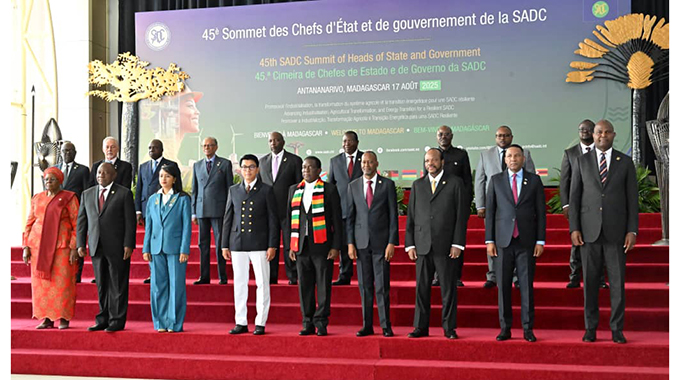
SADC needs, in the modern world, to be largely self-sufficient in food in good and bad years and be able to continue producing enough with global warming and more unpredictable weather.
In their final communiqué after the 45th SADC Summit, the Heads of State and Government stressed these needs and noted the practical efforts that would be required to achieve them.
Research throughout the region has been focusing on climate-smart farming and a number of practical programmes, such as the Zimbabwean Pfumvudza/Intwasa, have been introduced and seen to work very well.
So more probably needs to be done to make sure we learn from the successes of our neighbours so we can continue building. It has become obvious with the severe droughts that hit much of SADC last year, especially the central belt of countries, that we all need to build up our irrigation, converting potential into the dams and wetlands and pipelines and everything that goes with making sure farmers have enough water.
The actual methods will vary depending on where you are in SADC, but we all need to invest more in water and be able to use the resource we have far more efficiently.
Generally speaking Southern Africa is a drier area of the world, although we have exceptions such as the Congo basin rainforest.
But even where water supplies are good, they still need to be exploited sustainably and efficiently.
We also need to be looking at the right sort of crops and almost certainly increasing our variety of crops.
Huge mono-cultures of a single crop of foreign origin might well be unsustainable. Over the past four centuries, maize for example, has become the number one grain grown in the SADC area since trade routes opened across the Atlantic to its central American origin.
But the number of types and varieties commercially grown seems to be very small compared to what had been built up through trial and error during pre-colonial times, when African farmers faced with a new crop tried to find which types grew best.
Research has also been lacking in tying into the vast range of sorghums and millets that exist. These two crops were often seen in colonial farming as less useful and suitable more for stockfeed than people.
So what research was done pushed yields, rather than a combination of taste and acceptability along with better yields. This means there is a lot more that can be done in the two grains that are indigenous to sub-Saharan Africa and which between them still have natural varieties that can grow on almost any conceivable soil and climate type in the region.
Zimbabwe has shown that irrigated winter wheat harvests can be large and is the only SADC country that now grows more wheat than it eats.
But even Zimbabwe needs to diversify its wheat farming; we still import harder wheats and durum wheats and while some of these types might not grow here, durum wheat does grow in warm drier countries and should be part of the national wheat harvest once suitable varieties can be grown.
There are other crops where the region tends to import, such as oil seeds. Yet almost all known species and types of oil seed can be grown somewhere in SADC and possibly one of our problems is that we have not integrated our economies enough so that the right factories can link up with the right farmers, even if these are two countries away.
There are other possibilities of putting together farmers and industrialists across a swathe of countries to get the sort of volumes that efficient industries need.
Cotton is a good example. Many SADC states have farmers who grow the crop, and yet most of the fibre is exported out of the region, often to countries that, while they grow their own, have built up huge modern factories that need even more.
It might well be the case that a high-end textile industry in SADC needs far more cotton than any single country can produce in order to reach competitive efficiencies, so once again there would be scope for looking at the region as a whole rather than just one or two countries.
The SADC Summit also wanted to see continuing progress made on animal diseases and preventing them from spreading. Much has already been done and several countries now produce vaccines and are able to sell these to each other since they tend to specialise in the most likely for their own nation, yet disease does not stop at a frontier.
We need border controls to stop smuggling and these also work to stop illegal movements of potentially infected animals. Again more cooperation seems the way forward to solve a number of problems simultaneously.
Over the next few years, we are likely to see a peaceful DRC moving up the ladder as an agricultural producer, with that large area better watered by our standards.
This should allow a range of specialised tropical crops to join the more familiar crops grown in the region and open new opportunities for industrialists in agro-processing.
One important point when we look at upgrading SADC agriculture is fertiliser. Almost all the necessary raw materials for a full range of fertilisers exist somewhere in SADC although no country seems to have them all without imports.
The movement to get Africa to produce its own fertilisers by smarter use of the raw materials that exist on the continent and in the region appears to need to be accelerated so we convert the talk into the bags of fertiliser that our farmers require.
While a lot of the raw materials for the SADC industrialisation drive will come from the huge mineral wealth of the region, the huge farming potential provides the other crucial strand and here we also need to be looking at regional approaches, rather than just looking at what a single country can produce.