admin
admin
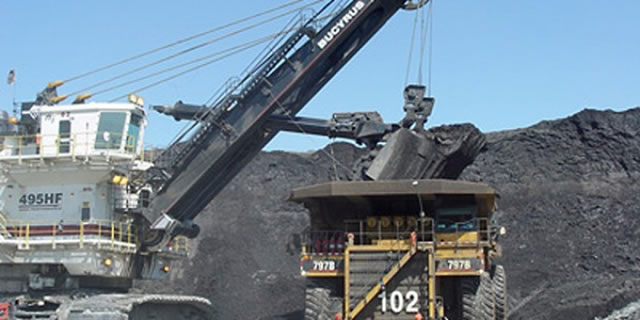 ZIMBABWE cannot afford to allow companies like Hwange Colliery to collapse because they lie at the heart of efforts to revive the country’s economy. We were alarmed like the rest of Zimbabweans to learn from HCCL chairman Farai Mutamangira on Monday that the company plans to retrench at least half of its workforce of more than 3,200 in the second half of the year. This is in addition to 304 employees that were laid off in June 2012.
According to Mutamangira, this was part of a raft of measures the company would implement to turnaround the fortunes of the beleaguered coal mining giant. While we appreciate the magnitude of the challenges besetting the company, we feel retrenchment on such a large scale should be the last resort with the authorities having exhausted all other channels to raise funds to recapitalise the company.
HCCL’s problems are well documented having started at the height of the economic challenges facing the country. Demand for coal and other by-products such as coke dwindled with the closure of the then Ziscosteel and challenges in electricity generation at Hwange Power Station — the two main local customers. To finance its operations and stay afloat, the company was forced to borrow at exorbitant interest rates from local financial institutions and to this day, it is still servicing those loans.
HCCL has historical debts of up to $172 million accumulated over the past five years and this is affecting its liquidity position. The company requires at least $200 million for recapitalisation and procurement of new equipment.
Lack of equipment has seen its production levels plummeting to two million tonnes of coal and coke last year from a high of 2.5 million in 2012. Total coal sold was 1.68 million tonnes, down from 2.4 million tonnes sold a year earlier. HPS accounted for 54 percent of coal sold in 2012 while exports by 28 percent with the main export markets being Zambia, the Democratic Republic of Congo and South Africa.
Against this background, all is not gloomy and we welcome efforts to turnaround the company.
In his latest update to shareholders, Mutamangira said as part of efforts to make HCCL profitable the company would be unbundled into six Strategic Business Units (SBUs) — Hwange Colliery Holdings, Hwange Coal Mining, Hwange Plant and Equipment, Hwange Coal Processing and Cokeworks, Hwange Hospital and Hwange Properties & Estates. HCCL also plans to resize senior management positions and appoint a chief operating officer. A consultant has already been engaged to rationalise costs.
“Staff rationalisation aimed at reducing staff complement by 50 percent of current and also reducing the wage bill by 50 percent. The retrenchment packages will be amortised against non-core assets and deferred financial instruments,” said Mutamangira.
“The objective is to ensure that these divisions/SBUs are profitable as units and further seeking that they raise capital on the basis for their own balance sheets. At the end of May 2014, the company is looking forward to closing additional recapitalisation transactions to the sum of $33,5 million as follows: $15 million BEML/Eximbank of India facility and $18,5 million BELAZ/PTA bank facility,” said Mutamangira.
Operations of HCCL remained constrained with the company producing 200,000 tonnes of coal against an envisaged 500,000 tonnes.
“The target for HCCL is to produce 450,000 to 500,000 tonnes of coal per month. This will assure HCCL of a monthly turnover of not less than $18 million”.
We are hopeful that current efforts to inject life into the giant coal mining company will bear fruit and urge everyone involved to put their shoulders to the wheel to save HCCL. Management and the workforce should put up a united front to ensure that all strategies that are being formulated are implemented successfully. It is in both their interests that the company rebounds and increases production to save jobs.
The implications of massive retrenchment at Hwange are too ghastly to contemplate because the town of Hwange is founded on the backbone of the colliery. Generations of migrant labourers from Malawi and Zambia who had made Zimbabwe their home would suddenly find themselves on the streetsif the exercise were to be implemented. HCCL should be saved from going under at all costs.



 derick.khumalo