Online Reporter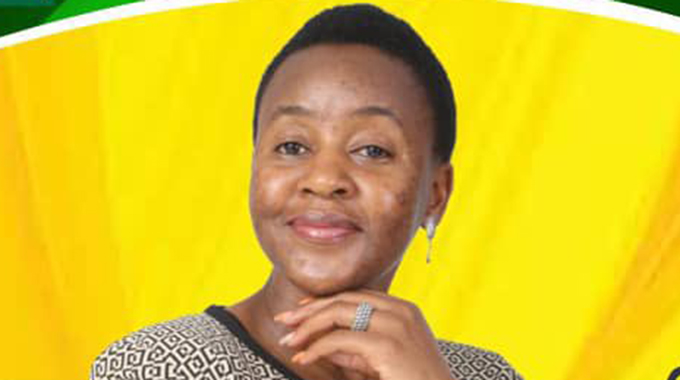
It is not unusual for emergency measures put in place to deal with a serious, if temporary, situation to prove so beneficial that they are continued in more normal times.
In Zimbabwe, the school feeding programme, which gave every child a decent hot meal at school, was introduced last year as one of the measures when severe drought hit the country and the Government needed to make sure everyone had enough food.
Many teachers were keen on the idea regardless of drought or flood, since they had discovered that a hungry child was not always able or willing to concentrate, and that most children were far easier to teach and would retain more of what they were taught after a decent meal.
Although good harvests are now coming in and a large majority of families have enough food without special Government assistance, the Ministry of Primary and Secondary Education, according to Deputy Minister Angeline Gata, wants to maintain the scheme, seeing the educational benefits that arose.
While it is a good idea for all families to give their children a decent breakfast, and for that matter make sure that the working adults have the same, this is not as common as it should be, even when there is enough food in the home.
Someone has to get up really early to cook a hot breakfast, and even those eating this need to wake up at a reasonable hour so they have time in the morning rush to sit down and have a proper meal.
The result is that many children rush off to school without having had much of a breakfast, or even any breakfast, and a lot of adults are in the same boat.
To a degree, urban children have for many years partly compensated for this by taking a packet of sandwiches, and the fact that many bakeries market a small and slightly sweet bun as a “school bun” simply recognises the popularity of this product.
Few rural families, however, have regular supplies of bread, so this second-best option is not really available for many rural children: they need a decent breakfast at home or a proper meal at school, and perhaps both.
While the Government contribution to the school feeding programme was largely limited to the mealie meal required, this basic input was added to by the schools themselves growing vegetables, or parents sending vegetables to the school.
In fact, there had to be a lot of school or community involvement in the scheme to make it work properly, including having often volunteer cooks.
But having had the scheme worked out at each school, it would be a pity to simply scrap it or wind it down so far that it no longer really mattered.
Deputy Minister Gata said the scheme would have to continue for the vulnerable learners, although the Ministry was keen on it remaining universal.
But to start separating out the vulnerable from the non-vulnerable seems difficult, and in any case, there are good reasons why children should not be separated publicly into socio-economic groups, although there might be a need to have a confidential record somewhere.
The third of schoolchildren whose fees come through the BEAM scheme, for example, are not treated differently, and it would be impossible without looking at the confidential records in the school office to tell whose fees were coming from parents and whose fees were coming from BEAM.
There is no mark or any public difference.
The feeding scheme for the last three terms was the same.
All children in the school had the school meal, although parents with more means were encouraged to send in more of the extras.
But the point was that all children were treated the same, all lined up for the same meal, and all sat down to eat it together.
We do not need to have the poor children treated differently from those of better-off families.
Countries that have children at school for more than just a morning session provide school meals, and while children from those families who cannot afford the meals get free meals, the meals are identical for all, and no one except the school and the affected families has any idea if a particular child is on free meals.
We would like to see the Ministry having some quantitative research done on the effects of the school meal scheme.
Schools could send in the quantitative results, how much better the children were doing in exams and other work.
We all know they did better, although no one has actually measured just how much better.
Deputy Minister Gata mentioned that the Ministry of Lands, Agriculture, Fisheries, Water, and Rural Development and the Ministry of Public Service, Labour, and Social Welfare would have to be consulted over the school meal programme, but we would hope that they will see the need and will be willing to continue with their inputs to make it work, even if schools and communities need to be active.