admin
admin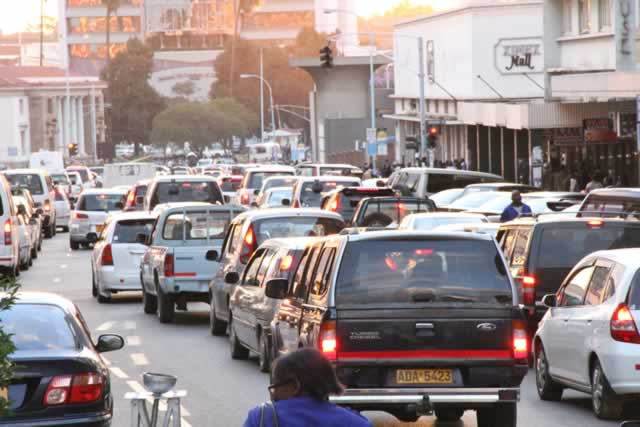
THE smart traffic management system planned for Harare and Bulawayo Metropolitan, in a public-private partnership, is a good idea and something like this is needed to prevent the total gridlock that is looming, but it can only be part of the solutions needed.
Even the management system, built around a network of cameras recording and processing information on registration plates and vehicle movements, will require a fairly decent upgrade of part of the traffic system already in place.
For a start, traffic lights will need to be working and intersections clearly marked so that all drivers know where the stop signs and give-way signs are located.
It will be difficult, not to say unfair, to hammer errant drivers with fines when so few intersections are properly marked and controlled. The same reasoning applies to the lane and other road markings.
Practically there will need to be a way of collecting fines easily and simply. It is not much use spending ZIG1 000 to collect ZiG900 in fines. There are ways round this problem, including raising the size of fines, but these would have to be in place before the systems go fully active.
The second problem is the proposed financing arrangement. The investor will be splitting the fine revenue with the authorities. Using fines as a primary source of revenue, rather than as a penalty for breaching the laws and regulations, can create a great deal of frustration and opposition.
We saw that in the last days of the previous dispensation when the police came in for a lot of criticism.
One important point in a fines-funded operation is that drivers will feel they are being used to raise money and that little regard is taken over the seriousness of a particular offence.
There is a difference between halting 1cm over a stop line and just shooting the intersection without bothering to stop, yet both carry the same penalty. It would seem, if this was the funding method employed, that there should be graduated penalties that do not treat trivial and serious offences equally.
The second problem with using fines funding is that there will be growing pressure on drivers to conform to the rules of the road. The system is designed to catch offences so there will be no exceptions, and the automated system means that there will be no corruption or bribes.
But if every driver realised that every offence would be logged, and so decided to drive legally then there would be zero fine revenue.
Other cities use different systems to raise revenue that in the end pays for improvements in traffic management and which can contribute to traffic management.
One of the most obvious is a congestion charge, both a highway congestion charge and a city centre congestion charge. These are designed to spread the load, encouraging drivers to bring their journeys forward or send them back to off-peak times, and then hitting the better off, who want to use a road or drive somewhere at peak hours to pay a far higher percentage of the costs.
You can get, as in Singapore for example, automatic collection of these charges with a simple small new attachment to the vehicles, and a law requiring drivers to keep a positive balance of cash in their travel account, so that the appropriate congestion fees are automatically deducted and transferred as you drive under the arch.
This sort of technology is also needed for longer distance travelling so that toll gate charges are raised without vehicles having to stop and queue, and so it would be handy if standard technologies could be set for both urban and rural driving.
Advanced traffic management usually also requires the addition of a decent and functional public transport system, something that the better off as well as the worse off are prepared to use.
This gives everyone an option, of using public or private transport and being able to make an informed choice when doing so.
There is a tendency for some local authorities in Zimbabwe, and Harare City Council has been perhaps the worst offender, to regard public transport as a nuisance and the main cause of congestion in the city centre.
At one stage they even wanted to ban 70-seater buses and 18-seater kombis from the city centre, perhaps to force the passengers in a bus to buy around 50 plus cars instead, and the passengers in a kombi to buy more than a dozen cars.
The congestions would be total gridlock if that happened.
Efforts have been made to upgrade public transport, and the most successful have centred on retaining private ownership of most buses and kombis, but working out ways that all fall within a proper planned transport system.
This would enforce proper registration and licencing of public transport vehicles and drivers, without putting the cooperative smaller businesses out of business.
So far the proposed deal has only reached the stage where Cabinet has approved of the idea and the investor in principle.
We think that as more detail becomes available and more steps are taken, there should be a quality public debate on just how the system will be implemented and how it will work.
The fact that it must be implemented has to be accepted by all drivers.
The Government approved the concept because it needs to save lives and make the whole transport system work better, and if that also includes applying pressure on motorists breaking the laws, this is an extremely useful secondary function.
But given that set of parameters, the details of the system, including the main sources of funding, can be debated and worked out so that it does the job it needs to do without creating any additional unfairness or difficulties.


 Online Reporter