admin
admin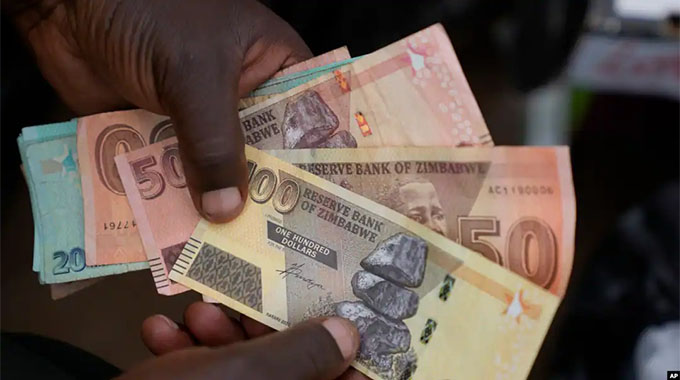
Yesterday the remorseless rise in value of the local currency continued with the exchange rate breaking through the important $5 000 barrier to leave the weight average value of a US dollar at $4 998,8352.
Considering that two weeks ago the interbank rate had risen to $6 949,1382, the progress in the past fortnight has been spectacular.
When we consider that two weeks ago people were betting when the exchange rate would hit $50 000, and this was the figure being bandied around by some opposition supporters, the turnaround has been even more dramatic. Yesterday the price of a US dollar was on average just 10 percent of what some were predicting quite recently.
What has been driving the whole process is that neither banks nor businesses have large amounts of uncommitted local currency available to buy US dollars.
In other words markets are balancing, as they are supposed to. Scarcer products can rise in price, and the scarcer local currency is thus rising in value.
The Ministry of Finance and Economic Development, which makes the foreign currency available, is now regularly offering US$20 million at each bankers’ auction. Most of that money is in fact left overs.
The Ministry put up US$30 million at the Tuesday auction two weeks ago, selling just over a third, and has been bringing forward the uncommitted portion for the next four auctions, and topping it up to match the small sales at the previous auction.
This means the rise in the value of the Zimbabwe dollar is real and market orientated, not some decree by a politician of the smart economists at the Finance Ministry or the Reserve Bank.
The 19 banks set the rate entirely by themselves, based on how they bid and how they read the market.
At the auctions the weighted average is the bid price from each bank, coupled with the quantity of foreign currency each bids for. The main control is that what a bank bids is what it pays, and most bankers would normally be trying to choose the lowest price that will guarantee them an allotment. That is how business works.
If they bid too high they will be left holding stock that their customers would prefer to buy from someone else, and if they go really too low they either miss out because other banks have bought all the dollars, or because as has now happened three times, the Reserve Bank reckons they are seeking too big a bargain compared to what other banks are prepared to pay.
The interbank market rate is also generated purely by banks and is again a weighted average. Each bank each day sets the prices it will buy and sell foreign currency.
Those rates are sent along with the amount transacted to the Reserve Bank where the weighted average of the 19 banks rates. At present there are sharp differences between what each bank has at its rates.
Banks are the only business which does not use the interbank rate. Again this rate does not involve politicians or the authorities.
Banks seem to be still trying to figure out the maths though. The gap between the highest allotted bid and the lowest allotted bid yesterday was nine percent, not as bad as a fortnight ago but marginally higher than last week.
Presumably they will be getting better and we should gradually see more convergence between the rates each bank offers.
At present most businesses in Zimbabwe are generating a large percentage of their own foreign currency, even if they have zero exports, through the direct foreign currency purchases of their customers. And the Government and Reserve Bank now let them keep all of the foreign currency from domestic purchases.
The honest majority are therefore paying the interbank rate plus 10 percent on the day of the domestic sale. Admittedly that has varied dramatically over the past couple of months, but we are now down to the rates seen at the start of the second week of June so a degree of normality and stability is coming in.
Almost all the buying and selling of foreign currency is now done by the banks. The shortages of local currency for the auctions are not so much a banking factor as one of the general economy.
Banks are just middlemen, and while they buy their currency on the auctions they have a pile of requests from customers to whom they can sell, get the local currency and buy some more foreign currency.
So customers are also short. This is all part of the major reforms made as the currency markets went bananas.
The Finance Ministry took over the buying of the 25 percent of export earnings from exporters, and that switched off one source of local currency creation since the ministry cannot create or destroy money.
When it buys or sells the foreign currency it simply is moving money from one account to another in the Consolidated Revenue Fund, where it has to keep all our tax money.
The other creation flow seems to have come from the private banking sector and its loans.
With interest rates at 150 percent there are very few new loans, and as a consequence very little creation of new local currency. The double switch off of taps is now affecting the fundamentals of currency trading.
This is seen in the black market as well. The bid rate, what the dealers pay for US dollars, is falling fast, if the dealers have any local currency to pay even their lower prices.
The ask rate, what dealers sell foreign currency for, is stickier, largely because dealers do not want to, or cannot afford to, sell their currency for less than what they paid for it.
Some banks have overpriced foreign currency they bid high for on auctions, but are grudgingly coming to the conclusion that they will have to take some loss, although unlike a pavement dealer they can afford what they will be hit by.
At some stage the local currency will bottom out in value, possibly fairly soon, depending on what its real value is compared to the US dollar.
We will know this when it happens as the markets which generate the exchange rates will also start evening out. When you use markets you need to accept markets and they generally work best to set values.



 Online Reporter