admin
admin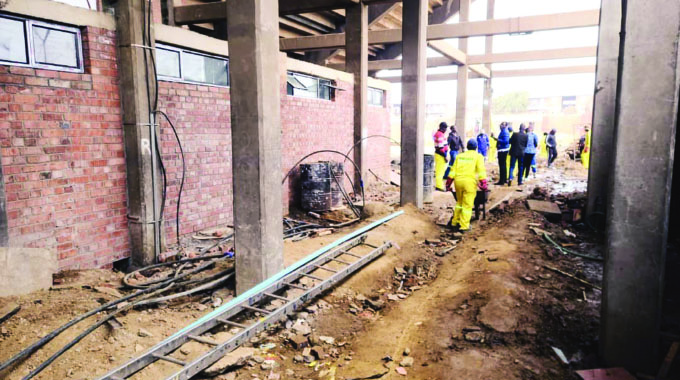
The debate surrounding the stadia crisis gripping the country reached a crescendo this week, with President Mnangagwa stating in no uncertain terms Government’s commitment to providing sound sports infrastructure in the country.
Sports infrastructure and several other amenities that are currently under private ownership and in the hands of Local Councils, have been run down over the years due to lack of maintenance.
The situation came to a head recently when the Premier Soccer League was forced to suspend matches due to a shortage of suitable stadiums, particularly in Harare where the six teams based in the capital have nowhere to play their home games.
The situation has become so dire, with giants Dynamos being forced to relocate to Bulawayo while crosstown rivals CAPS United have also been travelling to play home games at Bata in Gweru.
The smaller teams like Herentals, Yadah, Black Rhinos and Cranborne Bullets have also been caught up in this unfortunate situation.
The same has also affected other clubs like Manica Diamonds who cannot play at home in Mutare because of the deplorable state of Sakubva Stadium, Shamva-based Simba Bhora who have to travel to Mhondoro almost every two weeks for home games and fellow new boys GreenFuel whose dream of bringing topflight football to Chisumbanje is still to be attained.
These clubs have experienced difficulties with their budgets because of the stadium challenges.
They have had to review continuously to factor in the unforeseen cost of travelling. It has been hectic and quite exhausting physically, having to criss-cross the country to fulfil fixtures and most disappointingly being deprived of home advantage.
Quite refreshingly, the President, in his address to Zanu PF supporters in Harare this week, indicated the challenges the teams were facing due to the unavailability of approved stadiums should be attended to with urgency.
He said teams should not be made to suffer because there are no stadiums. His statement was largely welcomed by the football fraternity, who felt that something needed to be done about their plight.
Harare for instance, has the National Sports Stadium, Rufaro and Gwanzura, which used to host international football matches.
But these stadiums have been condemned by FIFA and CAF as unfit to host international games.
A way forward is needed and this would need all the stakeholders to put their heads together.
Government has done well to partner Sakunda Holdings in renovating the National Sports Stadium.
The giant facility is the only stadium that has been hosting games in Harare until recently when the authorities scaled down operations for refurbishments. About eight teams were sharing the giant stadium in the first half of the season, leading to the damage to its playing surface as a result of overuse.
The renovation of the National Sports Stadium ranks among the top sports infrastructure development projects being undertaken by Government as Zimbabwe prepare to return to international football following the recent lifting of the FIFA suspension.
Zimbabwe are set to participate in the FIFA World Cup qualifiers in November but risk playing their home games in a neighbouring country as the National Sports Stadium is currently banned by the international football governing body.
The facility was flagged down by FIFA and CAF in November 2019 after it failed a series of inspections.
It last hosted an international match in November 2021 when Zimbabwe played their last game of the 2022 World Cup qualifying campaign against Ethiopia.
But domestic Premiership matches have continued to be played, even during the time Zimbabwe was under a 16-month FIFA suspension.
Government has been busy with the National Sports Stadium in the last few months, and recently they entered into a partnership with Sakunda Holdings to expedite the refurbishment.
Already, preliminary feasibility studies for the upgrading of the National Sports Stadium and the adjacent hockey court are underway.
Through the partnership with Sakunda Holdings, Government has managed to send a delegation — including engineers, technocrats and officials from the Ministry of Youth, Sport, Arts and Recreation — to Europe for a benchmarking exercise.
The delegation toured the Real Betis High Performance centre and the Olympic Stadium in Sevilla, Spain and the Camp Nou in Barcelona, among high profile stadiums for research.
The hope is that the project will be a success, after also roping in a South African company that was involved in the construction of the 2010 World Cup games.
Hopefully Zimbabwe will be able to use the stadium for the upcoming 2026 World Cup qualifier games.
This is how projects of this nature should be done — involve as many stakeholders as possible to ensure quality standards are maintained, that proper checks and balances are conducted with regards to certification and that the health, safety and security concerns that may be raised by other stakeholders are addressed.
If these things are not factored, chances of encountering disaster could be high.
This is the challenge that Harare City Council faced when they decided to go alone on Rufaro recently when they started the renovations.
Harare City Council blundered in that they could not even involve the Harare Metropolitan Province, under whose jurisdiction they fall.
The reason they wanted to privatise the project is best known to themselves.
The Local authority could also better explain why it had wanted to rush the handing over of the stadium to the football authorities this week when it was clear the work at the facility was incomplete.
Rufaro at present is below 50 percent as the changing rooms, the drainage, the terraces and most of the structures inside the stadium are yet to meet the required standards. So why lower the standards by commissioning something that is half-cooked?
Even the ZIFA grounds inspection committee were surprised the ground was being handed over yet it has neither been inspected nor certified fit.
That’s the challenge with not involving all the stakeholders.
Consequently, the Provincial government stepped in and stopped the proposed commissioning.
The Harare City Council should work with all the stakeholders so that Rufaro and any other stadium that they would consider for renovation, will get the best attention.
Government has an intention to make sure that all local stadiums, including Rufaro, Barbourfields and Gwanzura, are built to the highest standards.
As it stands, there is a lot of work that needs to be done in order for the grounds to meet the CAF and FIFA approved standards and it needs an all-stakeholder approach and involving Government as the major stakeholder.


 Online Reporter