

 admin
admin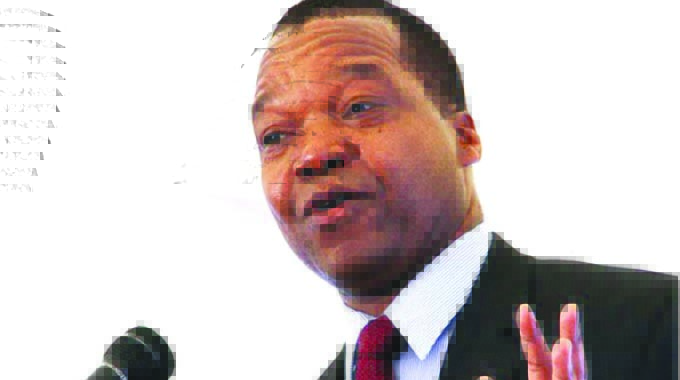
The major effort in the middle of this year to bring inflation back under control, generate a market-driven official exchange rate, largely break the black market for currency, and ensure that the Government contracts cannot be misused will be continuing next year.
This makes sense. If something works, and the measures have worked, then we need to reinforce and support our successes, building on them and converting them from trial programmes to the standard way we deal with these sort of things now and in the future.
The major success is the lowest monthly inflation we have seen for some years.
After the appalling spike in inflation seen in the middle few months of the year, largely driven by speculative pressures within the foreign currency black market, steps were taken to break both the black market and inflation.
What really worked was almost pure market economics, although pressure on regulatory enforcement ensured the banks moved into being supporters of the anti-inflation drive.
The first dramatic move was, after borrowing was found to be both driving the speculative bubble and creating money supply, to cramp borrowing and make speculators who borrowed the losers.
This saw the bank rate, the minimum interest rate, rise to 200 percent overnight. Technically it was still below the annual inflation rate, but coupled with other measures it quickly meant that borrowing to arbitrage and speculate in the black market or the stock exchange was simply a way to lose money.
The borrower’s nominal profits were below what was needed to pay the interest, so the borrower lost out. With that out of the way other measures could be brought in.
There was still a lot of liquidity in the market, largely created within the banking system, and this had been helping to fuel the speculation-driven black market for currency, both by reducing the value of local currency and so making foreign currency valuable as a store of value, and then by providing a way people could climb into foreign currency markets.
The Reserve Bank started selling gold coins, and these quickly mopped up a lot of local currency liquidity and gave the majority who would rather be legal than commit crime a legal way to lock in value.
It was a trifle old fashioned, and the International Monetary Fund has sniffed a bit, but it worked and since Zimbabwe is a gold producer and less than a fortnight’s supply of gold has been turned into coins, the system is quite manageable.
Other serious gold producers also mint gold coins. While the Reserve Bank was busy on the monetary policy, the Government stepped in and reduced what was becoming a major source of local currency liquidity, unearned profits in local currency.
It became noticeable that some suppliers, around 30 percent with the other 70 percent found to be honest, were grossly inflating their prices, winning huge profits from the payments and then using these to play the black market.
The Ministry of Finance and Economic Development insisted on value for money, and did this simply by checking accepted prices.
A tender should produce a lower price than a shop window label, not one three times as much. The worst of the cheats have been barred from all future contracts after some close co-operation between the Ministry and Reserve Bank found this unpleasant group were not just cheating the Government, but also fuelling the black market.
At the same time, for all practical purposes around eight months ago, the Reserve Bank with Government backing allowed a proper interbank market to start operating, where willing buyers and willing sellers would set the exchange rate.
This was allowed to grow, carefully a step at a time, but quickly became what we all hoped, at least the setter of a realistic market rate even if there was still a journey until it became the main buyer and seller of currency.
Quite quickly the raft of economic measures, all market related mind you even if backed by tighter Government spending controls and rules on businesses banking their money, tamed the black market and reduced the premium to something a little over 10 percent.
Then the authorities, in a smart move, shoved in the knife and turned it. Retailers were allowed to use a 10 percent premium on the interbank rate when accepting payment in foreign currency.
The immediate result was that the flows of free foreign currency, basically what Zimbabweans were getting from relatives in the diaspora, stopped flowing into the black market and instead started being direct payments to suppliers of goods and services.
The black market died back further and went from a major driver of our economy and controlled by speculators to being just a small convenience store, like it is in most countries, where people wanting to change small amounts of money when there is no bank around or when banks are closed can do this with little fuss.
But it is now driven by the official rate, with the small convenience premium, rather than being the driver.
Other Government measures, not really directly related to inflation and exchange rates, also reinforced the new stability. Auction sales have been declining.
Some of this is because retailers are seeing more diaspora cash in direct sales and so can do their own importing, but quite a lot is because most of the major allotments on the auctions were for agricultural raw materials needed by oil expressers, millers and dairy product producers.
The Government was pushing local production, so now these importers are now buying most of their requirements, directly or through the GMB and Cottco, from our farmers so their demand for auction money decreases sharply, and the Zimbabwean farmers get the money rather than the foreign farmers, so everyone is happy.
Zimbabwean consumers get the resulting stable prices. Next year we start producing our own steel again and another block of auction money goes local.
These are all reasons why Reserve Bank Governor John Mangudya can be reasonably confident that he can, with continued Government backing and present pro-production policies, of keeping monthly inflation within the 1 percent to 3 percent bracket.
He almost reached this in September and October with 3,5 percent and 3,2 percent, and then made it in November and December with 1,8 percent and 2,4 percent.
This sees, when that dreadful inflation spike of the middle of this year is out of the calculations, annual inflation of significantly below 40 percent and falling by the fourth quarter of next year.
Dr Mangudya is now moving out of the emergency mode into the future, seeking to build his willing-buyer willing-seller system, the market driven one, ever closer to what it is in most countries, the way currency dealing is routinely done. This is a major development, normalising the Zimbabwean economy, but after the way the last speculative spike was killed, and the black market neutralised, it is achievable.



 Online Reporter