Online Reporter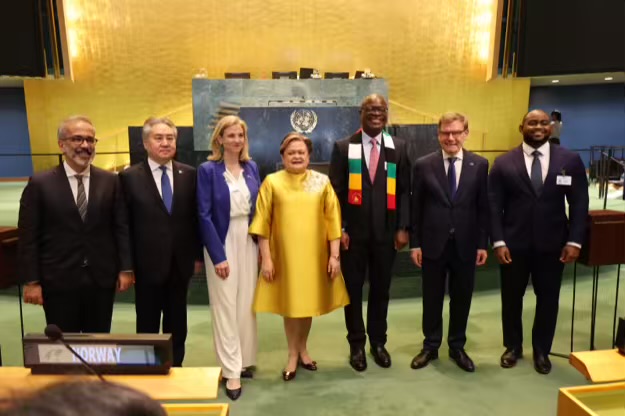
ZIMBABWE has won a non-permanent United Nations Security Council seat for next year and 2028, with 182 voting nations out of 190 endorsing us to fill the one seat assigned to Africa in yesterday’s election at the UN headquarters in New York.
The high level of endorsement shows the immense success of President Mnangagwa’s diplomatic initiative since the start of the Second Republic.
That initiative sought to normalise relations with all countries, summed up as being a friend to all and an enemy of none.
That is worth celebrating.
We have moved from being the object of sanctions by the West and with varying support from others, to being a trusted UN member in good standing and with largely normal diplomatic relations.
Africa is almost always very careful in presenting its candidates for election to the Security Council, debating internally which countries will be put forward to fill the three Security Council seats assigned to the continent.
Africa suffered more than most from the tactics of divide and rule in the colonial era, so prefers to present a united front in international fora.
But the election of AU-backed nominees is never certain even if no African countries break ranks in the secret ballot. A reasonable chunk of the rest of the world can easily block an African nominee, forcing a second round and the admission of other candidates.
More importantly Africa in general, and Zimbabwe in particular, want the support of the rest of the world when it comes to voting on the Africa-assigned seats so the African trio in the Security Council can be as effective as possible. Just scraping the two-thirds majority in the General Assembly vote would weaken the voice of the elected member.
So while Zimbabwe’s nomination for the sole Security Council seat assigned to Africa this year was uncontested, we still had to win at least two thirds of the votes of the entire UN General Assembly to gain the seat, and that was never a certainty.
That was why Zimbabwe used diplomatic channels to make it as clear as possible when seeking support for what it stood for and the general outline of what it was likely to support when the Security Council debates and votes on matters before it.
We were not making deals. Our stand has been consistent. We are perhaps more strongly in favour of the multilateral order than many countries; we are against the use of force or sanctions on both moral and practical grounds; we prefer diplomatic and negotiated settlement of world crises and other issues rather than seeing the big stick wielded.
For a start these usually work; secondly they tend to fit into a decent moral order; and thirdly they do not leave the smaller countries behind or having to just spectate without being able to pull their weight.
Next year we join Liberia and the Democratic Republic of Congo as what is known as the A3 on the 15-member council, since the Africans try and work together.
Between them they can supply a third of the nine votes needed to pass a Security Council resolution, so long as one of the five permanent members does not cast a veto.
So while there is no African permanent member veto on the Security Council, by working together Africa can be a critical component in any majority.
Zimbabwe is likely to be an enthusiastic supporter of peaceful action and retaining multilateralism, and will be seeking and offering support to others who think likewise.
Smaller countries tend to receive the bombs and suffer the casualties when peaceful means and diplomacy fail, which is a practical reason to back the moral imperative and to work together.
As a matter of practical diplomacy and bringing in the cultural ties, the Caribbean country on the council usually works quite closely with the three Africans, strengthening the diplomatic push from the smaller states in the South.
We are confident that Zimbabwe will be able to pull its weight when it takes up the non-permanent seat next year.
President Mnangagwa will be making sure that a heavyweight diplomat is assigned to head our UN mission for the two years, multiplying our effectiveness, especially as at least once, and perhaps twice, we will have to preside over the Security Council in the monthly rotation of that post.
We have certainly been given the confidence of almost all the General Assembly that we can do the job, and that vote is in many ways the culmination of a diplomatic drive we launched at the advent of the Second Republic.