daniel chigunwe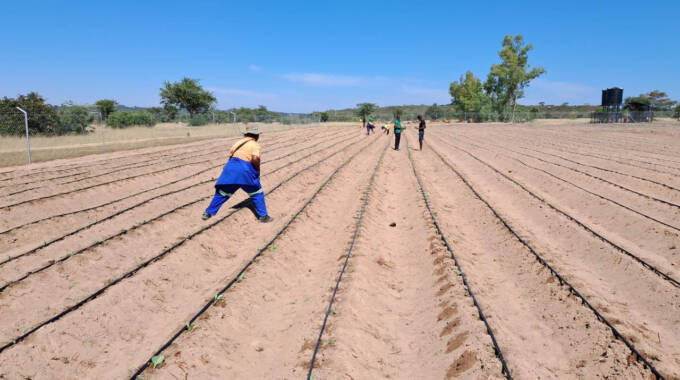
THE Presidential borehole drilling programme goes far beyond just drilling a borehole in every village, or even the major add-on of the solar-powered pumping and the drip-irrigation equipment.
This physical infrastructure is just the starting point, and is the capital injection for the new village and school business units, where the revolution actually takes place.
The business units, which are registered companies with members of the village community as the shareholders, are the practical means whereby the community takes ownership and control of the borehole, solar panels, pump, tanks and irrigation equipment.
This places the responsibility for the whole system on the village, or the school where the borehole is drilled. The community is responsible for looking after the equipment, guarding it against theft and vandalism, and crucially for its maintenance and eventual replacement, and that will be a continuous recurrent charge against the profits generated by the scheme.
This insistence that the community, the village as a whole, takes ownership and responsibility is a new feature of Government development, ensuring that the scheme goes far beyond a gift from the Government or a well-intentioned development partner or voluntary organisation, with the whole community then sitting around wringing their hands when something goes wrong and no one really responsible for buying a spare part or cleaning out a clogged pipe.
The communities are not being treated as children getting a really nice present from Santa Claus, and who will cry when it breaks, but rather as a group of rational and responsible adults who need to organise and manage the infrastructure of their village for the benefit of all, with everyone contributing as well as benefiting.
Training schemes are being offered so that the required skills for maintaining all the equipment are physically located in the village or nearby, with the Government hoping that those trained will be able to set up a business that will look at the private boreholes and pumps in their area, and that they can be on call as it were for that essential service when a farmer needs something fixed, promptly.
This central plank of modern rural development, that the Government does the enabling and provides the initial capital in many cases, but that the communities and others do the work and maintain and grow the development, is in some ways a new idea, although the private sector farming did accept it some time ago.
The need for the community-centred responsibility becomes obvious when we look at the resettlement programme.
A very large quantity of improvements came with the land, and while the land is not being bought, since it was never really sold in the first place, the improvements are being paid for in a substantial compensation deal now being funded.
In some areas and on some sub-divided farms the improvements are simply the original core of the present development, and have been added to and more work has been done in the almost a quarter century since the resettlement.
In other areas, the improvements were run down and often are just sitting there in near ruin.
A lot depended on the attitude of those who were resettled, whether they were willing to build on what they had inherited or whether they saw the maintenance as someone else’s problem and responsibility.
The new programme of the village business units makes it clear that the maintenance, as a starting point, is not someone else’s responsibility or someone else’s problem. It is the responsibility of the community.
We have been meeting some of the people now earning a living from these village business units, using the highly efficient irrigation to grow decent vegetables most of the time with good sales to neighbouring schools and businesses, as well as better family diets.
This is besides the sheer convenience of having a decent and safe water supply for their homes on tap in the village.
It is fairly obvious that the village business units once set up and working are making a respectable profit, and the business model that was created is working.
The communities just need to realise that profits are precisely that, what is left over once the costs are taken into account and among the costs will be maintenance and upgrades, with upgrades being important since the starting point is just that, the start, not the end.
We would assume the village business units will evolve in many different ways to suit each community, and that many will grow as more infrastructure is added in years ahead.
This is to be expected and the independence of the units allows this organic growth. Best practices are likely to circulate and be adopted by other units.
Rural development was bundled with the agriculture and water ministry for the obvious reason that development will be built on farming and water, and in many ways the borehole programme is a microcosm of that straightforward connection.
But the middle name of the units is business, and that has to be dominant in the development that they bring.



 Online Reporter