daniel chigunwe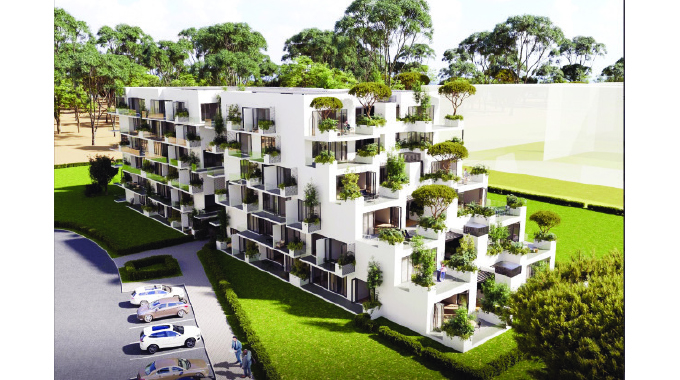
Zimbabwe is busy chewing up its farmland, needed for food and environmental support, at an alarming rate with the greater Harare area, now spreading well beyond the Harare Metropolitan boundary, needing a circle almost 50km in diameter to contain the sprawl and demonstrating just how bad things can get.
Part of the problem has been the greed of some private developers, part of it a cultural concept system built on colonial settlers believing that the bigger the plot the better, and part the near abdication of local authorities in town planning and making sure planning and service delivery can progress together, at costs affordable to residents.
The central Government is well aware of the problems, the lack of required planning by local authorities, and the deficiency of infrastructure development.
It is also aware of the outline of the required solutions: far denser housing development in urban areas, the need for local authorities to service that development and the need for the private sector to operate within the grand planning designs, contributing to this planning as appropriate, and play its part in filling the gaps.
Early this week President Mnangagwa took the opportunity to bring a lot of the required strands together when he accepted an invitation to be guest of honour at the ground-breaking ceremony for new luxury housing development in Borrowdale West, a development that met much of the Government stress for how our cities should develop.
For a start developer WestProp is following the high level planning principle of high-density development, and as other enlightened developers in several parts of northern and eastern Harare have shown, there is no laid down tie between large plots and upper-income housing.
It is quite possible to have such housing, usually in cluster housing designed by good architects, that has high densities, large housing units, luxury finishes, plenty of parking, attractive grounds and high levels of privacy.
The President, while happy that the private developers were working hard to meet the needs of the better off, was also keen to see them involved in other income groups, and committed to social housing goals as well.
Some countries actually give developers percentages, which may be necessary one day in Zimbabwe if good common sense does not prevail.
One problem in the densification debate is a concept problem. The settler colonials, with their tiny population, liked to spread out and so designed their cities to have a few hundred houses extending over several square kilometres in a typical “low density” suburb.
“Native locations” were designed, still largely with detached housing, using greater densities, and far lower quality.
At independence, with the need to find non-racial terminology to reflect the new reality, the label “high density suburbs” was chosen, perhaps unfortunately since it cemented in the concept that the larger the plots the better off the residents.
But even in 1980 easily the highest density suburbs in Harare were the Avenues and Avondale, with the multiplicity of expensive flats, many being two storied terraced blocks that combined high density, large unit sizes and high values.
A lot of the housing development, the more formal development in the first three decades and the land-baron development of the fourth decade, however pressed ahead with the spreading development with city councils having seemingly abandoned their planning roles after 2 000.
The Government itself made a most useful and determined effort to create reasonable middle-income high density housing with its clusters of blocks of flats.
These generally combined good design and the insistence on low-maintenance finishes, with external walls being face brick that would still look good in a 100 years even if no one painted anything, and reasonable layouts.
The one modest question mark, a four-storey block without elevators, was not a problem at the time of building and when the average age of those living in the blocks rises to the sort of level that does need these, they can be added.
Public housing that starts off with a good design can always be upgraded, as can be seen in Germany where a lot of work was done on the blocks erected on the rubble of the Second World War once prosperity returned to the country.
Higher densities also make the services viable and affordable, assuming the local authorities can plan and cope.
The costs of 1km of road, or sewer, or water mains, electric cable or fibre-optic cable is constant, regardless of whether that kilometre services 10 houses or 200 houses and flats. The denser scheme slashes the cost for each family though, and so allows better services, easier to maintain and costing less.
Zimbabwe’s public transport is rather basic, and it will take some years of continuous investment to build it up to the sort of levels that a major European city, for example, would consider adequate. But again it needs reasonable densities for that investment to be viable and to give most people access to decent public transport.
In many ways, the sort of cities that President Mnangagwa, the rest of the Government, and most people who live in these cities want and need, requires the sort of intimate co-operation he wants to see between central Government, local government and an enlightened private sector, each doing what they do best but all working off the same policy page.
Harare’s master plan is way out of date, even though all the major water, road and sewerage works required in the 1990s have yet to be completed, and most areas have either a totally misleading local plan, meaning everyone is just doing their own thing without any effective plan, or have no plan at all with land barons destroying the environment.
In any case planning has progressed a lot in the last 30 plus years, and new principles need to be adopted. One obvious one is to make sure that there is provision for the extra school sites and small neighbourhood parks that a far denser urban landscape requires, otherwise we just have a sea of concrete.
There are plenty of Zimbabwean professionals who have some very good ideas, and many property owners and prospective property owners are perfectly capable of looking at the cost benefits of properly planned development over the free-for-all of bad councils and greedy developers, and seeing that they can pay less to get more.
Again we just need to put all this together, preferably long before the outer suburbs of Harare urban area are closer to Chegutu and Marondera than to the city centre.


 Online Reporter