admin
admin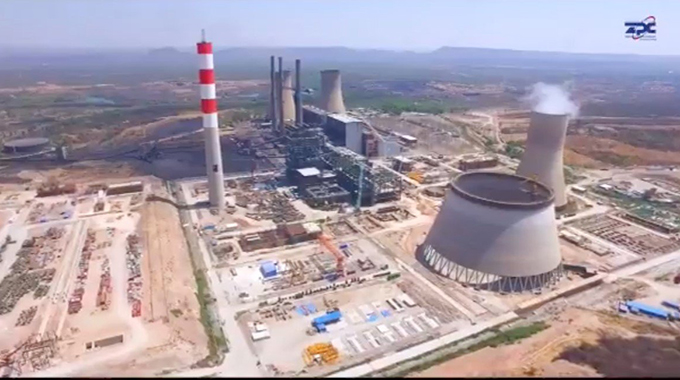
The corner has now been turned in Zimbabwe’s tight electricity supply with Kariba South able to increase output by 50MW, or 17 percent, as the Zambezi flows increase and the final settings are made to the 300MW Unit 7 of Hwange Power Station.
The Zambezi River Authority, which had been keeping Zesa Holdings and Zesco of Zambia on generation of 300MW each at their Kariba stations, basically just using the daily inflows of the Zambezi into the lake after the stored flood waters had been used, has pushed both up to 350MW, while still being able to start building up the stored volume.
The Zambezi flows are rising a little, although the main jump in flow rates is not expected until the end of this month, when the Zambezi River Authority will make its next assessment and allow its next increase.
Very little water enters the Zambezi upstream of Kariba from Matabeleland North or south central Zambia. The bulk of the water in the upper and middle Zambezi comes down from Angola, where major tributaries drain almost half the country, and north west Zambia.
A lot of this runoff is now building up in the Barotse floodplains and this is the first batch of what is expected to enter the lake in a few weeks.
To show how small the inflows from Matabeleland North are, even when rivers are flowing well, we can look at the Gwayi-Shangani Dam, whose impounded lake will be the third largest interior lake in Zimbabwe and hold enough water to supply all Bulawayo’s needs plus a swathe of irrigation in the province.
But its entire capacity, if emptied into Lake Kariba, would raise the level just 11cm. It is that small when compared to the world’s largest hydro-electric reservoir.
This is one reason no one was fussed over the Gwayi River, the largest Zambezi tributary in Matabeleland North, being dammed. All that water so valuable in western Zimbabwe hardly makes a splash in the vast Lake Kariba.
The Zambezi is a large perennial river, so the two power stations will never run dry and have to be switched off. But the flow varies considerably. The lowest flow, in late December and early January, seems to be enough to allow the two stations to generate around 300MW each in an average year, perhaps just a little less.
The main floodwaters, and around three quarters of Zambezi water comes from Angola, arrive between March and June.
The Zambezi River Authority policy is to impound this water in the lake so as to give the two power stations a steady continuous supply 365 days a year.
Generally, the authority reckons this is enough to generate an average of 600MW at each station.
However, since hydro is very flexible, units being able to be supplying the grid within a few minutes of the valves to a turbine being opened, both Zesa and Zesco have extended their power stations to a little over 1 000MW each. This allows them to have the whole lot operating during peak periods, but then cutting back in off peak and just keeping a couple of turbines spinning in the middle of the night so as to keep within the 600MW average.
Zesa have also been very active recently in their special metering for those with reasonable solar installations, who can now move to net metering. Thus these consumers actually sell surplus solar to Zesa when the sun is shining properly, and buy from Zesa as the solar output fades.
So far 117 consumers with solar have been connected to the grid through these special meters, and when we have really strong sunlight they add 4,1 MW.
More applications have been accepted, and the meters are being fitted, and another batch of applications are being checked out.
This is a fairly modern concept around the world and Zesa have embraced the idea and the technology. As time goes on and more consumers look at solar, Zesa and the rest of us will win.
This is besides the independent power producers, those building special new solar power stations, where the Government has made the necessary administrative and financial changes to make this viable for investors.
The good rains also make imports easier. While the Zambezi flows are still building up, the Kafue that drains central Zambia is now flowing well, allowing Zesco to operate its two sets of stations on that river at close to full output, and more water is now flowing into the lower Zambezi, so Mozambique’s Lake Cahora Bassa is also rising.
While Kariba South output rises, the new Unit 7 at Hwange Thermal is now in the final stage of commissioning. Everything is built; everything is fitted; everything is working.
The critical work in progress is the synchronisation, making sure that everything works together in the precise way needed to ensure the final output is exactly what is required to go into the grid.
This is a matter of settings and adjustments and it has to be done very carefully and done exactly right.
The sort of problem that can arise was seen last year in South Africa when there was an error at a new Eskom power station.
Initial guestimates suggested it would take 18 months and R2 billion to repair the damage; even if it is not that bad, it was still a warning of what can happen if you fall short of perfection, and if Zesa and its Chinese contractor need a couple of weeks to get all the settings exactly right, rather than nearly right, we should simply be patient.
But we can now expect that extra 300MW very soon, followed reasonably quickly by the additional 300MW from Unit 8.
This will commission faster since it was designed and built as an exact twin of Unit 7, so the engineers in the final stages have a starting point that is very close to what the final settings need to be.
Basically by mid-year we should have almost 1 000MW extra, the normal average ration from Kariba South rather than the restricted ration, plus the two new units at Hwange, plus a growing contribution from solar.
This gives us a breathing spell while we start work on the six 1980s units at Hwange, one or two at a time.
That refurbishment will include reconditioning some parts, replacing some parts and at times simply cleaning up and resetting. This is quicker than commissioning a new station, about two years if we push hard.
We will win around 400MW to 500MW extra from the present limited and variable output of Hwange, enough to cope with the economic expansion we are seeing and then more input from the growing number of private stations being planned and now worked on, as promises turn into racks of solar panels.
In time we will look back on the last two months as the nadir of our output, and obviously be prepared to move ahead a lot more swiftly in future to make sure that we can cope, even if there is prolonged drought in the Zambezi basin or some other limiting factor, and no doubt maintenance delays will be very much past tense.



 Online Reporter