admin
admin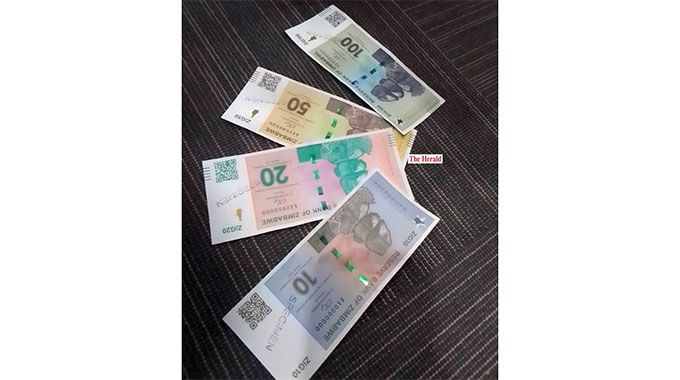
Over the last few years Zimbabweans have become used to the modern world when buying and selling by using electronic transfers almost exclusively when using local currency, either on-line transfers, or debit cards at point-of-sale machines in shops, or mobile money wallets for a range of small payments or a swathe of online payments, such as buying Zesa tokens.
Cash was useful for some small payments, or as change when submitting US dollar banknotes, but had stopped being used for most purchases. Although electronic payments above fairly low limits attracted a 2 percent transfer tax plus a small bank charge, cash withdrawals attracted the same tax plus a far higher bank charge, so generally you won by going digital.
While electronic bank transfers could be used for any level of payment, right up to buying modern office blocks let alone anything else, there were tightish limits on mobile money, largely because the authorities could not monitor these easily and it had become apparent that a lot of people were up to no good, such as black market dealers, were using this medium.
So there were those changes that limited the size of transactions and the total over a period, and while the rules allowed merchants to accept anything, they could not pay anything from their wallets and had to transfer the money to their bank accounts, again electronically, before they could use it.
The recent inflation of the old Zimbabwe dollar, and the refusal of the Reserve Bank of Zimbabwe to print larger value banknotes, helped accelerate this trend towards a largely cashless society, with the banknotes in circulation just used as small change to pay for bus fares, and buy sweets, soft drinks and cigarettes from pavement vendors.
The introduction of the ZiG notes and coins starts tomorrow, with banks buying their stocks today. The notes and coins will be useful for some small payments, and will hopefully help start reversing the trend for so much to be paid in US dollars, considering the shortages of small denomination US banknotes and the deplorable state of many in circulation.
The Financial Intelligence Unit of the Reserve Bank has made it clear that low limits on withdrawals of ZiG banknotes and coins will apply. Fairly obviously the Reserve Bank expects most payments in ZiG will continue to be done electronically and is simply issuing lower denomination notes and coins as a convenience, not a way of buying a month’s groceries, let alone anything larger.
The largest ZiG note, the ZiG200, is the equivalent of roughly US$15, so the Reserve Bank does not see banknotes taking over from electronic payments for anything particularly pricey.
Individuals are allowed to withdraw ZiG3 000 a week in notes and coins, a reasonable amount roughly equivalent to US$200 and so enough for most families to buy their weekly groceries if they insist on using physical rather than electronic money, and companies ZiG30 000 a week, enough to make change but not to do much more and certainly not enough to buy in supplies.
Schools, local authorities, hospitals, clinics and Government departments are given more leeway, but with monthly limits, and again it looks as though the limits are designed to make change rather to buy in supplies.
There is one undesirable problem that may arise, unless the police and the financial authorities are on the alert. In the past there has been a premium for banknotes in black market dealings, and even sales of banknotes at a premium for electronic payments. We used to see pavement dealers with bundles of cash in their hands, anxious to buy US dollars.
These bundles, and even bricks of banknotes, were probably handed to the pavement dealers by corrupt business people or even corrupt bank tellers to make black market transactions easier. The advantage of banknote cash is that it is anonymous, the FIU cannot see the transaction of banknotes for banknotes.
But it would not be that difficult for the police to keep their eyes open and observe and then arrest anyone waving bundles of ZiG notes in the streets. In fact, it should be easier to observe a black market transaction using physical cash rather than electronic cash. And if the pressure we have already seen to break up the pavement dealing continues, then this use of banknotes should be minimal.
The objective should be a totally electronic society. This has already occurred in several countries, where almost all shops, hotels and the like refuse to accept physical cash and insist that all payments are made by electronic card or transactions on a phone. There are advantages of a second set of transaction records, plus the fact that no thief or robber can steal what is in a bank account.
Although 80 percent of transactions in Zimbabwe are in US dollars, recent changes throughout the mobile money and banking system have seen a growing ability to transfer US dollars electronically, with this brought to almost completion as banks and businesses upgraded their electronic payment systems when the ZiG was introduced at the beginning of the month taking over from the old Zimbabwe dollar. POS machines now are now multi-currency readable.
Again, the growing daring of robbery gangs, who now even have explosives to blow open safes that are too heavy to lift into the back of a pick-up, suggests that moving towards the cashless society for all currencies would not be a bad idea. That would limit physical cash to tiny traders, and to those who buy and sell drugs and other criminal activity where anonymity has a premium.
The ZiG coins and banknotes can enhance convenience for smaller transactions and so usefully make the ZiG more acceptable, but at the same time the banking and business sectors need to keep pressing for ever more electronic transactions, by making sure these are cheaper, precise, recorded, and ever so much safer.


 Online Reporter