

 Online Reporter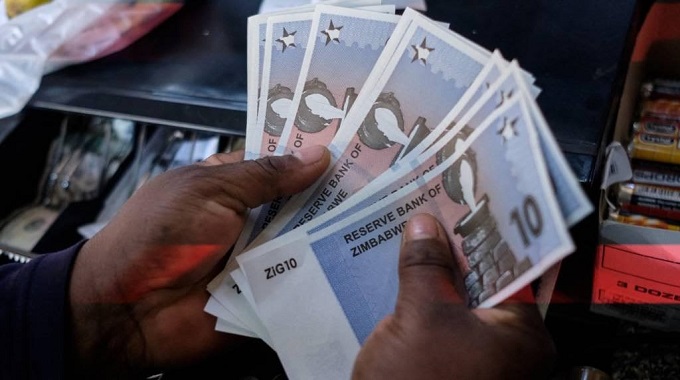
THE stability of the ZiG currency, even a month after retailers were allowed to set their own exchange rates, has become generally accepted as the new normal and Zimbabwe now appears to have a respected local currency as efforts by the Reserve Bank of Zimbabwe, backed by the Government, bear fruit.
The latest inflation figures show that month-on-month inflation measured in ZiG or in US dollars is the same, around 0,1 percent in either currency.
That is another sign that exchange rates are stable and people are not trying to reduce the value of the ZiG through the back door of pushing up local currency prices.
The big test for the ZiG was the decision last month to remove the legal obligation of retailers to use the official exchange rate, for some time the interbank rate set by the banking markets, with a fixed premium of up to 10 percent. The Reserve Bank and the Government were sufficiently confident that they had control of a stable currency that they could now grant the frequent petitions by the retail sector to let the value of the ZiG float.
It did not float much. Retailers rounded it off marginally upwards to the nearest whole number, which made change much easier, and it has stuck there ever since. Market forces, rather than Government fiat, now value the ZiG. The two market forces are the relationship between willing-buyers and willing sellers in the banking sector, and how the shopkeepers remain functioning with their cash flow using both currencies and needing to give and receive value in both.
The retail exchange rate will have to include, to a degree, the fact that the official rate is the weighted average mid-rate between what banks, on average, pay for foreign currency and what they sell that currency for.
No one in the banking sector actually buys and sells foreign currency at that mid-rate, which is generated as a convenience in other sectors from the real dealings in the banks.
Retailers would be net buyers of foreign currency, so have to look at the ask rate for their bank since they will not be selling foreign currency rather keeping it in their bank accounts to pay bills. Another reform was allowing banks to set their own margins between their bid and ask rates, what they pay for foreign currency and what they sell it for. Although they can choose their own rates and margins, the gap between the two rates has remained at a little over 5 percent in the weighted averages, and the rates set by each bank are pretty close.
This might be considered still a little on the high side, but it is at least a stable margin, is not rising even though it could, and in time is likely to come down as banks are forced to compete more tightly in a stable environment.
Again market forces in a highly competitive banking sector have tended to curb any temptations to profiteer, it being remarkably easy for a customer, or at least the sort of good customer bankers like to have on their books, to simply move banks if that happened.
What is called the parallel market rate, which is what unlicensed and so illegal dealers sell foreign currency for rather than the mid-rate between what they pay and what they charge, is now a very modest percentage.
The gap between what they pay for foreign currency and the value retailers give for the same banknotes is now negligible, and probably negative once bank charges and transaction taxes are factored in.
The result is that those crowds of money changers on the pavements outside supermarkets and other major retailers have vanished, not driven away by the police this time but because there was simply no business. This is what happens when things are working properly. The exchange rate stability in market-driven environments, legal and illegal, shows that the series of orthodox economic measures by the Reserve Bank in its tight monetary policy, and the Ministry of Finance, Economic Development and Investor Promotion in its tight fiscal policy, have worked and are working.
This means that these two independent but co-operating authorities can be using normal monetary and fiscal economic tools to manage the economy and ensure that there is economic growth with low levels of inflation, the goal of all central banks and governments everywhere if they are sensible.
We are moving out of the emergency measures that were needed to the more normal state of affairs where policies can be fine tuned in our progress towards having just a single local currency used in internal business and other financial dealings within the country, and foreign currency bought and sold by banks for those who have and those who need it for imports.
In time the gap between the two market rates, the bank rates and the retailer rates, will need to converge, remembering that banks do run the double rates of buying and selling foreign currency, while retailers use only a single rate so there is unlikely to be total convergence, rather retailers using ever more ZiG.
The Reserve Bank will need to be careful as it moves forward. At some stage interest rates must be allowed to fall once inflation is kept low, but that fall needs to be carefully managed so that the speculators cannot benefit and borrowing remains more for production than consumption.
We are some distance from the sort of movements we see from some central banks, where base interest rates move up and down by a quarter percent at a time, but we are probably moving towards the stage where we can see more small drops and rises rather than the major impositions and slashing we have seen in the last couple of years.
Very few Zimbabweans have ever seen what amounts to a normal economy with monetary authorities using market forces rather than regulation to provide the desired balances between growth and inflation. We are now moving into that territory following the successful action by the authorities.



