admin
admin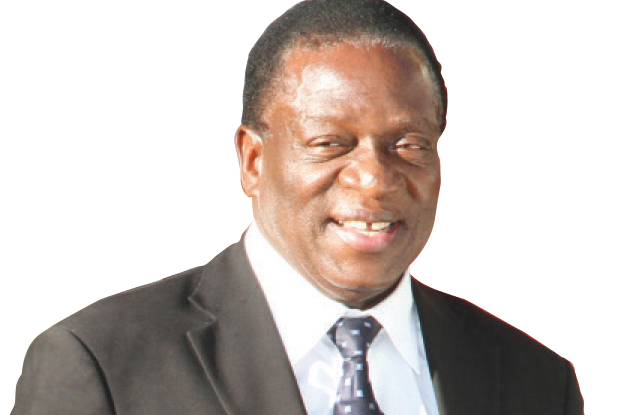
Since Zimbabwe signed mega-deals with China and Russia in August and September last year, the government has demonstrated encouraging commitment to ensuring that the agreements actually take off.
In August, President Robert Mugabe embarked on a week-long state visit to China where he witnessed the signing of at least nine huge investment agreements between Harare and Beijing. The deals are mainly to do with infrastructure — power generation, broadcasting digitalisation, rail and road construction. In September, Zimbabwe and Russia signed what is easily the biggest single investment in the country’s history, the $4 billion Darwendale Platinum Project. Like many of the Chinese ones, the enormous Russian project has started.
To underscore the government’s commitment to the success of the deals, there has been a flurry of exchange visits between Harare, Moscow and Beijing. During his visit to Moscow in May to attend that country’s celebration to mark 70 years of Russia’s defeat of Nazi Germany, President Mugabe used that time to engage President Vladimir Putin on the Darwendale investment and held meetings with the financiers of the project.
As we write, Vice-President, Emmerson Mnangagwa is on a week-long visit to China, having been sent by the President to follow up on the August 2014 mega deals.
We are unsure if there has ever been such steadfast commitment before, but the high-level follow-ups we are seeing highlight the government’s strong resolve for the deals to move from paper to the ground, all for Zim-Asset to succeed and the economy to rebound.
“These projects will be coming,” the President pledged, speaking on his return from China. “They can employ our young people from school boys and girls. You will be seeing them; but of course things don’t just overnight become shining.”
Indeed results are on the ground for everyone to see. Work has started on some; key among them is the Kariba South Hydro Power Station Expansion. The digitalisation of the public broadcasting sector has been successful because of the support Zimbabwe got from China following the President’s visit to that country in August.
On Wednesday, Acting President Phelekezela Mphoko toured the Darwendale platinum mine where he was shown Great Dyke Investments’ state-of-the-art laboratory and houses being built for workers.
The government is showing what some might say is a never-seen-before commitment to making sure that project proposals, especially those forming the historical mega-deals with China and Russia, are implemented and deliver on their tremendous potential. With such a high-level resolve, we cannot fail.
One lesson that the illegal economic sanctions has taught us is that we must work really hard, harder than ever before to rebuild our economy, of course with strategic support from genuine allies seeking win-win deals. And hard work also entails periodic, sincere and high-profile assessments. The embargo has taught us to survive regardless of the challenges.
Regular assessments enable the government to track progress, identify weaker areas and institute timely corrective action, rather than getting surprised later on when we discover that what we only have are papers with signatures and no progress.
Zimbabwe has been accused of being excellent in drafting blue-prints but poor in translating them into viable projects on the ground. We would put the great ideas so eloquently on paper, launch them amid pomp and pageantry but soon forgot about them, wrongly assuming that the blue-prints or agreements would implement themselves. We are optimistic that we are past that ruinous stage of abstractness.
In reshuffling his Cabinet this week, President Mugabe gave an added responsibility to VP Mphoko who is now also charged with overseeing policy coordination and implementation of government programmes in the Office of the President and Cabinet.
This is consistent with what we see as the commitment by the government to have its policies and programmes implemented fully for national development. On this, VP Mphoko is a round peg in a round hole. He is showing that he is a man of action. Well before his added responsibility, he had toured the country, assessing the progress of many government projects, getting the on-the-ground appreciation of the situation as opposed to relying on activity reports from officials, which reports are not always accurate.
Related to the foregoing is the new requirement by the Office of the President and Cabinet for ministries to submit weekly activity diaries, part of the government’s efforts to monitor progress in policy implementation. Logically, this will not end with weekly diaries, but go with weekly reports as well.
It is because of the new strategic thrust of the government, following-up on its programmes, that we are very confident that, notwithstanding the prevailing economic challenges and the illegal western sanctions that caused them, Zim-Asset will be more successful than the Medium-Term Plan (2011-2015), Short Term Emergency Recovery Programme (STERP 2009-2011), Zimbabwe Programme for Economic and Social Transformation (ZIMPREST 1996-2000) and other economic development blue-prints the government has crafted over the years.


 Online Reporter