Online Reporter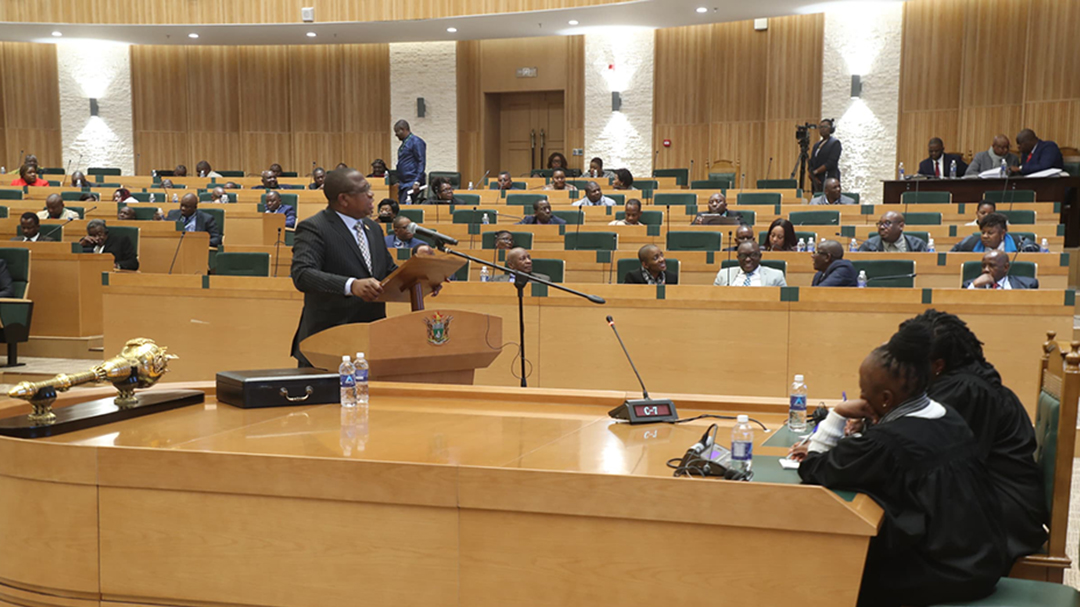
ZIMBABWE is still expected to meet the forecast 6 percent growth in the economy despite falling expectations of global, continental and regional economic growth and falling prices of non-precious metal minerals.
This remarkable achievement of one of the highest growth rates in Africa and the world, Finance, Economic Development and Investment Promotion Minister Mthuli Ncube told Parliament yesterday, would be coupled with continued falls in inflation rates and exchange rate stability as a result of the correct fiscal and monetary policies being applied.
The minister was delivering his mid-year budget and economic review, using the figures for the first six months of the year to map against his Budget expectations at the end of the last year.
In his introductory remarks, he stressed the global changes as a result of the highest tariffs for a century, resulting in major trade changes and falling growth rates. The good rains, although as the minister noted these were not evenly spread, had been driving high levels of growth in agriculture as the farmers recover from the devastating drought of last year, plus better flows in Lake Kariba have helped improve electricity generation at Kariba South.
Mining companies had partly covered falls in prices by pushing up volumes mined.
But the minister was careful to stress that a lot of the expected economic growth was because the private and public sectors were doing the right things at the right times and taking advantage of the stable and improving economic environment as well as upgrading their general administration and development.
One major factor that has been troubling many is the fall in assistance from development partners, especially the United States. But the minister noted that, while significant, the falls had not been as bad as initially feared.
Much of the US$148 million in such aid in the first six months went to health with almost US$96 million.
The changes in the major US programmes have seen, after all the reassignment, a fall in such US health support of around 21 percent, with more programmes maintained than cut.
Zimbabwe has been switching its own resources to fill the gaps, with the minister noting that a top priority of his ministry was to keep an adequate flow of medicines to the public sector.
Administrative changes and release of funds on time had seen the improvement in medicine flows from the two major suppliers to NatPharm.
In addition, there had been significant purchases of equipment and upgrading of hospitals. As has been made clear in the past, the Government was determined to maintain existing public health services and improve these. The very low ZiG inflation in the first six months, lower than the global inflation rates, produced some curiosities. Both revenue, that is tax collections and spending were below the budgeted figures, which had been calculated on a higher inflation rate.
The upshot is that revenue, in both ZiG and less spectacularly US dollars, was higher than spending, meaning that the ministry was running a surplus in the first six months. Taking into account the actual inflation figures revenue collection was up, with the blitz on smuggling producing such good results that the minister was able to announce making this permanent with an upgraded co-ordination of all involved.
One reason for falling expenditure was the fact that staff costs, while still 46,3 percent of all Government spending, were lower than expected because of the low inflation.
Civil servants have automatic escalation of salaries tied to inflation, so that they are not hurt by price rises, but when there are no price rises or only very small ones, then pay rises are equally small.
Improved benefits would, however, see expenditure on staff rise, said the minister.
The Government was able to maintain high levels of capital expenditure, everything from dams and roads to staff housing and offices. This absorbed almost a quarter of all the taxes collected.
The minister was keen on stressing this point and provided a lot of examples of what was being done by Government in improving the infrastructure as well as the quality of life of the population.
On the broader economic front, the current account remained positive, meaning that foreign currency inflows exceed outflows.
The surplus was lower than in the first half of last year, largely because of the food imports needed before the new harvest, but we still managed to pay for those imports without touching reserves.
The excellent cropping season should see the end of the maize imports, that were the second highest item on the import bill in the first five months, a little below the cost of diesel imports, but above the cost of petrol imports.
In the second half of the year, Zimbabweans will be consuming the maize harvested by our own farmers.
Without those maize imports Zimbabwe would have seen foreign currency inflows being almost US$300 million more than what was spent and about twice what was seen in the first half of last year, rather than the just under US$20 million surplus.
But the fact that the account was still positive shows the fundamental strength of the modern economy, that it can cope with the worst drought for 40 years, but also the need to continue improving irrigation and other measures to take care of drought years.
This strength is also seen in the rising inflows of direct investment into Zimbabwe, as a lot of external business and entrepreneurs see Zimbabwe as a good bet for their money.
Foreign direct investment is a fairly ultimate vote of confidence, or lack of it, in a country where governments can welcome it, they cannot control it. So when hard-headed businesses spend money in Zimbabwe, they calculate we are worth it.
The need to rationalise the business licencing regimes and simply the number and ranges of licences required, was brought up by the minister, but in terms that suggested it was moving from a talking point and an item of the to-do agenda to something more practical in the next six months. A lot of the pressure for this change comes from Zimbabwean businesses.
The results of the economic census, showing the Zimbabwean economy was larger than expected once the entire informal sector is included, reduced Zimbabwe’s debt to GDP ratio in ZiG terms to 14,3 percent and in US dollar terms to 60 percent, below the sub-Saharan average of 61 percent.
This, as we move towards agreement on our debt arrears, puts Zimbabwe into a stronger position when it comes to sensible borrowing to accelerate development. The effects of the measures already taken and being taken should see a US$40 million loan later this year.