admin
admin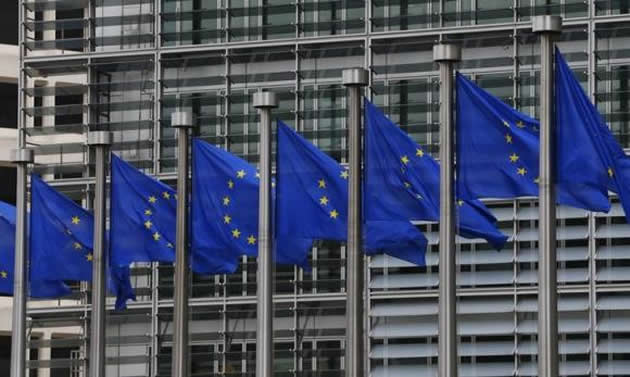
On Thursday the European Union gave with one hand and took back the same with the other. The bloc announced a partial lifting of its illegal sanctions against Zimbabwe, removing the 12-year trade embargo but keeping the unjustified punishment on President Mugabe and First Lady Cde Grace Mugabe.
Making the announcement, EU Head of Mission Philippe Van Damme said this meant that the 28-nation bloc would directly engage Harare on bilateral economic ties. He said the arrival of official British and Danish trade delegations highlighted the commitment by the EU to normalise relations with Zimbabwe.
Van Damme said EU lifted Article 96 of the Cotonou Partnership Agreement which governed relations between the Western bloc and African, Caribbean and Pacific countries, but maintained Article Nine until February next year which related to travel bans imposed on the First Family.
In 2002 the EU imposed sanctions on President Mugabe and at least 112 people and 11 companies that were said to be associated with government. Direct government-to-government interaction was stopped as well. From time to time, the bloc increased or reduced the number of people and firms on the sanctions list. After the Thursday announcement, direct talks can start on agriculture, support of realignment of laws, health, Zim-Asset and the International Monetary Fund’s Staff Monitoring Programme.
“I think we’ve reached an important stage of normalisation of relations with Zimbabwe,” said Van Damme.
“The step we’ve taken isn’t the final step, but a very important one. What we need now is to rebuild trust.”
For patriotic Zimbabweans, it is as-you-were; the action does not mean much. It is self-preservative, insincere and dishonest. We further hold that it is divisive and disrespectful to the extent that it keeps the embargo on President Mugabe and Cde Grace.
We don’t see the EU as having lifted its illegal sanctions on this country. Sanctions on President Mugabe are sanctions on Zimbabwe. What the EU has done is still intrusive and unacceptable in a more malicious sense than before.
The motivation in all this is that the EU can see that many business and investment opportunities are being taken up by the Chinese, Russians and Indians so to ensure that they are not seen to be violating their own sanctions and to ensure they are not left behind by Asians,they had to remove the trade aspect of the sanctions.
Also, we recognise this latest announcement as partly a result of Zimbabwe’s own campaign against the illegal sanctions particularly when it took the EU to the General Court of the European Union in Luxembourg. Harare argued that the sanctions were illegal since they were not backed by a United Nations resolution. The first hearing in the case in which the government is challenging the legality of sanctions imposed on the country by the European Union was held early June. The application seeks to have the sanctions declared illegal on five primary grounds. Firstly, government lawyers argue that that there was no legal basis for imposing them on the individuals and companies associated with the government of Zimbabwe and Zanu-PF merely on the basis of reports from faceless internet newspapers and non-governmental organisations and secondly that there was no legal basis for imposing them on the said individuals and companies on the sole basis that they were Zanu-PF members of the then inclusive government.
The third argument is that the EU in imposing the measures had failed to give adequate reasons for targeting the said individuals and entities and fourthly in imposing sanctions, the grouping had failed to provide particulars or evidence to the affected persons and entities in order to allow them to comment on the case against them, in particular, those cases where serious criminal misconduct was alleged. The fifth argument was that the EU had infringed, without justification or proportion, the applicants’ fundamental rights, including the right to protection of their property, business, reputation and private and family life.
Prior to this government-driven court case, former Deputy Minister, Cde Aguy Georgias had his personal one in which he stated that the EU acted unlawfully by imposing sanctions against him. He was listed in 2007, but had his name removed four years later at around the time he brought up the case. His delisting did not make him to drop the suit. He lost his case in September, not exactly on points of law, but, we think, obvious political influence that Europe exercises on the court when critical issues like these are put before it.The government will not abandon the case even after Thursday.
The only credible movement that Zimbabweans will recognise is the total and unconditional lifting of all sanctions on their country and its leadership.


 Online Reporter