

 Chronicle Editor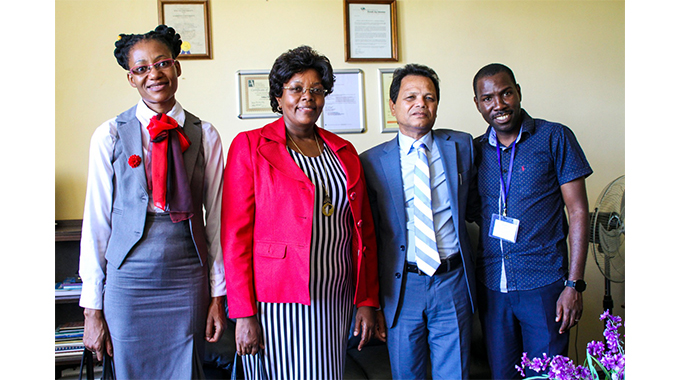
Mbulelo Mpofu
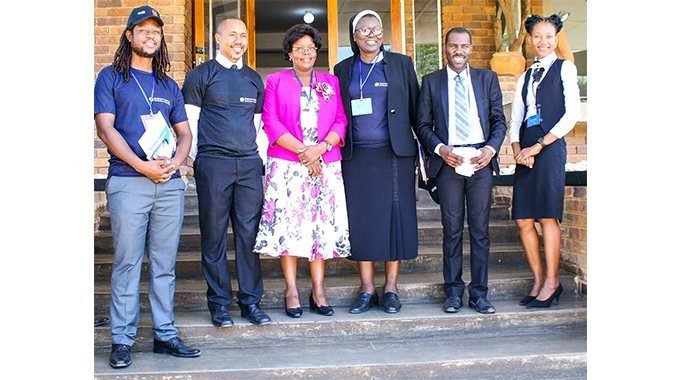
FORTY-THREE Information and Communication Technologies (ICTs) teachers and lecturers recently graduated after completing a free Designing and Deploying Computer Networks (DDCN) course at Solusi University.
The intellectuals underwent a DDCN trainer boot camp where Internet Society Global capacitated them with the requisite skills and tool kits to further train members of the public.
Held under the theme, “Connecting the unconnected”, which is in keeping with Government’s drive on inclusivity and leaving no-one behind, the Internet Society Global sought to bridge the digital gap between Zimbabwe and the international community.
The graduation ceremony was also attended by personnel from local internet service provider, Utande.
The course, meant for individuals with a basic understanding of computer hardware and software, taught teachers the process of setting up a new computer or system to a point where it is ready for productive work in a live environment.
The Ministry of Higher and Tertiary Education, Science and Technology Development recently adopted Education 5.0, which is the use of new technologies to provide more humanised teaching, with a focus on students’ social and emotional development and solutions that improve life in society.
Higher and tertiary education in the country is now expected to do more than just teach, conduct research, and serve the society. It is also expected to innovate and help industrialise the country.
State universities in Zimbabwe are required to begin outcome-focused national development initiatives in order to create a competitive, modern, and industrialised country under Education 5.0. Now, everything revolves around problem-solving for value-creation.
Education 5.0 necessitates personalised learning where students can learn at their own pace, and the learning experience can be tailored to individual needs.
It also necessitates collaborative learning where students work together on projects and assignments, and learn from each other.
Technology integration which enables students to learn in a more engaging and interactive way through the effective use of the internet is another aspect of the model.
Education 5.0 also necessitates soft skills development such as communication, creativity, critical thinking, and collaboration, which are essential for success in the 21st century.
The model also encourages a global perspective where students learn about different cultures and ways of life, which helps to foster understanding and tolerance.
In an interview, Solusi University’s ICT manager Mr Ntokozo Ncube said the boot camp was targeted at equipping teachers and lecturers with the requisite skills to train various stakeholders.
“We conducted training on designing and deploying computer networks. It was a free course by Internet Society Global. This time, we focused on teachers and lecturers who have trained from March to April. Because this is for trainers, we focused on the practicals only.
“This is supported by the Internet Society Zimbabwe Chapter and we had 50 participants from all over Zimbabwe who will undergo face to face training and will be equipped with toolkits and skills to go and train members of society, high school students, Technical and Vocational Education and Training (TVET) and university students so that we make sure that everyone is connected to the internet.
“This boot camp was also for the empowerment of teachers, lecturers and trainers on Deployment of Computer Networks around the communities where they serve. The other objective was to build an army of trainers that can champion practical skills when it comes to computer networking and internet connectivity,” he said.
An appreciative Ms Jennifer Chasumbwa from Hwange Teachers’ College praised the organisers of the boot camp for the opportunity.
“I learnt a lot from the boot camp and I know my knowledge from here will push the Education 5.0 narrative forward. The course has given me renewed impetus and verve to impart tailor-made and relevant education to the students I teach,” she said.
Mr Andrew Mangena, a lecturer at the National University of Science and Technology (Nust) Faculty of Science and Technology Education said the boot camp was an eye-opener.
“Over the course of the week, I learnt a lot, from identifying what is what, configuring routers, to going as far as installing a firewall. What fascinated me the most was that the programme was a hands-on one and they say, ‘Practice makes perfect’ so we surely did a lot of practice. This skills exchange programme’s importance can’t be overemphasised in this ever-changing landscape,” he said.
Training and e-Learning Senior Director at Internet Society (ISoc), Ms Esther Mwiyeria Kioni from Kenya, who was the guest of honour, underscored the need for Africans to seek technological parity with the international community as well as adjust to advancement in the tutoring landscape.
“We are at a very critical point in the civilisation of humankind and teachers are the ones on the forefront of changing the narrative. The next generation of young people need to be connected and be at par with the rest of the world. Connectivity is a must and if one isn’t connected, problems arise. We need to adapt and have a digital presence to enhance our learning.
“A teacher has to lead by example and as ICT experts, there is a need to understand platforms such as Facebook, Twitter, YouTube and Instagram. Everything happens online now and we need to be well-versed with how it works. Theory can do as much but with practical skills, a lot can be achieved and we will be taking huge strides towards global parity,” she said. — @MbuleloMpofu



 Online Reporter