


 admin
admin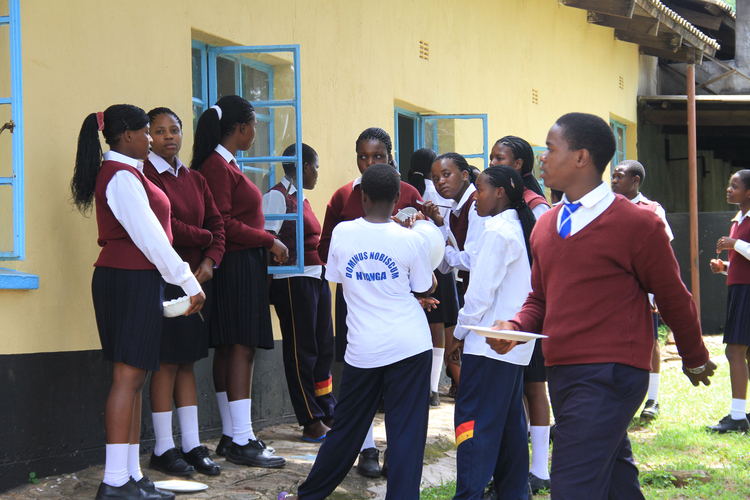

Tendai Chara
Since his appointment as Minister of Primary and Secondary Education in 2013, Dr Lazarus Dokora has often courted controversy.
Over the years, the minister has made what are believed by many to be controversial pronouncements.
As a result of some of the minister’s pronouncements, he has often been on a collision course with stakeholders in the education sector.
Some of his statements, however, were personal opinions, not policy statements.
Among some of the controversial policies that were initiated by Dr Dokora include the scrapping of monetary incentives for teachers and the banning of extra lessons.
He stirred a hornet’s nest when he said parents were free to pack condoms for their children in schoolbags but he would not allow condoms to be openly distributed in schools.
Dr Dokora’s pronouncements have often been subjects of intense debate with parents, teachers and other stakeholders.
Mr Maxwell Rafemoyo of the Education Coalition of Zimbabwe defended the minister’s point of view by arguing that such decisions lie with the parents and not the ministry.
“What type of a parent would give their child condoms to carry to school? What the minister was simply saying is that the decision to give children condoms lies with the parents and that the ministry would not recommend that children bring condoms to school,” added Mr Rafemoyo.
Recently, the minister conducted unscheduled visits to schools in Chitungwiza and Mashonaland East. During the impromptu inspections, he interrogated some headmasters over the way they run school affairs.
However, just like most of Dr Dokora’s previous pronouncements, the school inspections roused different opinions amongst players in the education sector.
During the minister’s visits, financial statement records for some schools were not ready, a factor which led to some school heads and staff panicking as they desperately tried to cover their tracks. Most schools have been plagued by examination leakages, financial mismanagement and corruption.
As the majority of the school heads were being grilled, Mr Takesure Kanyemba, the headmaster of Mandedza Secondary school, received some praises from the minister.
Dr Dokora commended Mr Kanyemba’s sound leadership and called upon other school heads to emulate what was being done by Mr Kanyemba.
However, a section of the stakeholders dismissed the minister’s visits as “publicity stunts” which are meant to appease a section of the education sector.
Those that are against the visits are of the opinion that the minister is failing to address serious issues that are affecting schools and is instead focusing on such “petty issues” as unannounced school visits.
Mr Takavafira Zhou, the president of the Progressive Teachers’ Union of Zimbabwe (PTUZ), dismissed the inspections, and urged the minister to tackle “serious issues”.
“While we appreciate the minister’s efforts, we feel the inspections will not help much. The minister has been visiting mostly urban schools yet there are rural schools and those located in resettlement areas that need attention. To me, the piecemeal inspections are a publicity stunt,” Mr Zhou said.
Mr Rafemoyo welcomed the inspections, adding that the lack of supervision in schools had been the education sector’s biggest challenge.
“Given the nature of education, visiting remote schools might be a bit of a challenge. However, the inspections will go a long way in solving some of the biggest challenges that our education sector is facing. Most schools are detached from head office and I think the visits will solve the issue of lack of supervision in schools,” he said.
Mr Zhou also accused Dr Dokora of making decisions without consulting the stakeholders.
“The minister does not consult the stakeholders and we often learn of the minister’s pronouncements in the media. He claims to have an open-door policy but in actual fact, that is not the case,” Mr Zhou said.
The minister’s relations with the teachers and parents have been frosty with teacher representatives accusing Dr Dokora of formulating policies without teachers and other stakeholders’ input and consultations.
In one of his pronouncements, the minister expressed his wish to extend primary education to nine years from the current seven by adding two years of early childhood development.
Dr Dokora further waded into the murky waters of controversy when he said that as a matter of policy, Government was not going to fight the introduction of mobile phones in schools, an opinion which was supported by Farai Marange, a parent.
“We must move with the times. If they are ordinary phones which cannot access the internet, then let them be banned. But if they are smartphones which could be used for research, then the students must definitely carry them to school,” Mr Marange said.
Parents were particularly irked by the minister’s pronouncement, adding that some of the minister’s policies risked destroying the gains achieved in the education sector since independence.
In the past, the minister also announced plans to re-train already qualified teachers.
And then he said that sporting activities in schools will only be done on Saturdays because they disturb lessons during the week.
Addressing an International Day of Peace gathering, the minister said children performing at public gatherings should wear clothing that covers their bodies instead of donning cultural attire that exposes them.
Dr Dokora also drew the ire of Christian Changemakers, a Bulawayo-based Christian organisation, after the minister gave the directive to recall teachers that failed Mathematics, English and Science.
In a statement, the organisation said Dr Dokora had made a “destructive” decision.
Teacher organisations have often complained against the way Dr Dokora discharges his duties, which they regard as detrimental to the education sector. One of the organisations went to the extent of calling the minister a “misguided and overzealous element”.
One of the minister’s pronouncements that was not well received by the teachers concerns the fact that they (teachers) should not be paid their salaries for April, August and December since they will be on school holidays and will not be rendering any service to the Government.
Mr Rafemoyo offered a possible answer to the nagging question of why most of Dr Dokora’s pronouncements often stir debate.
“The education ministry is an interesting portfolio. Like soccer, everyone wants to be a referee or the coach. In my view, Dr Dokora is doing well,” Mr Rafemoyo concluded.


 Bongani Ndlovu
 Online Reporter