

 admin
admin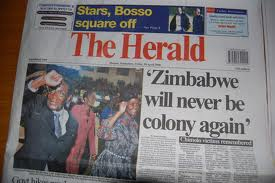
competition, management at newspapers has had to make decisions on two central issues – content and design.
As the old media adage goes, content is king. Content would nonetheless count for nothing if not properly arranged and packaged in a way that readers can decode with minimum effort.
Newspapers have vast amounts of data at their disposal, but limited newsprint space to accommodate it.
Their challenge is to present as much information they deem relevant to their readers as possible.
If readers are left with more questions than answers after sifting through news presented by the paper, it is suffice to conclude not enough has been done by the media company.
Presentation of news is design.
Experts say a newspaper design should be guided by three aims. A newspaper design must be functional for the newspaper staff, and reflects the content and nature of the newspaper, and it should also be appreciated (subconsciously) by the reader.
Media companies miss the point when they ask advertising agencies to develop new design concepts for them without providing significant training for their sub editors and other technical staff.
As a result, the newspaper would resemble a quality product for only a few days, and then deteriorate into something similar to the old look. The changes made on newspaper layout and design methods should be at levels that the paper’s staff can comprehend.
I have always wondered how newspapers with so many sections inside say so little about them on the front page. The traditional way of telling people of what the newspaper has inside has always been through two teasers, one on either side of the masthead. But as today’s newspapers have become bigger with new subsections such as “travel”, “food” and “technology”, it has become even more essential for them to inform their readers of what their product contents. So much information is “hidden” in newspaper sections that the product does not tell the readers about on the front page.
The general trust of the paper must be reflected through design. Formal, business-like newspapers should use fonts, colours and layouts that are more subtle and the general arrangement of components must show a certain level of sophistication.
Colour is essential to the more informal, tabloid newspapers. Colourful designs go hand-in-hand with the sex, scandal and witchcraft news that dominate such newspapers. Some Zimbabwean newspapers suffer from an “identity crisis”. Their insistence on viewing one political party that dominates their pages everyday as nothing but scandalous gives their designs a “Caster Semenya” look – one is never sure if they belong to one side or the other.
Visual forms of presenting news in a newspaper are numerous. It is the newspaper’s choice to choose one, or a combination that allows the reader to best understand the story. One form of visual presentation that has become common in today’s newspapers is the juxtaposition of photographs from different sources to create a picture combo that refers to a story accompanying the graphic.
The process involves “extracting” a figure by isolating it from the background, and then adding other components to it to create a “virtual picture” that never existed. There are problems with this form of design.
Unless the designer takes time to electronically cut the picture out of its frame, the “cut marks” are all visible for all to see and the illusion of a picture combo disappears. The combo would have to be colour-edited to ensure that there are no distinct differences in skin colours, initially caused by differences in light or camera settings.
The head provides the greatest challenge, especially for ladies with fancy hairstyles, dreadlocked persons or those of European descent. When it comes to creating such graphics, a wide range of pictures should be available and a high degree of patience must be exercised.
The biggest challenge with picture combos is how to make it contextualise it to relate to what the text alludes to. If, under the headline, “Politicians worried over Wikileaks”, a paper carries pictures of ministers smiling, then the graphic loses its relevance.
Similarly, newspapers’ use of conceptual photographs, those that carry the same emotional power as the stories they accompany enhances meaning of news in the papers. One misconception on design or redesign is that the principle objective is to make the paper look more beautiful. Aesthetic appeal is certainly a by-product, but the overall objective is to enhance news presentation. The bottom line though is that designs or redesigns are done primarily for the readers. When newspapers venture of that journey, it should be a chance to create a reader-friendly publication that is also pleasing to the eye. Typographic facelifts need to be real improvements from those of the past.
Legibility should take precedence over aesthetic eminence. A balance between visual and typographical representations, based on the nature of the paper – must be struck. Redesign requires the newspaper to rethink the whole concept of news presentation so as to incorporate readers’ needs but also mindful of the levels of competence of the staff that would work on implementing the changes.


 Online Reporter