Online Reporter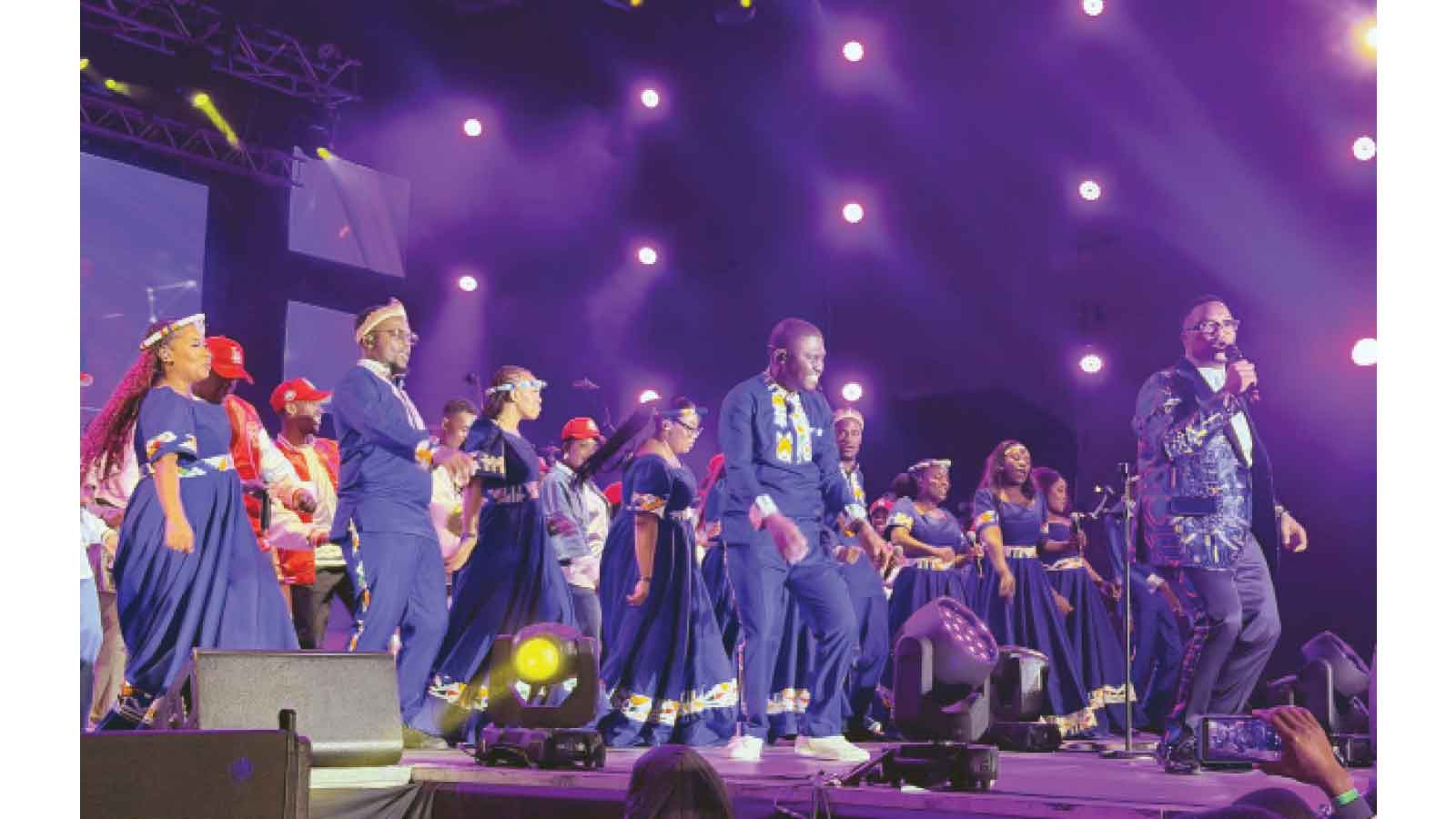
Tafadzwa Zimoyo recently in Bulawayo
FOR one unforgettable night, Hartfield Stadium ceased to be a sporting arena and transformed into something far greater — a living cathedral of worship, hope and human connection.
The giant venue, usually associated with football chants and roaring terraces, became holy ground on Africa Day as a record-breaking 15 000 people gathered for the 2026 edition of the Ekhaya Worship Festival, the largest attendance ever witnessed at a gospel music event in Zimbabwe’s history.
From the moment the gates opened, Bulawayo felt different.
The city breathed with anticipation.
Roads leading to the stadium swelled with streams of believers wrapped in winter jackets, families clutching picnic blankets, youths carrying banners and elderly worshippers slowly making their way toward what many would later describe as a spiritual encounter rather than a mere concert.
And perhaps that is what Ekhaya has now become.
Not simply an event.
But a pilgrimage.
The bold decision by organisers to move the festival from the intimate Zimbabwe International Trade Fair grounds to the imposing Hartfield Stadium had initially raised questions in some circles.
Could gospel music truly fill such a massive venue?
Could worship command the same magnetism as mainstream entertainment?
By nightfall, those doubts had dissolved into the floodlights above a packed stadium.
Every corner of Hartfield pulsed with life.
Every aisle sang.
Every seat carried testimony.
The move did not merely signal growth, but it announced the arrival of gospel music into a new era of cultural dominance.
Yet before the music swallowed the city in song, Ekhaya Worship Festival introduced something deeply refreshing and profoundly necessary, a Health Expo during the afternoon.
In a country where many entertainment gatherings often overlook social responsibility, the festival fused spirituality with wellness, offering free health consultations, screenings and medical awareness programmes.
It was a masterstroke of compassion.
The health initiative gave the festival an added heartbeat, grounding worship within the realities of everyday life.
Among the many attendees was an 87-year-old woman from Luveve, Gogo Epiphania Nqubalo, who slowly walked through the expo with the assistance of relatives before later joining thousands inside the stadium.
“I came for prayer and worship, but these health checks are also important for us old people,” she said softly, her face carrying the grace of many seasons.
“This festival is helping people in more ways than one.”
Her words lingered long after she disappeared into the crowd.
Because the festival this year was not only about worship.
It was also about healing people on earth.
As the main programme unfolded, one noticeable shift immediately distinguished this year’s edition from previous instalments — the deliberate inclusion of upcoming gospel artistes alongside established names.
Instead of reserving the grand stage exclusively for household names, organisers opened the doors for emerging voices to minister before thousands.
And they rose magnificently to the occasion.
The atmosphere became a beautiful collision of youthful hunger and seasoned excellence.
Powerhouse acts including Reality 7, The Unveiled, Joyful Praise Choir, Zimpraise, Vocal Ex, Lorraine Maplanka, Takesure Zamar, Blessing Jeduthun and South African gospel heavyweight Dumi Mkokstad delivered deeply stirring performances that kept the stadium spiritually charged from beginning to end.
There was no weak link.
Every performance felt intentional.
Every song carried purpose.
Then came the man at the centre of it all — Everton Mlalazi.
By the time he emerged onto the massive stage, Hartfield had become a boiling sea of expectation.
The cheers that greeted him rolled across the stadium like thunder after a summer storm.
But before fully launching into his set, the festival paused for one of the night’s most intimate moments.
His daughter Natasha appeared and led thousands into a heartfelt rendition of “Happy Birthday,” as family mem-bers, fellow artistes and fans joined in celebration.
For a brief moment, the massive stadium suddenly felt like a family gathering — warm, tender and deeply personal.
Then another magical surprise followed.
His younger daughter, Keisha, stepped behind the marimba and introduced “Hakuna Zita,” unleashing joyous screams from the crowd. The rich traditional instrumentation gave the worship session an unmistakably Zimbabwean soul, blending culture and praise into one irresistible rhythm.
The stadium erupted into dance.
People leapt onto their feet.
Strangers held hands.
And from there, Mlalazi shifted gears completely.
What followed was pure Ekhaya energy.
He launched into upbeat praise songs that transformed the giant venue into a jubilant explosion of dance and worship. The atmosphere became electric as thousands moved together in synchronised celebration.
Yet even amid so many unforgettable moments, the true climax still lay ahead.
In what became the defining scene of the festival, Mlalazi assembled a mammoth choir featuring Joyful Praise, The Unveiled and Vocal Ex for a breathtaking rendition of the trending anthem “Tiri Vana vaMambo” before flowing seamlessly into “Nomakunje.”
The effect was seismic.
Voices rose like ocean waves.
Some worshippers knelt.
Others simply stood frozen beneath the floodlights, overwhelmed by the spiritual weight of the moment.
Speaking afterwards, an emotional Mlalazi admitted he was overwhelmed by the historic turnout.
“Ekhaya Worship Festival is very close to my heart,” he said. “Seeing all these people gathered here in worship means everything to me.”
He also shared a touching testimony involving his son and a miracle his family experienced, a deeply vulnerable moment that silenced the giant crowd into reflective stillness.
It was raw.
It was human.
Closing the night was Joyful Praise, whose scintillating finale injected fresh fire into an already exhausted but ener-gised crowd. Their delivery of favourites such as “Ngaibve Mumoyo,” “Takaedza,” “Unogochemei” and “Jehovah Wee Makanaka” sent worshippers into one final frenzy of praise.
By then, fatigue no longer mattered.
Nobody wanted to leave.
Perhaps the greatest triumph of Ekhaya Worship Festival was not merely the historic attendance, the polished production or the star-studded line-up.
It was the excellence behind every detail. From stage management to sound clarity, crowd coordination to smooth transitions, the entire production unfolded with rare professionalism and precision.
Everything moved according to script.
Everything felt world class.
And as thousands slowly poured out of Hartfield Stadium long after midnight, one truth remained hanging in the cold Bulawayo air: Zimbabwean gospel music had just experienced its defining moment.
The festival is now a national movement wrapped in song.