admin
admin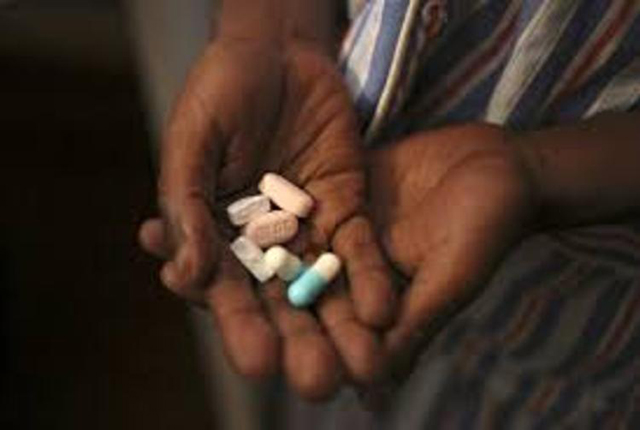

What is medication adherence?
Roselyne Sachiti Features Editor
TWELVE-year-old Panashe (not real name) of Hoya area in Muzarabani, in Zimbabwe’s Mashonaland Central Province was born with HIV.He has never worried about his status as he was well informed about how he became HIV positive, and had the support of family and friends. He also hasforgiven his parents for not accessing prevention of mother to child transmission at their local health facility blaming the religion they belonged to during his pregnancy.
He does not know when he started taking paediatric anti-retroviral drugs (ART), but remembers that when both his parents died, his grandmother always reminded him to take his medicine at the same time daily.
In fact, not taking his medicine was a “criminal” offence that would sometimes result in spanking from his grandmother.
Over the years, he became more responsible, knowing when to take his medicine and making his grandmother proud that he was growing into a responsible person.
Today, Panashe is somewhat not proud to talk about his HIV status.
He is worried.
The El Nino induced drought which resulted in his grandmother failing to harvest anything significant has had a great impact on his uptake of ART.
“I have not been adhering to my medicines because of food shortages. Sometimes my grandmother and I have nothing to eat. Sometimes we have a little which is not filling. During the day, we usually eat fresh masau but they are now out of season. We have dried a number of 50kg bags which we keep in my grandmother’s granary. I do not take my ARVs when I don’t have any food to eat and nurses at the clinics say this is bad,” said Panashe in an interview with Herald Review.
Just a few homesteads from his, HIV positive six year old Mercy (not real name) has not been feeling well for the past two weeks.
She had stopped taking her medication in August because her family barely had enough food for all six members.
Four of the five 50kg bags of maize they harvested had been consumed by October. What has made them last this long if the food rationing the family introduced?
“We started giving her medication twice a week, then once and we eventually stopped. I did not have food to give her. She says she feels very weak when she takes them on an empty stomach. I cannot force her to take ARVs when we do not have enough to eat. I am worried for her and also worried about myself,” her mother Munopiwei, who is also HIV positive revealed.
Sometimes, Mercy eats at school were they are given porridge and sadza and beans under the government and World Food Programme school feeding scheme. Sometimes, this is the only meal she has. It is harder during school holidays.
At the family level dietary needs for most HIV positive children like Mercy are overlooked as the family struggles each passing day, as the effects of El Nino ravages most parts of Zimbabwe.
In Chadereka also in Muzarabani, 12-year-old Takudzwa (not real name) who has been on ART has also been avoiding taking medication saying he feels weak if he does.
He only takes them once a week yet once a child has started HIV treatment, it is important that they take it every day.
Like many other children in the area, Takudzwa only takes ART when they have food.
With family support, children like 13-year-old Matipei (not real name) of Muzarabani growth point have managed to stay on their ART even with little available food.
“We were also affected by the El Nino induced drought and did not harvest much but we always try to find food for her. We would rather have one meal and she has two so that she adheres to her medicines,” said her mother Martha.
A villager Sekuru Naboth Mukungurutse called for the revival of the zunde ramambo concept (a community granary to cater for the less fortunate) to feed such children.
“Those in the community with children working in the city and have extra food can donate food to HIV positive children. We have helped poor people in the past and we can still do it,” he said.
The 2015-2016 El Niño has devastated crops and decimated livestock in Zimbabwe, however its toll on children and their well-being is only now beginning to be felt.
In a sign of increasing stress among children, data from the United Nations Children’s Fund (UNICEF) supported Child Protection Fund, which tracks welfare and protection needs among poor and vulnerable children, released last week is showing a sharp rise in children needing welfare assistance in 2016 compared to 2015. Welfare assistance includes children reporting health problems, requiring educational or school assistance, or being in need of emotional and social support.
Among the main findings, slightly more than 2 000 children reported health problems in the first six months of 2016 compared to 400 in the whole of 2015. The increase of 1 600 is worrying.
According to Unicef, the 2 000 includes children who have defaulted on their anti-retroviral therapy HIV due to an inability to take medication due to hunger.
Given the implications, the coping mechanism taken by children was to take medication only when food was available.
“With the failure of crops, families face the grim choice of spending their little money on food or buying books and paying school fees,” says UNICEF Deputy Representative in Zimbabwe Dr Jane Muita.
“They will always choose food. But these are hard choices no family should have to make and we worry about the long-term developmental effects the drought will have on affected children.”
While this upsurge in numbers can be partially attributed to a better identification and reporting system, the ongoing drought has left increasing numbers of children in desperate need of help.
Zimbabwe, along with other countries in southern Africa, is in the throes of a drought that has devastated crops and livestock, dried up sources of livelihoods, including water, and left an estimated 4 million people, including 1,9 million children, in need of assistance. An estimated 90 000 children will also require treatment for malnutrition.
Together with the government and NGO partners, UNICEF has been treating children for malnutrition, providing safe water, supplying health facilities with medications for the treatment of diarrhoea, providing social cash transfers to poor households, and ensuring that vulnerable children receive protection support.
These efforts are complementing the government’s drought relief assistance programme which is providing grain to affected households.
So far, out of UNICEF’s current funding appeal of $21,8 million for Zimbabwe, $3,1 million has been mobilised.
Elizabeth Glaser Pediatric AIDS Foundation Zimbabwe Senior Technical Advisor Programme Coordination Dr Tichaona Nyamundaya, said poor adherence to lifelong treatment results in an increase in viral load, declining CD4 counts, poor growth and development, poor quality of life, missing school, on and off illness and hospital admissions and increased risk of death.
“The primary goal of ART is to prevent clinical complications of HIV and to prolong survival, maximal and durable suppression and replication of HIV.
“ART also restores and or preserve immune function, reduces HIV-related morbidity and mortality and preserves normal growth and development. It improves the quality of life of family and child,” he explained.
How to manage ART
Dr Nyamundaya added that before initiating ART in children it is critical to identify any caregiver who understands the prognosis of HIV, implications of ART and that ART does not cure.
He added that it is important for caregivers to understand that treatment is lifelong, the importance of adherence and also identify a secondary caregiver.
Nutritional support is also important according to Dr Nyamundaya.
He added that once a child is on lifelong ART, psychological monitoring is critical and the following should be monitored:
Progress at school
Relationships with family members, friends
Attitude to daily drug taking, adherence
Questions about reason for drug taking & regular check-ups
Development into adolescence – sexual awareness, behavioural issues
With the impacts of El Nino taking a serious toll on children, it could now be the time to revive the zunde ramambo concept to the needs of HIV positive children.
Adherence means “to stick firmly.” So for people with HIV, medication adherence means sticking firmly to an HIV regimen — taking HIV medicines every day and exactly as prescribed.
Why is adherence to an HIV regimen important?
Adherence to an HIV regimen gives HIV medicines the chance to do their job: to prevent HIV from multiplying and destroying the immune system. HIV medicines help people with HIV live longer, healthier lives. HIV medicines also reduce the risk of HIV transmission. Poor adherence to an HIV regimen allows HIV to destroy the immune system. A damaged immune system makes it hard for the body to fight off infections and certain cancers. Poor adherence also increases the risk of drug resistance and HIV treatment failure.
What is drug resistance?
Drug resistance can develop as HIV multiplies in the body. When HIV multiplies, the virus sometimes mutates (changes form) and makes variations of itself. Variations of HIV that develop while a person is taking HIV medicines can lead to new, drug-resistant strains of HIV. HIV medicines that used to suppress the person’s HIV are not effective against the new drug-resistant HIV. In other words, the person’s HIV continues to multiply.
Once drug-resistant HIV develops, it remains in the body. Drug resistance limits the number of HIV medicines available to include in a current or future HIV regimen.
What is the connection between medication adherence and drug resistance?
Taking HIV medicines every day prevents HIV from multiplying, which reduces the risk that HIV will mutate and produce drug-resistant HIV. Skipping HIV medicines allows HIV to multiply, which increases the risk of drug-resistant HIV developing.
Research shows that a person’s first HIV regimen offers the best chance for long-term treatment success. So adherence is important from the start-when a person first begins taking HIV medicines.
Why is medication adherence
sometimes difficult?
Adherence to an HIV regimen can be difficult for several reasons. For example, side effects from some HIV medicines, such as nausea or diarrhoea, can make it hard to follow an HIV regimen. When an HIV regimen includes several HIV medicines, it’s easy to forget how many pills to take and when to take them.
The following factors can also make medication adherence difficult:
Side effects from interactions between HIV medicines and other medicines a person may take
Trouble swallowing pills or other difficulty taking medicines
A busy schedule, shift work, or travel away from home that makes it hard to take medicines on time
Illness or depression
Alcohol or drug use that interferes with the activities of daily life
Fear of disclosing one’s HIV-positive status to others
Lack of health insurance to cover the cost of HIV medicines
This fact sheet is based on information from the following sources. Department of Health and Human Services: Guidelines for the Use of Antiretroviral Agents in HIV-1-Infected Adults and Adolescents/Adherence to Antiretroviral Therapy. Health Resources and Services Administration: Guide for HIV/AIDS Clinical Care/HIV Treatment/Adherence.


 Online Reporter