Mkhululi Ncube [email protected]
FOR years, Huwana Primary School headmistress Ms Gertrude Nkomo has struggled to retain teachers, as the school’s remote location and lack of electricity made it hard to attract and keep staff.
But the situation is set to change after the Rural Electrification Agency (REA) connected electricity to Huwana Primary, Ndutshwa Primary and Huwana Secondary schools, as well as the Ndutshwa and Huwana business centres in Bulilima District.
REA switched on the electricity on Friday, bringing new possibilities for education, agriculture and business development in the communities.
For Ms Nkomo, the connection offers an opportunity to create better working conditions for teachers, introduce technology-assisted learning and expand income-generating projects at the school.
“With the Huwana-Ndutshwa electricity project, we are looking forward to higher teacher retention compared to before. We had a high problem of staff turnover, which impacted our pass rate at the school,” she said.
Ms Nkomo said the school was now looking at introducing information and communication technology (ICT)-assisted learning to expose learners to modern teaching methods.
“Teachers will now be comfortable at the school and we will introduce ICT-aided learning. We hope to convert our borehole to use electricity so that we introduce agriculture projects for income-generating projects as well,” she said.
The availability of electricity is also expected to reduce reliance on firewood, which had presented challenges for the institutions.
Matabeleland South Provincial Affairs and Devolution Minister Albert Nguluvhe, who was represented by the Permanent Secretary in the province, Mrs Latiso Dlamini-Maseko, commended REA for expanding access to electricity in rural communities.
He said as at November 16, 2026, REA had provided energy access to 131 projects in Bulilima District.
The projects comprise 36 primary schools, 19 secondary schools, 11 business centres, 27 clinics, four chiefs’ homesteads, 10 Government extension offices, 14 village group schemes and eight other community-related projects.
“At provincial level, 350 primary schools and 139 secondary schools have been connected to electricity. For health centres, 103 rural health centres have benefited.
“In total, REA has provided access to energy to 1 136 institutions, business centres and villages across the various categories in Matabeleland South Province,” he said.
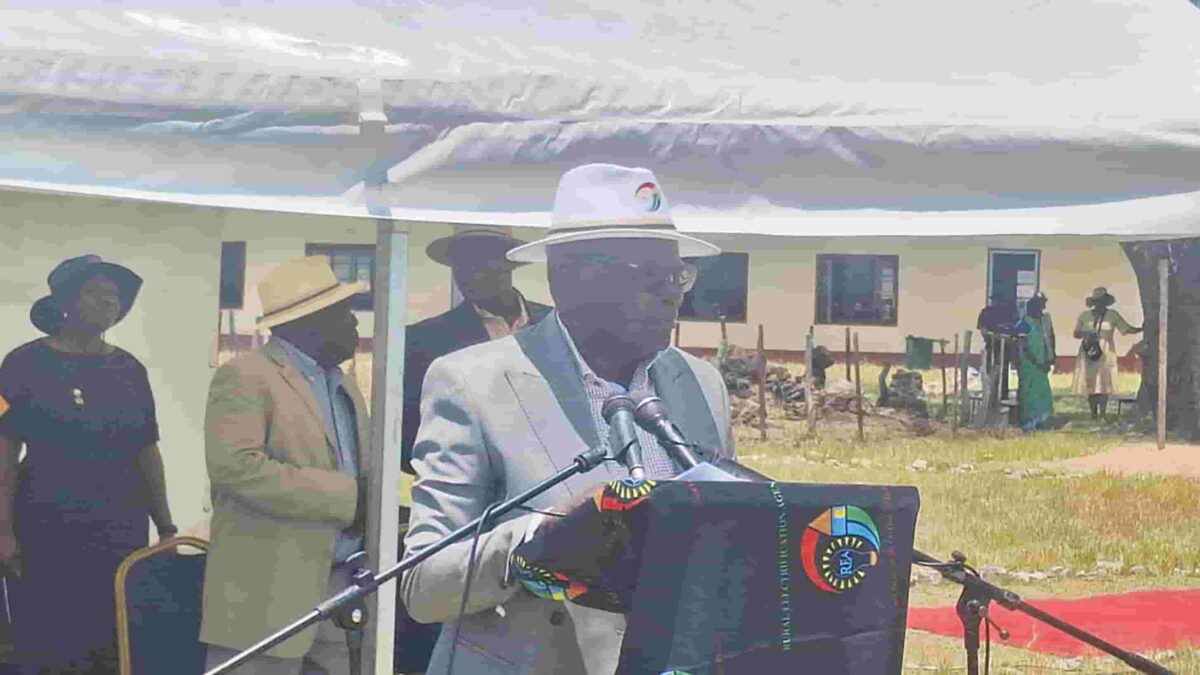
Speaking soon after switching on the power on Friday, Energy and Power Development Minister July Moyo challenged the newly connected institutions and surrounding communities to use electricity to stimulate production and advance the Government’s rural industrialisation drive.
He said access to power should translate into practical economic opportunities, including manufacturing agricultural equipment and other products needed by rural communities.
“Let us make use of the electricity and do welding and produce various products like scotch carts, hoes for use by schools and communities, among others and push rural industrialisation because you now have power. Use electricity for your own benefit,” said Minister Moyo.
He said every Zimbabwean deserved access to essential services, economic opportunities and decent living standards.
“A school without a reliable source of energy faces limitations in the use of modern teaching technologies and, as a nation, we cannot speak of modernisation of rural Zimbabwe when both teachers and students remain disadvantaged in terms of electrification,” said Minister Moyo.
He said Government was extending its rural electrification programme to traditional leaders’ homesteads, following the connection of chiefs’ homesteads.
“We are now embarking on electrifying all headmen’s homesteads and they are close to 600 in the country. We are also doing village heads and through the Village Business Unit we will ensure there is electricity and production,” said Minister Moyo.
He said electrification of secondary schools had reached 86 percent nationally, with progress also being made in connecting primary schools and clinics.
Minister Moyo urged the private sector to complement Government efforts by investing in renewable energy projects and establishing businesses in newly electrified rural areas.
“The Government calls upon the private sector to participate in rural development through taking up energy projects in the renewable energy space and to establish businesses in the electrified rural areas to promote rural industrialisation,” he said.
The minister also called on communities to protect electricity infrastructure against vandalism and educate children on the dangers associated with electricity.
REA board chairperson Mrs Celia Chitiyo said they were implementing three programmes, namely grid expansion, solar mini-grids and micro-grids.
She said the agency was connecting schools and clinics through a 100 percent subsidy funded by allocations from the board.
REA was also promoting biogas digesters as an alternative source of clean energy, particularly at boarding schools, where they could reduce reliance on electricity for cooking.
“We have been constructing these at boarding schools so that they stop using electricity for cooking but gas generated from the biogas digester, and we are promoting the same for domestic use.
“If you have eight cows, come to REA; they will construct for you a biogas digester and you enjoy cooking with gas in your own kitchen,” said Mrs Chitiyo.