Chronicle Editor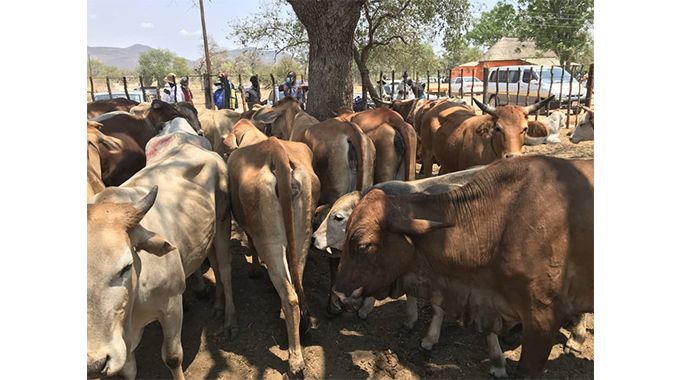
Flora Fadzai Sibanda, Chronicle Reporter
CATTLE are an important asset for most Africans; they are viewed as a birthright and a symbol of wealth.
They resemble how hardworking a family is and as such, they are protected.
Losing cattle is devastating to many families and it hurts even more when the cattle are not wiped out by natural causes but are stolen by another human being who instead of buying and nurturing their own cattle decides to gain from another person’s hard work.
Cattle rustling continues to be a big problem across the country, particularly in Matabeleland South Province where livestock production thrives.
For years, farmers have continued to lose their cattle to rustlers with no solution in sight despite the presence of stiff penalties for offenders.
The thieves do not only pounce at night but are also brave enough to trick farmers into shoddy deals under the pretext of being cattle sale agents.
Mr Thulani Ndlovu, a farmer from Gwanda recently lost over 20 cattle to an agent who claimed to be buying cattle on behalf of a local company.
Mr Ndlovu said when the agent first approached him, he was a bit sceptical but saw a lot of farmers who had trusted him and gave him their cattle and decided to join them.

“When I gave him the 23 cattle, he only gave me US$400 which he claimed to be the deposit he had been given. Back then it was a lot of money although it did not amount to the price of my cattle. I was happy and I relaxed. I became worried when four months went by without hearing anything from him. I asked some farmers if they had been paid as I thought I was the only one. I can’t say I was surprised when I discovered none of the other farmers had been paid as I had lost all the trust I had for him,” he said.
The cattle owner said they reported the bogus agent to the police but they did not see much progress as he claimed he also had not been paid by the local company.
Mr Ndlovu said they had since lost hope that they will ever get their cattle or their money back because it has been a while since the incident occurred.
“Losing such a large number of cattle is really painful because this is our children’s birthright and future. Losing the cattle means we are losing our children’s inheritance. We are still hoping for justice and to at least get our cattle back although the idea of getting it all back now seems to be far-fetched,” said Mr Ndlovu.
He said farmers selling cattle should have organisations that represent them when they want to sell their cattle so that similar incidents are avoided.
Mr Ndlovu advised cattle owners to do due diligence and not be easily sold “deals” especially those that seem too good to be true.
“When a deal is too good to be true, especially in livestock production, leave it alone until you are sure it is legit. Otherwise, we are going to have more of these problems where farmers are losing cattle because of bad judgment,” said the farmer.
Another farmer who fell prey to this scheme is Mr Eric Ndou from Beitbridge who said losing cattle through fraud hits harder than through natural causes.
He said one is left with the guilt of trusting an agent and with so many questions of why they trusted them.
Mr Ndou said he was approached by an agent who came with a lucrative deal that they could not resist as villagers. He said the agent promised to pay the money after seven days.
Mr Ndou said he agreed to the deal when the agent told him he was buying the cattle on behalf of 5 Brigade in Kwekwe.
“If someone mentions such a highly esteemed organisation, it is hard not to believe them. Rather you grab the risk with both hands. The only mistake I made was not asking for documentation to verify if he was really from there,” said Mr Ndou.
He said farmers become careless because they are easily charmed by deals that might bring in more money.
Mr Ndou said farmers should also desist from dealing with people they do not know.
“At the moment, the man has still not been caught and he robbed a lot of people. But we can’t blame the police because none of us knew where he was from and where he stayed. Had we been careful enough and asked this we would not have had this problem,” said Mr Ndou.
Mr Gadzikanai Gumbo from Bhambadzi described the feeling of losing cattle as a wound that reopens and gets worse just when the person affected thinks it’s about to get better.
He said his cattle were stolen during the 2020 Covid-19 period.
Mr Gumbo said he had left his cattle grazing at a nearby field with his sons watching them.
“You know how boys are, they get distracted and run away playing forgetting they should be minding something important. I don’t know what happened after that; the only thing I remember is seeing my son coming back scared with five of my cattle missing and not knowing their whereabouts.

“We usually put bells on the cattle so tracking them can be easy. The bells that were on my cattle were found on a track leading to the border,” he said.
Mr Gumbo said after the incident, he forgot about his livestock because he knew getting them was close to impossible.
He, however, said whenever someone mentions the incident, he gets hurt over and over again because the cattle were from his daughter’s lobola.
“I think it’s time we started embracing the technology of putting these software trackers on our cattle. By doing this, tracking the cattle is easier because honestly, looking for your cattle using a bell no longer works. Even if you mark them, what if the person who stole the cattle is from another district; it’s not like you can travel in all districts looking for them,” said Mr Gumbo.
He said butchery owners are also at fault as they prefer buying cattle from the middleman and not the farmers.
“They don’t even check if the agents got the cattle the proper way and if they are fully registered. A law needs to be introduced to the effect that all butchery owners who buy meat from unregistered people are arrested because they are also accomplices to some of these crimes,” said Mr Gumbo.
A butchery owner who could only be identified as Mr Sibanda said as owners of butcheries, they know the danger associated with buying meat from agents that are not registered.
He said they are aware that not only is it dangerous lawfully but also health-wise.
“In as much as we know how dangerous this is, we prefer buying from them because they are cheaper and eliminate transport costs as they bring the meat to your doorstep. We don’t ask any questions like where it is coming from and how they got it because honestly speaking we’re not interested in that detail but rather on whether the meat looks healthy,” said Mr Sibanda.
He said the responsible authority should consider reducing the prices they charge if a butchery owner is moving cattle on their own and if one is buying from the abattoir.
“If that is fixed, butchery owners will not see the need of getting meat from the unregistered agents because as it stands, doing things the legal way often leaves one without any profits,” said Mr Sibanda.
According to recent statistics from the police, almost 3 800 cattle were stolen from villagers countrywide last year while 336 suspects were arrested on stocktheft charges.
National police spokesperson Assistant Commissioner Paul Nyathi said despite the decrease in stock theft statistics compared to other years, the current figures of livestock being stolen are still high hence the need for continued cooperation between the police and communities.
“On the other hand, livestock buyers are advised to adhere to proper livestock clearance procedures that involve the use of ZRP livestock clearance certificate form 392 and veterinary animal movement permits,” said Asst Comm Nyathi.
He said the police continue to work with communities through anti-stocktheft liaison committees to increase cooperation between police and communities in the fight against stock theft.
“Branding and ear tagging of livestock to improve traceability and identification will help track down stolen cattle and following the regulations governing the livestock and meat industries should dry up the market for stolen cattle,” he said. — @flora_sibanda.


 Online Reporter