Online Reporter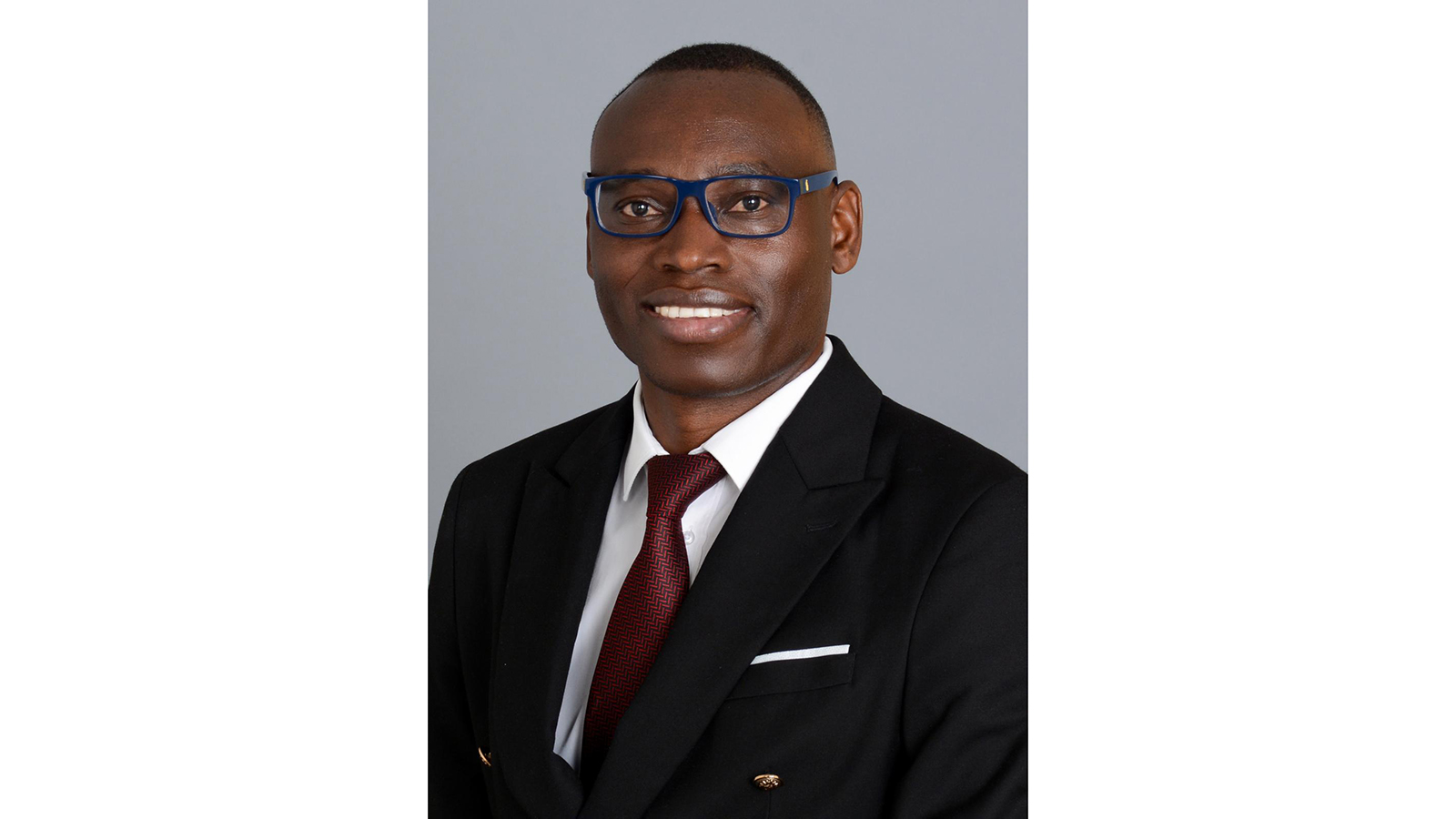
Herald Reporter
Zimbabwean executives have been urged to embrace controlled disruption and rethink traditional approaches to leadership as businesses navigate an increasingly unpredictable operating environment.
Business leaders are facing mounting pressure from changing markets, technological advances, rising operating costs and rapidly evolving customer expectations.
Against this backdrop, USA-based leadership trainer and business adviser Tendai Watyoka will conduct a leadership diagnostic workshop at the Jameson Hotel in Harare, warning that organisations focused solely on protecting existing operations risk being overtaken by businesses more willing to adapt, experiment and challenge established ways of doing things.
Watyoka argues that disruption should not always be viewed as a threat.
Instead, he believes it can be deliberately managed and used as an opportunity to strengthen businesses, improve performance and create new avenues for growth.
“Executives cannot simply manage what exists. They must also anticipate what is coming,” is the central message behind his approach to what he describes as disruptive leadership.
Protect the Core, Attack the Future
At the centre of Watyoka’s approach is Controlled Disruption, a leadership philosophy built around the principle: “Defend the Core. Attack the Future.”
The concept encourages executives to protect the parts of their businesses that currently generate value while simultaneously creating room to experiment with new ideas, technologies, markets and business models.
For established organisations, this could involve testing a new product before a full-scale launch, exploring a new market, introducing artificial intelligence into selected processes or redesigning the customer experience.
The objective is not to pursue change recklessly.
Rather, controlled disruption involves testing, learning, measuring and scaling what works.
According to Watyoka, companies that wait until disruption becomes unavoidable often find themselves reacting under pressure rather than leading strategically.
The Hidden Cost of the “Little Foxes”
Another element of Watyoka’s approach is the Little Foxes Framework, which focuses on the small, often overlooked problems that gradually undermine business performance.
Executives naturally tend to focus on major issues such as declining revenues, large expenses, competitors or significant operational failures.
However, smaller inefficiencies can accumulate quietly.
Unnecessary subscriptions, inefficient processes, poorly managed expenses, lost customer opportunities, excessive meetings, outdated systems and underperforming products can all consume resources without receiving sufficient executive attention.
These are the “little foxes” that, individually, may appear insignificant but collectively can have a substantial impact on profitability and productivity.
The challenge for executives is therefore not only to solve visible problems, but to systematically search for the hidden ones.
Innovation Does Not Always Have to Be Radical
Watyoka also advocates Soft Innovation, an approach that challenges the assumption that innovation always requires a revolutionary product, major investment or entirely new business model.
In many cases, relatively small changes can produce significant improvements.
Simplifying a customer process, eliminating unnecessary approval stages, improving internal communication, automating repetitive administrative work or changing how teams use existing technology can all contribute to better performance.
For executives, the question is not always, “What revolutionary idea can we introduce?”
It can also be:
“What are we doing today that no longer makes sense?”
That question can expose opportunities that conventional strategic planning may overlook.
Leading Through Chaos
The broader philosophy behind disruptive leadership is that executives must become more comfortable making decisions in conditions of uncertainty.
Rather than simply reacting to external changes, leaders are encouraged to anticipate them.
This requires asking better questions.
Instead of asking why sales are declining, executives can examine which part of the customer journey is preventing growth.
Instead of simply asking why costs are rising, leaders can determine which expenses are creating value and which have simply become organisational habits.
And instead of asking why employees are not performing, executives can examine whether the organisation has created the systems, culture and incentives necessary for high performance.
The ability to ask these questions can help organisations move from reactive management towards more deliberate and strategic decision-making.
A Changing Business Environment
The call for greater leadership agility comes as businesses across Zimbabwe and the wider African market continue to operate in an environment shaped by technological change, economic uncertainty and shifting consumer behaviour.
For executives, the challenge is increasingly not whether change will occur, but whether their organisations will be ready when it does.
Watyoka believes companies that develop the capacity to experiment and adapt before disruption becomes an emergency will have a significant advantage over those that wait for circumstances to force their hand.
Disruptive Leadership Workshop
These issues will be explored at a Disruptive Leadership Workshop scheduled for 28 August 2026 at the Jameson Hotel in Harare, under the theme “Agility in Leadership — Leading Through Chaos.”
The workshop will introduce executives to the Little Foxes, Controlled Disruption and Soft Innovation frameworks, with an emphasis on practical leadership application and organisational diagnosis.
The central message is simple: disruption is coming whether organisations are prepared for it or not.
For Zimbabwean executives, the strategic choice may therefore be between waiting for disruption to happen to their businesses — or learning how to manage it, harness it and use it to create new opportunities.
In an increasingly unpredictable business environment, the executives who thrive may not be those who avoid disruption, but those who learn how to lead through it.