

 aurora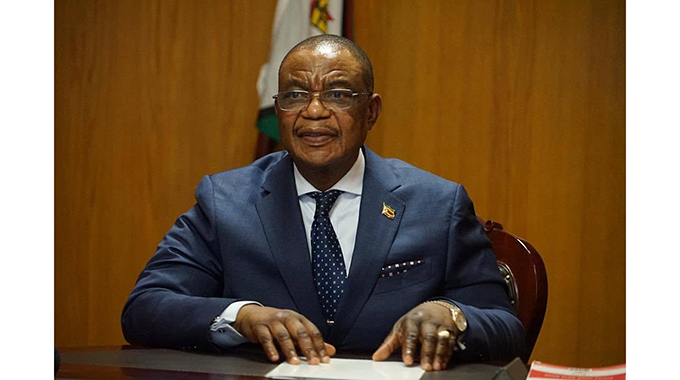
Business Writer
The Zimbabwe economy can no longer be broken down into formal and informal sectors, but should instead recognise everyone engaged in economic activity across micro, small and medium enterprises sectors, according to Vice President Dr Costantino Chiwenga.
Over the years there has been decry that the formal economy is shrinking while the informal economy is ever growing.
The World Bank described the informal economy as a shadow economy and said the Zimbabwe one has grown to 65 percent of GDP.
The global lender also said the informal workforce, now comprises 85 percent of the total workforce.
According to the World Bank high levels of informality generally means weaker development outcomes. Countries with larger informal sectors have lower per-capita incomes, greater poverty, greater income inequality, less developed financial markets, and weaker investment and are farther away from achieving the goals of sustainable development.
As in other parts of Africa, the informal sector in Zimbabwe comprises self-employed entrepreneurs and micro-enterprises employing small numbers of paid full- or part-time wage workers and some contracting out for household production.
But according to Vice President Chiwenga, while officiating at the 2021 Zimbabwe International Trade Fair International Business Conference held in Bulawayo last week, the local economy can no longer be viewed as comprising the informal and formal sector.
“We no longer view our economy as comprising formal and informal sector. Indeed, we consider our economy as comprising economic agencies including the micro, small and medium enterprises, variously referred by some as the informal sector.
“This paradigm shift means that enterprising individuals sustaining themselves through engagement business in the micro, small and medium enterprises sector should no longer be considered as unemployed just because they are not in waged employment.”
Vice President Chiwenga said the Second Republic’s thrust is to encourage and incentives more people to start businesses and improve their personal lives through lawful means.
Vice President Chiwenga’s view was supported by economic analysts Walter Mandeya who said the economy has changed and new methods of accounting for economic activity need to be developed.
“I will give some examples. The Zimbabwe Stock Exchange (ZSE) is the main exchange, but there is Financial Securities Exchange (Finsec) also and it is hardly ever mentioned because it is too small. Now compare both ZSE & Finsec to Mbare, which as a major commodity market is completely unaccounted for. No stats whatsoever, even aggregated data, for example, number of deliveries, tonnage, number of shoppers, etc.
“What the VP is saying is, government should work with these small players and put measures at that level to better understand them, regulate and encourage them to grow into proper formalised businesses,” said Mandeya.
Zimbabwe Confederation of Trade Unions (ZCTU) President Peter Mutasa, however, believes focus should still be on formalising economic activities operating outside formal channels.
According to Mutasa, informality creates many policy challenges, like shrinking fiscal space, lack of social security, poor working conditions, environmental degradation and many others.
He said Government has to acknowledge that the informalisation of the economy is a policy problem that requires policy interventions as informality in Zimbabwe is a result of de-industrialisation which started with ESAP right through to indigenisation policy.
“We, therefore, should be encouraging formalisation of the informal economy in line with ILO Recommendation 204.
“This ensures that we rebuild our industrial capacity by assisting the small informal entrepreneurs to formalise, grow and compete better in markets and in attracting capital. We will also be able to ensure regulation of labour laws and develop decent jobs with better conditions. Formalisation also ensures extension of social protection to a wider pool of citizens,” said Mutasa


 Online Reporter