Online Reporter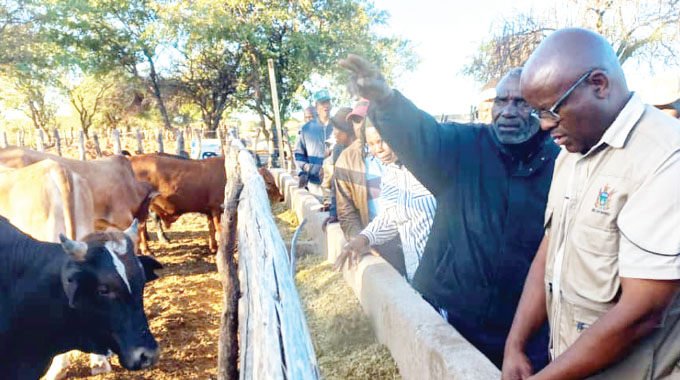
Thupeyo Muleya, Beitbridge Bureau
FARMERS in Matabeleland South have been urged to transition from subsistence to commercial farming by embracing smart agriculture practices and market-led production models that prioritise profitability and sustainability.
Speaking during a recent production assessment tour of horticulture projects in Gwanda and Beitbridge districts, Chief Director in the Ministry of Lands, Agriculture, Water and Rural Development, Mr Leonard Munamati, said the transformation of agriculture in the province was encouraging.
He commended the progress made, particularly in areas where market-led production is being practised, with farmers now cultivating crops based on consumer demand.
“Market-led production in agriculture is crucial because it helps farmers align their output with actual market demand, leading to increased profitability and sustainability,” said Mr Munamati.
He explained that focusing on market needs helps reduce production costs, improves quality and enables farmers to secure better prices.
Mr Munamati said that adopting this model empowers farmers with knowledge and decision-making skills, allowing them to plan effectively, boost productivity, and contribute to a more inclusive rural economy.
He also highlighted the benefits of smart agriculture techniques such as drip irrigation — a water-efficient system that delivers moisture directly to the root zones of plants, enhancing yields even in dry conditions.
Mr Munamati urged farmers to treat agriculture as a business and to make informed use of land, extension services, and appropriate implements to maximise output.
“We are impressed with the horticulture projects in Matabeleland South. Our message to farmers is clear: they should identify markets before growing crops or raising livestock, and focus on supplying those markets,” he said.
During the tour, Mr Munamati visited Makhado Ranch in Gwanda, Toppick High Integrated Farm, and the Aluwani Farmer Learning Centre in Beitbridge — all of which he described as models of smart, market-aligned agricultural production.
The Aluwani Farmer Learning Centre, in particular, was praised for equipping communal farmers with practical skills and boosting household incomes. Mr Munamati said such centres are instrumental in developing successful, self-sustaining farmers.
“We’re seeing more horticulture farmers emerging from these centres. This model should be replicated across the province to uplift more rural communities,” he said.
Mr Munamati also noted that, to mitigate drought, many farmers were now producing their own stock feed with support from agricultural extension officers.
He encouraged continued diversification and innovation in farming practices.
Chairperson of the Aluwani Farmer Learning Centre, Mr Rueben Shanga Ndou, applauded the Government’s initiative, saying it had empowered communities.
“We have become a model for Tshapfutshe. Through knowledge sharing, more villagers are generating income and improving livelihoods,” he said.