admin
admin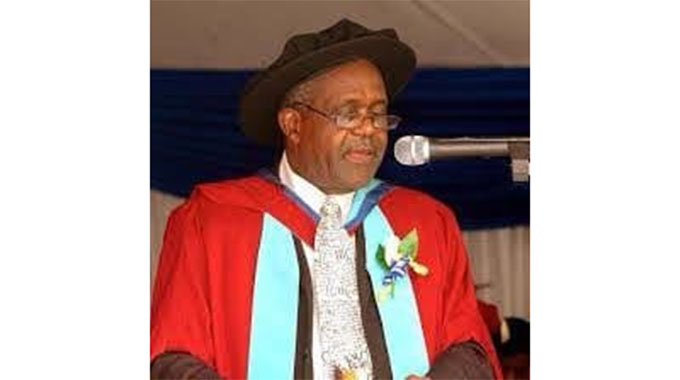
Sifelani Tsiko Innovations Editor
DR GIBSON Mandishona, a multi-talented and leading research scientist, mathematician and statistician, who moved the centre ground of Zimbabwe’s innovation and renewable energy drive, has died.
He was 83.
Dr Mandishona died on Saturday from a stroke at Parirenyatwa Hospital in Harare.
His daughter Mary – Ann told The Herald on Sunday that her father died at 4.30pm.
“He was very healthy but he suffered a stroke and died. He had been admitted at Parirenyatwa Hospital for a week,” she said.
“We have lost the greatest, compassionate, wise and beautiful soul. He touched so many lives with grace, empathy and love. We will miss his light. We will miss his jazz music. We will miss his unconditional love for all his relatives, friends and family.
“He went above the call of duty to serve humanity and the planet through community work and renewable energy research innovations.”
Dr Mandishona was a recipient of numerous academic honours and was set to be conferred with an honorary doctorate degree of the London Graduate School and the Commonwealth University of Business Arts and Technology for his lifetime achievements and contributions in October this year.
In 2021, Dr Mandishona was among outstanding Zimbabweans that were honoured by President Mnangagwa for excelling in various fields.
He was honoured with the Order of the Star of Zimbabwe Silver Medal Award during the 2021 Heroes and Defence Forces Day commemorations.
Dr Mandishona had vast interests in the field of technology innovations, corporate management, township music and Shona poetry read in schools in the country.
He was also instrumental in the establishment of Zimstat, SIRDC, ZIMRA and the Harare Institute of Technology.
Other accolades include a merit award of the Research Council of Zimbabwe, 2019 Board Chairperson of the Year and Higher Learning and Tertiary Institutions – Institute of Corporate Directors award.
Dr Mandishona was the first board chairman of the Harare Institute of Technology and in the 1970s he once worked for the United Nations as a statistics and demography consultant.
He was active and globally recognized in the field of science and innovation especially in the field of renewable energy.
He installed the first Solar Street traffic light in Harare in 1993 which is still active today (close to Prince Edward School). He spearheaded the first International Solar Energy Society hosting of the World Solar Summit in 1996 in Harare.
Dr Mandishona served in various local, regional and international organisations.
He was the Dean of Physical Sciences at the Zimbabwe Academy of Sciences (ZAS), chairman of NMB Bank, patron of the Jazz Association in Zimbabwe, chairman of Community Technology Development Organisation board, ZESA and numerous other organisations.
In 1998, he founded the Centre for Renewable Energy and Environmental Technology (CREET) which spearheaded the installation of biogas and solar power plants in Zimbabwean rural communities.
He was a part of many charitable organisations including chairman the Painted Dog Conservation in Hwange National Park.
Dr Mandishona was a writer and poet of Shona books which include — Svosve which remains in the O’Level curriculum for Shona poetry.
He edited the Zimbabwe Township Music book.
Dr Mandishona was born in a small town of Chegutu in 1940. After attending secondary school in Zimbabwe, he completed BSc (Hons) with majors in Physics and Mathematics.
During his student years at the University of Zimbabwe in the 1960s, he was part of the first student members of ZANU PF which organised peaceful protest activities against the racist Rhodesian regime.
He later attended UK universities and attained MSc and PhD degrees in Mathematics at the universities of Kent and Nottingham respectively.
In 1975, Dr Mandishona was a university lecturer in Mathematics, before he moved to Addis Ababa, where he worked at the United Nations, as a consultant in statistics and demography (1976-1980).
He was a Pan-African activist throughout his life, and whilst in Ethiopia he contributed immensely towards the emancipation and liberation of several African countries.
As part of his activism and dedication towards the upliftment of Africans, he formed the UK Black Student Alliance which was responsible for educating black students in the field of nuclear science which was prohibited by the Rhodesian regime.
The first recipient was South African Dr Gordon Sibiya, the first black nuclear scientist in Africa.
In Ethiopia, Dr Mandishona formed the organisation which trained the first black Zimbabwean air pilots.
During this time, he was active in providing support in the liberation movement and worked closely with committees that provided support both financial and material to the liberation movement. Most of the liberation leaders were hosted and facilitated by Dr Mandishona, as he mobilised support for Southern African liberation movements.
He returned home when Zimbabwe became independent in 1980.
Dr Mandishona was the first black director of the Central Statistics Office. He continued to work in this post, whilst experimenting on renewable energy devices to improve environmental sustainability and protection.
He built his own ‘award winning’ prototypes of a biogas plant and a producer gas generator (gasifier).
From 1993, he headed the GEF (Global Economic Forum) Zimbabwe Solar Project which oversaw the installation of over 20 000 solar PV systems in rural homes, business centres, schools, clinics and co-operatives.
The leading mathematician and researcher has been widely recognised for his exceptional contributions to science and innovation.
Apart from science and innovation, Dr Mandishona had a strong passion for music which saw him working closely with Bob Marley — a musical spiritual and revolutionary hero of all time to compose the song Zimbabwe.
It was this song – Zimbabwe – which influenced the revolutionary struggle and helped Marley’s historic performance in Zimbabwe in 1980 to open the doors of reggae music in Africa.
“The Zimbabwe tune by that time didn’t have the full lyrics. Yes, I gave him a few words which he put in the lyrics to polish up the Zimbabwe track which he later released on his 1979 Survival album. So this was my modest contribution to this track which is still a global anthem and loved by many people across the world,” Dr Mandishona told the Herald in an interview early this year.
“He was very interested in my musical work although I was not a reggae brought up musician. I was not much into reggae music but being an artiste and under the mentorship of the legend himself I found myself throwing in my ideas so as to add the African sound to the song.
“While we were practising the song, I would add my ideas both in the instrumentation and lyrical bit of the song until it was complete. He asked me to join him on a tour of the rest of Africa but I told him it was not possible because I had a permanent job. I had my family here in as much as I was going to be excited to tour with him. So I couldn’t travel with him.”
Community Technology Development Organisation director Andrew Mushita said he was devastated by Dr Mandishona’s death.
“This a great loss to us. His renewable energy innovations had a huge impact on local communities dotted around the country,” he said. “I am devastated by his death.”
“We love you so much papa. Rest in peace, rest in power Nyamasvisva, vaTsunga, Nhari uneNdoro, Samanyanga,” said Mary – Ann. “We will miss you papa.”
Dr Mandishona is survived by four children — Taona (48), Mary – Ann (45), Anthony (43) and Tanya (35). He divorced his wife – Kukie Jane Mandishona in the 1980s.
Mourners are gathered at 687 Glenwood Drive in Glen Lorne.


 leeroy