

 Online Reporter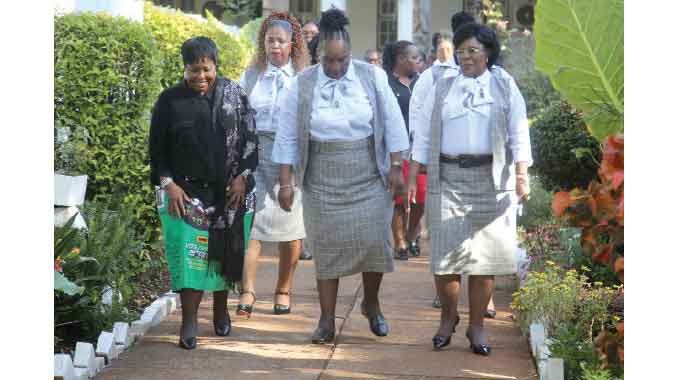
Rumbidzayi Zinyuke-Senior Reporter
WOMEN empowered through First Lady Dr Auxillia Mnangagwa’s initiatives have become self-sufficient and are now extending the same support to others, demonstrating the lasting impact of the empowerment drive.
Beneficiaries drawn from the Zimbabwe Prisons and Correctional Service (ZPCS) Phakamani/Simukai Women’s Network on Thursday presented Dr Mnangagwa with an assortment of products they now manufacture as a gesture of gratitude and proof that the skills and starter packs they received have transformed their livelihoods.
The group, which comprises serving female officers, spouses, widows, pensioners, wives of retired officers and reformed female inmates, said the gesture symbolised appreciation for the life-changing skills and opportunities they received through the First Lady’s initiatives under the Angel of Hope Foundation.
Formed as a platform to empower women within the ZPCS community, the network has grown to include more than 4 000 members drawn from all the country’s provinces.
It operates under the patronage of ZPCS Commissioner-General Dr Moses Cyrial Chihobvu, with Deputy Commissioner-General Mrs Christina Manhivi as vice patron, while Mrs Marian Chihobvu serves as the national chairperson.
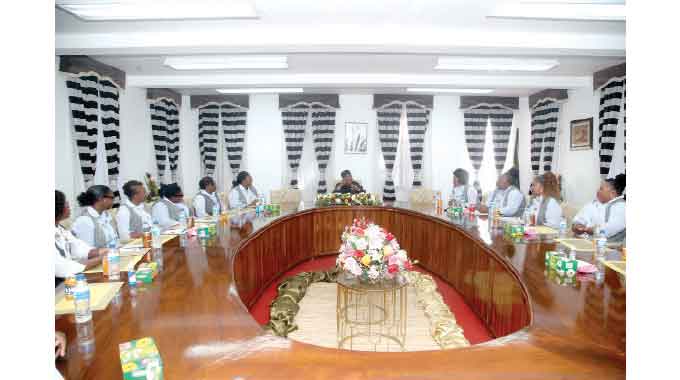
First Lady Dr Auxillia Mnangagwa meets Zimbabwe Prisons and Correctional Services Phakamani/Simukai Women’s Network members in Harare before they donated various goods in support of her empowerment initiatives. — Pictures: Joseph Manditswara.
Members said the training and starter packs they received from the First Lady in 2021 restored their dignity and gave them a renewed sense of purpose.
They presented various goods including detergents, cleaning materials, school uniforms, water bottles, bags and petroleum jelly, all produced through skills imparted under the First Lady’s empowerment programmes.
ZPCS Deputy Commissioner-General Support Services Mrs Manhivi said the network was revived and strengthened following guidance from the First Lady.
“We used to have a women’s network in the past but it was not doing well, so when the First Lady came, she advised us to join hands as women so that we could uplift each other through projects. She came into the camps and told us not to leave anyone behind,” she said.
“She is the one who equipped us with the knowledge on how to make these detergents and dishwashing products and since then we have taken those lessons and diversified even the products we produce.”
National chairperson Mrs Chihobvu said the initiative had unified women across different backgrounds.
She said the programme deliberately included all women linked to ZPCS.
“When those in leadership joined, others began to take it seriously. We realised that the same problems affect all women, whether at work, at home, widowed or incarcerated. By working together, we can reduce conflicts in homes,” she said.
“Financial challenges are a major driver of gender-based violence, so empowering women helps address this.”
Phakamani/Simukai national coordinator Ms Tizai Chimpasi said the network continues to grow and extend its reach.
“When we met with the First Lady, we trained four women from each province who then went back to train others. As we grow, we are now helping others. Recently, we assisted more than 60 families living with disabilities in Mabuthweni, Bulawayo,” she said.
Principal Correctional Officer Sibonakele Ndanga said the programme had strengthened women’s economic independence.
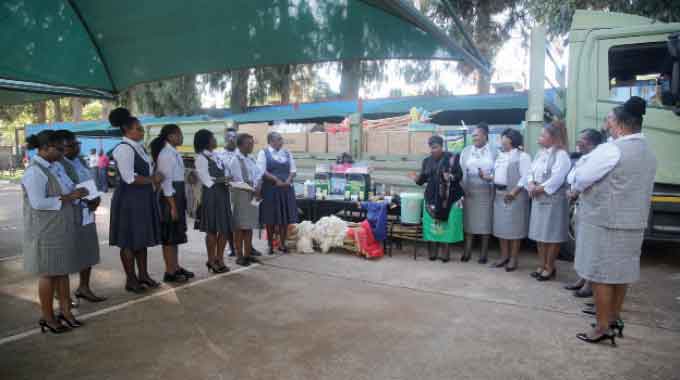
First Lady Dr Auxillia Mnangagwa is shown detergents and assorted goods presented by members of the ZPCS Phakamani/Simukai Women’s Network in Harare.
“As female officers, we believe that when we remove the uniforms, we are mothers who must take care of our families. Through Phakamani, we got financial literacy and learnt the importance of multiple income streams,” she said.
“An empowered woman faces fewer conflicts at home because she contributes to the family’s upkeep.”
The network also includes young people who are benefiting from the empowerment projects.
Assistant Principal Correctional Officer Paidamoyo Chipfuko said young women were now on course to drive the economy.
“As young people, we are happy to be part of this network. We have formed groups and even rented a farm where we produced watermelons for sale,” she said.
“We have also participated in Amai’s Cookout Competitions and benefited from them. These projects are helping us improve our lives and also contribute to national development.”
Advisor to the network Mrs Mebhi Mpofu said emphasis was also placed on personal presentation and confidence.
“The First Lady taught us that a woman’s first impression comes from how she presents herself. We ensure that women market their work through their appearance,” she said.
“We are also equipping them to go and share what they have learnt with others. So we are taking this knowledge to rural areas because these projects are easy to start and do not require a lot of capital.”
Harare Central chairperson Mrs Nyembezi Mhizha, whose husband has retired from service, said the initiative had helped bridge divisions among women.
“In the past, there were conflicts between female officers and wives of officers because there was no trust. We did not realise we could work together and achieve something great,” she said.
“Now we understand that we must work hard as women to support our families. Even after retirement, life must continue, which is why this network includes everyone.”
She said members had learnt new skills, including sewing and hairdressing, adding that they hope to open retail outlets soon.
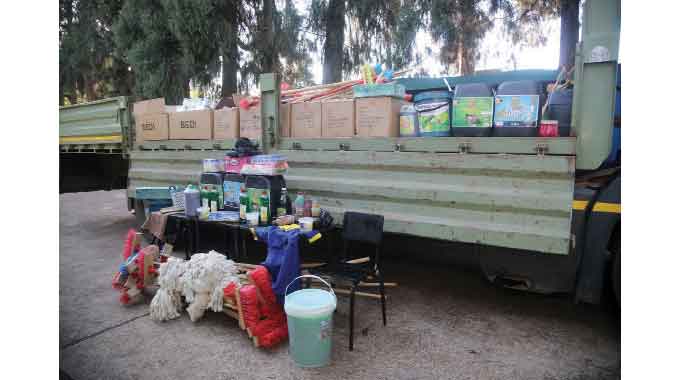
Some of the detergents and assorted goods presented by members of the ZPCS Phakamani/Simukai Women’s Network to First Lady Dr Auxillia Mnangagwa in Harare.
Upon receiving the donation, Dr Mnangagwa expressed heartfelt appreciation, saying she was humbled that the women had embraced and utilised the knowledge they were given.
“I feel so humbled that you remembered what I taught you and you came back to show your gratitude. Sometimes you give someone a skill but then you realise that knowledge is being wasted,” she said. Dr Mnangagwa urged the women to continue mentoring others and to share the knowledge widely.
“Do not just stop there. I want you to continue to mentor other young women and give them a chance to improve their livelihoods. Do not keep the knowledge you have gained to yourselves, people need to know the good deeds you are doing,” she said.
The First Lady also called on women to uphold discipline both at home and at work, while taking a leading role in addressing social challenges such as drug and substance abuse. “It is important that when you take off that uniform, you become a woman, a mother and you have to step up and show that you are organised both at work and at home,” she said.
“A woman thrives when everything is going on well at home and at work. You should not just sit and wait for your husband to do everything but you should work hard and make sure that you have a role that you play in the development of your family and your country.”
Mother Zimbabwe said it was up to women to guide their children and other young people and protect them from the scourge of drug and substance abuse.
The First Lady also commended the unity within the network, saying in the past it was rare to see women working together harmoniously.
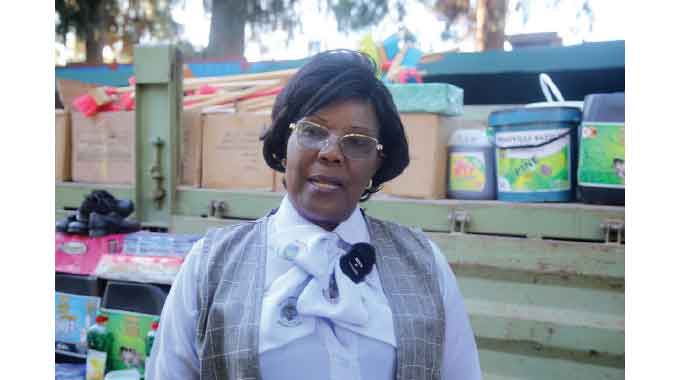
Zimbabwe Prisons and Correctional Services (ZPCS) Phakamani/Simukai Women’s Network vice patron Deputy Commissioner Christine Manhivi speaks after handing over detergents and assorted goods to First Lady Dr Auxillia Mnangagwa.
“I am happy that you took everyone on board from serving officers to widows and prisoners. This shows that the spirit of leaving no one and no place behind is alive in you,” she said.
“Sometimes differences are there but if you correct each other with love and respect, you can get through all those problems and work towards your goal.”
The First Lady further expressed appreciation to ZPCS leadership for supporting the initiative.
Through her Angel of Hope Foundation, the First Lady has spearheaded numerous initiatives aimed at empowering women and improving livelihoods, particularly among vulnerable groups.
Her outreach programmes, which have reached all of Zimbabwe’s 10 provinces, including remote areas, continue to transform lives and inspire communities, with beneficiaries such as the Phakamani/Simukai Women’s Network now emerging as agents of change.



