admin
adminresources in their communities.
In a speech read on his behalf by Mashonaland East provincial administrator, Cuthbert Ndarukwa at Hokonya Primary School in Chikomba, Minister Nhema said chiefs were the custodians of the country’s natural resources.
He was addressing heads of government departments, local leaders and school children who attended the commemoration of the Ministerial Tree Planting and 2012 World Forestry Day.
“Every chief has a responsibility to develop his area through such programmes as tree planting. It is through such programmes that food security is guaranteed while the protection of other resources is also achievable.
“Preserving forests preserves our heritage. These trees and other natural resources are not just for us but for generations to come so we must protect them diligently,” he said.
World Forestry Day is celebrated every 21st of March.
The United Nations adopted the day in 1971 in an effort to curb deforestation.
The theme for this year is “Our Forests-Our Life” while the chosen tree for Zimbabwe is “mumvee.”
Minister Nhema said there was need for communities to have localised laws to guard their immediate environments and work closely with the police for their enforcement.
Hokonya School has so far planted 3 500 trees while the surrounding villages have received 1 500 trees from Minister Nhema.
Chivhu district administrator, Ms Beauty Tagarira, also challenged the Chikomba community to take charge of their resources and do everything to re-establish all the forests that had been wiped out due to human activities.
“Our forests face serious threats from veld fires and wood harvesters who do not plant anything after cutting down trees.
“Chikomba now has more than 200 tobacco farmers who will all need to cure their crop so it is imperative that we grow more trees,” she said.
“I am happy that the district has so far planted 56 235 trees with 80 percent of them in schools while 17 715 seedlings have also been nurtured for the programme”
Chikomba has 132 environmental clubs in schools and 48 of the schools have also registered to participate in competitions involving the environment. There are 118 primary and 51 secondary schools in the district. Chief Musarurwa said in the past there were sacred trees in the district, which were strictly preserved.
“Trees such as mutsubvu, munhengeni, and hute to name just a few were called “chirisanherera” and were supposed to produce fruit to help in the nourishment of orphans.
“Most of these trees have since been decimated as people settle and clear the land for agricultural purposes. We are saying these trees have to be replaced without fail,” he said.
Chief Musarurwa appealed to the Environmental Management Agency to consider resuscitating Campfire programmes in the different parts of the country. Chief Musarurwa later donated books to four schools saying the children should use them appreciating that they (books) were tree products.


Online Reporter
- Herald
- September 24, 2026
- 5 views
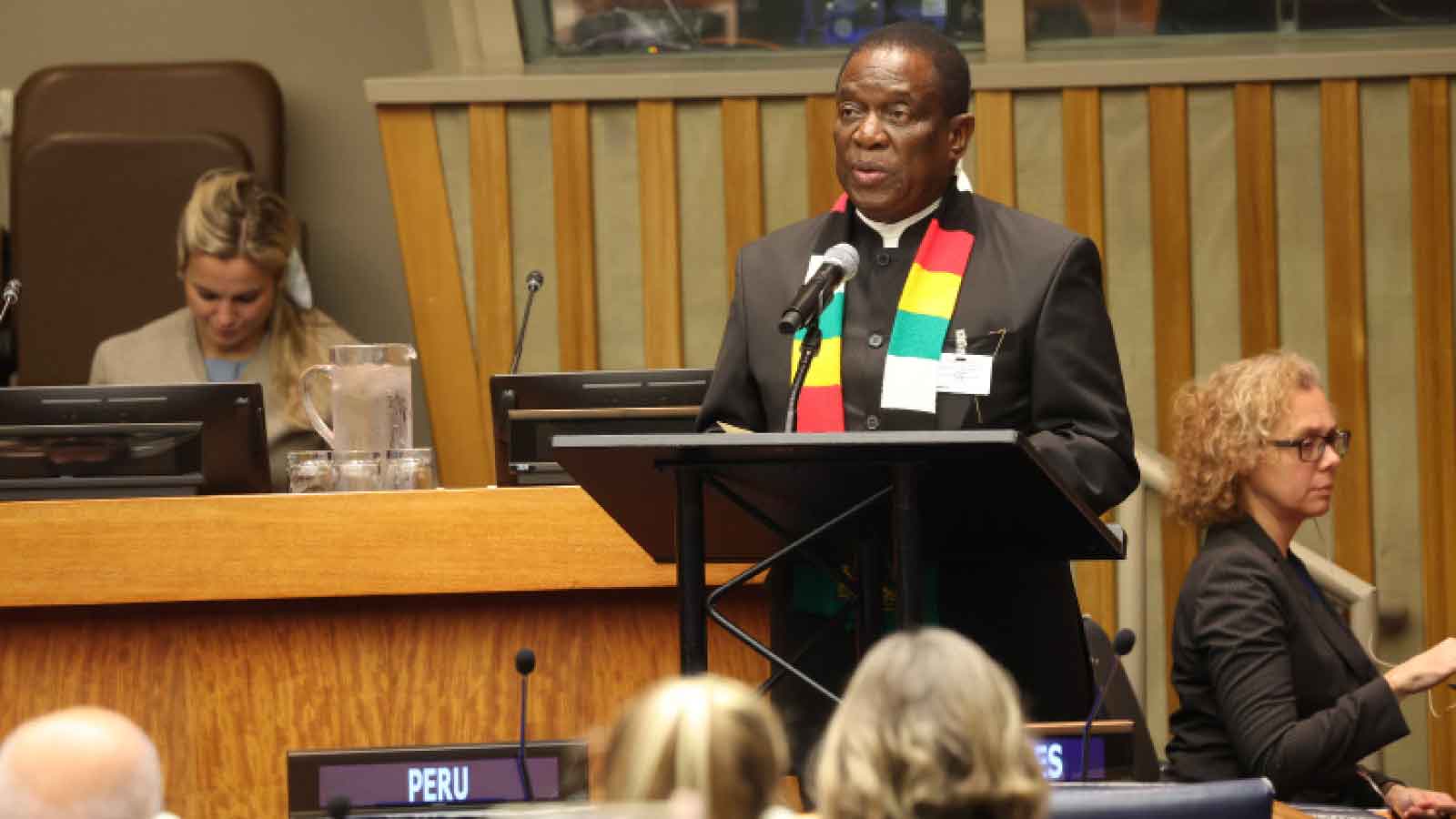
‘No to global inequalities’ . . . Development a basic human right for all, says President
Wallace Ruzvidzo in NEW YORK, USA DEVELOPMENT acquires its fullest meaning when every person and nation has a genuine opportunity to shape their course and share the benefits, President Mnangagwa…