Online Reporter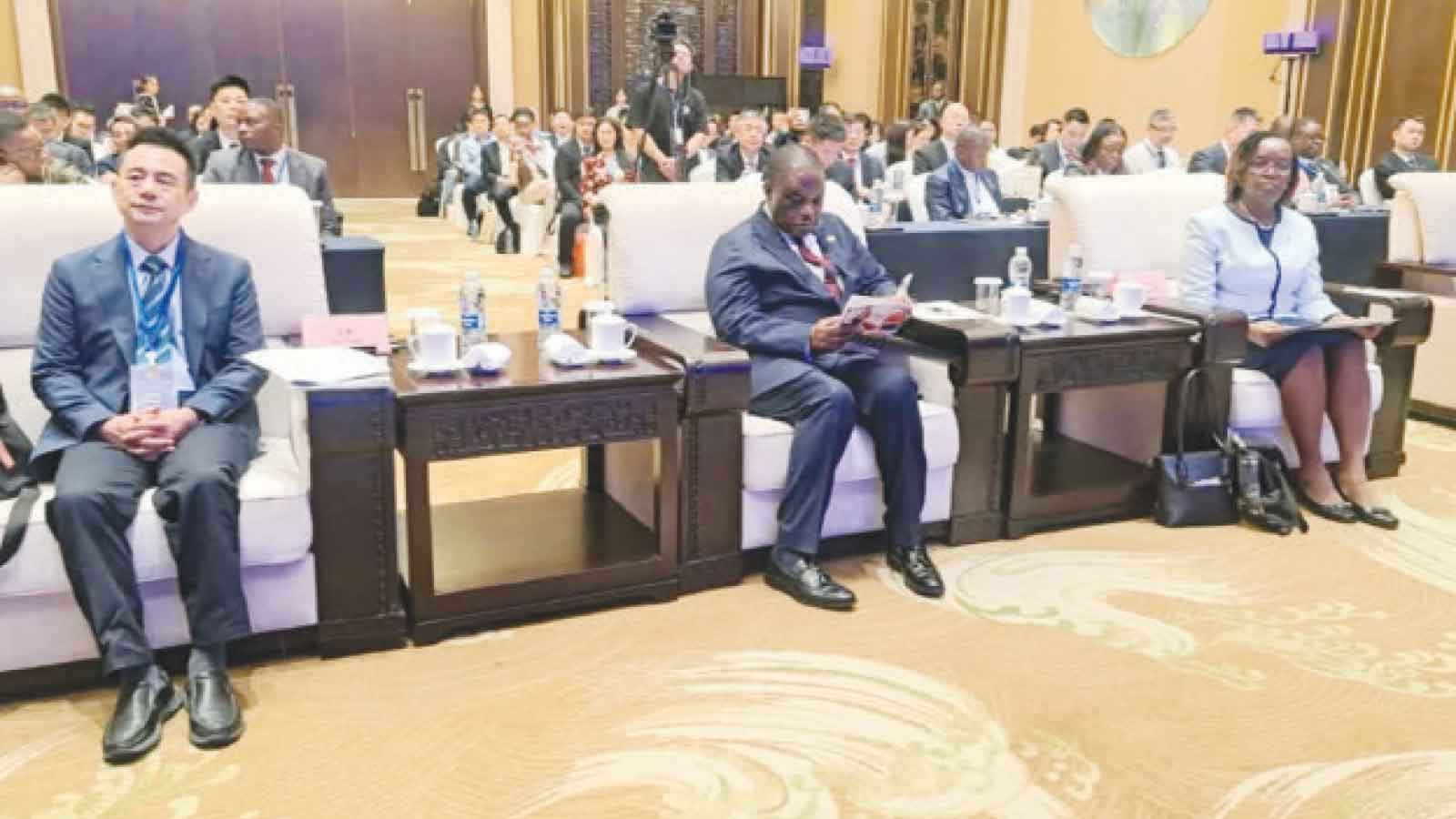
Kuda Bwititi in Beijing-Zimpapers Politics Hub
IN a definitive declaration that signals a permanent departure from the historical, extractive economic model, Vice President Dr Constantino Chiwenga on Tuesday announced that the Government of Zimbabwe will no longer license isolated, single-mineral mining operations.
Addressing delegates at the Zimbabwe-China Business Forum in Hangzhou, the Vice President said that Government will no longer allow mining approvals that have no value addition strategies.
He articulated the Second Republic intention that all future mining investment must incorporate robust beneficiation capacity capable of identifying, separating and processing the multiple mineral ores embedded within local deposits.
This strategic pivot represents a fundamental recalibration of Zimbabwe’s economic architecture, designed to capture maximum value from the nation’s natural endowments and accelerate the march toward Vision 2030.
For decades, the African mining paradigm has been characterised by the export of raw, unprocessed ores, a model that has historically deprived resource-rich nations of the wealth generated by their own soil.
Vice President Chiwenga’s announcement directly confronts this legacy. Through the new policy of mandating integrated mining operations, the Government is effectively closing the door on ventures that seek to extract a single mineral while ignoring the complex, multi-layered geological reality of Zimbabwe’s ore bodies.
The VP grounded this policy shift in an undeniable geological reality, which is that Zimbabwe occupies an “elite geological tier.”
He highlighted that the country is ranked second globally for the most geographically concentrated layer of strategic minerals, particularly along the Great Dyke.
Crucially, every primary input required for the burgeoning global electric vehicle (EV) battery chain—lithium, nickel, graphite, manganese, and cobalt—as well as the hardware stack for artificial intelligence—copper, chrome, Platinum Group Metals (PGMs), and rare earth elements—exists within Zimbabwe’s borders.
This unique geological advantage demands a sophisticated response.
Allowing investors to mine only one mineral from a poly-metallic deposit is an economic inefficiency the State can no longer tolerate.
The new model compels investors to bring in advanced machinery and technology capable of separating and beneficiating the full spectrum of embedded minerals, thereby transforming Zimbabwe from a mere supplier of raw materials into a critical node in the global high-tech supply chain.
To operationalise this beneficiation agenda, the Government is anchoring its strategy in the development of Special Economic Zones (SEZs) and dedicated industrial parks.
These zones will serve as the physical and regulatory hubs where upstream extraction seamlessly integrates with downstream manufacturing.
VP Chiwenga provided a clear blueprint for this evolution, citing the steel industry as a prime example.
The national objective is no longer just to produce raw steel, but to foster an ecosystem where steel production naturally evolves into the manufacturing of steel bars, flat steel, pipes, wire, and high-value automotive alloys.
Through clustering these interconnected industries within SEZs, Zimbabwe aims to create economies of scale, attract technology transfer and generate sustainable, high-skilled employment.
This approach ensures that the wealth generated from the ground is retained, multiplied and reinvested within the domestic economy.
The Vice President astutely noted that the philosophy of value addition at source must not be confined to the mining sector; it is equally imperative for agriculture, the backbone of Zimbabwe’s livelihoods and food security.
Despite boasting favourable agro-climatic conditions, fertile soils, and abundant water bodies, the agricultural sector has historically suffered from the same raw-export syndrome as mining.
Highlighting a glaring economic anomaly, Vice President Chiwenga pointed out that while Zimbabwe is Africa’s largest tobacco producer, it continues to export approximately 90 percent of its crop as raw leaf.
This represents a massive forfeiture of potential revenue, jobs and industrial development.
The Government is now actively inviting investments to establish comprehensive tobacco value chains at source, encompassing cutting, blending, manufacturing, and packaging.
This “farm-to-table” ambition extends to other high-value cash crops, including citrus, blueberries, macadamia nuts, avocados, groundnuts and chillies.
In demanding full agro-processing value chains, the Second Republic is signalling its intent to transform agriculture from a primary production sector into a fully integrated, commercial and industrial powerhouse.
This dual-track approach to beneficiation in both mining and agriculture demonstrates a holistic, Government-wide commitment to structural economic transformation.
Strategic partnerships and infrastructure enablers
Recognising that this industrialisation drive cannot be achieved in isolation, Vice President Chiwenga emphasised the critical role of strategic, mutually beneficial partnerships, particularly with the People’s Republic of China.
He noted that Zimbabwe’s vast mineral wealth and fertile lands, when combined with Chinese technology, capital and expertise, provide the perfect foundation for a new phase of industrial development.
This synergy was evident in the bilateral engagements held on the sidelines of the forum.
The Vice President held productive meetings with Mr Roger Guo, Vice President of Sany Group, China’s largest construction machinery manufacturer and a global leader in heavy equipment.
Sany Group’s view of Zimbabwe as a lucrative market and a strategic gateway to the wider African region aligns perfectly with Zimbabwe’s need for advanced mining and construction equipment to execute its beneficiation and infrastructure agendas.
Similarly, the Vice President’s meeting with Mr Cheng ZhiQing, General Manager of China Railway 25th Bureau Group Co—a subsidiary of the Fortune Global 500 China Railway Construction Corporation (CRCC)—underscored the importance of infrastructure.
Efficient transport networks, including railways, roads and bridges, alongside reliable energy and ICT systems, are the indispensable arteries of any industrial economy.
They are required to move bulk, processed commodities from production centres to domestic, regional and international markets competitively.
Future-Proofing the Economy
Demonstrating a forward-looking perspective, Vice President Chiwenga’s itinerary in Hangzhou also included strategic visits to the forefront of technological innovation.
His tour of the Hangzhou City Brain Operation Command Centre—an AI-powered urban management platform utilising big data for real-time monitoring of traffic, public safety, and emergency response—highlighted Zimbabwe’s interest in adopting smart city technologies.
Furthermore, his visit to the headquarters of Alibaba, the global e-commerce and cloud computing giant, signalled an awareness of the digital economy’s role in modernising trade, logistics and financial services.
VP Chiwenga’s address in Hangzhou was a masterclass in economic statecraft. In drawing a firm line under the era of isolated, single-mineral extraction and raw agricultural exports, the Government has set a clear, non-negotiable standard for future investment.
This paradigm shift is informed by hard-learned historical lessons and a fierce determination to secure greater value from Zimbabwe’s God-given natural resource endowments.
Through leveraging the country’s elite geological status, enforcing integrated beneficiation, developing Special Economic Zones, and forging strategic, technology-driven partnerships with China, Zimbabwe is decisively laying the groundwork for a diversified, industrialised, and resilient economy.
This is the very essence of the national development agenda, charting an irreversible course toward upper-middle-income status by 2030.