admin
admin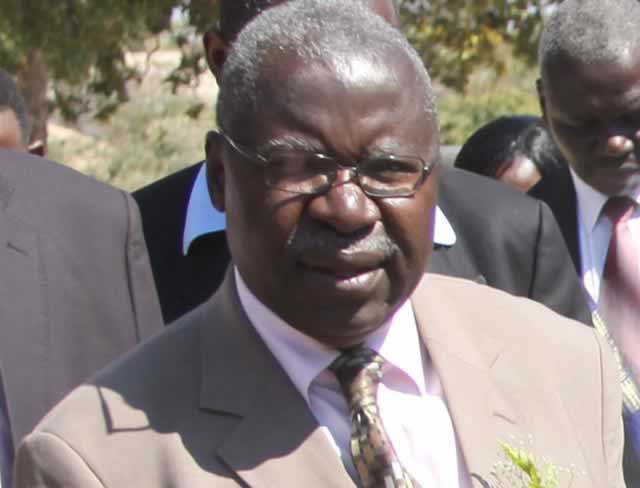
Morris Mkwate The Interview
ENERGY supply is critical if the country is to achieve its developmental targets. Government needs to correct the energy sector and ensure that the country has enough fuel and electricity to drive the economy. What is the current position as regards the availability of fuel in Zimbabwe? Star FM (SFM) presenters Napoleon Nyanhi and Morris Mkwate caught up with permanent secretary in the Ministry of Energy and Power development Mr Patson Mbiriri to talk about this and other issues.
SFM: How much fuel is Zimbabwe using daily and how much is coming by road, rail and Feruka Pipeline?
PM: In general terms, although of course consumption of fuel fluctuates from day-to-day, whether it’s a week day, weekend or a public holiday, on average we consume 1,5 million litres of petrol and 2,5 million litres of diesel per day giving us an average of 4 million litres of fuel a day.
SFM: There has been a contentious issue, the use of the Feruka pipeline as a conduit through which fuel comes into the country, what quantities are coming through road, rail or pipeline?
PM: Most of our imports are coming in by pipeline. Ninety five percent of our fuel imports are coming in through the pipeline. A bit of the fuel like jet A1 comes in by road because of the fear of contamination. From the southern route we bring fuel via rail but the dominant mode of bringing in fuel to Zimbabwe is now through the pipeline.
SFM: At one time there was scepticism by the oil industry as a method of bringing in fuel into the country. What do you attribute this to?
PM: A number of measures were taken. It is a bit of a carrot and stick. One of the reasons that the private sector was not willing to use the pipeline was that their oil was getting stuck in the line. In other words we were not bringing in enough to continuously push the oil in the pipeline. What has happened is that Government has taken all the fuel that is in the pipeline. And now whenever an investor brings in fuel and once the documents are in place a litre in is literally translating a litre out at the other end of the pipeline. As a way of stick, we have put in a US4c per litre on the use of the road and that has had a telling effect in the use of the pipeline. We now in fact are exceeding the design capacity in terms of the throughput of the pipeline.
SFM: AT a recent meeting of stakeholders in the petroleum industry, serious allegations were made against some senior officials in the ministry that they were prejudicing the country of millions of dollars by favouring some European companies in the use of the pipeline and the storage tanks in Mozambique. Is there any substance in these allegations and what is the ministry doing about it?
PM: Sometimes in public forums we tend to have situations exaggerated or generalised but yes of course there were challenges in the past in respect of the use of petrol tanks we have in Beira. Those are tanks we have a 45 percent stake and so does Petronag of Mozambique and so are the Kuwaitis. So it’s a joint venture relating to three parties. So when Noczim was disbanded the Kuwaitis were reluctant to receive fuel from any other party other than Noczim and that resulted in people who wanted to bring in fuel being denied storage space.
That situation has since been resolved and anyone can now store their fuel there for a fee.
SFM: It seems as though most garages are now owned by foreigners and local giants such as Wedzera have since been elbowed out of business. On indigenisation and liberalisation of the Petroleum sector, have the locals benefited?
PM: For now we have 25 licensed fuel companies in the country. Though they may have English names most of them are owned by indigenous people. Some of the companies have failed because they have very low profit margins per litre.
The margins have forced the companies to fold. We are working with Zera and Motor Traders Association on the issue of mark up especially for those who own one or two garages to make sure that they are able to remain in business.
SFM: What types of vehicles can safely use green fuel?
PM: It is mostly newer cars, cars post 2005 that can consume up to 15 percent ethanol. Most of our cars are imports from Japan and unfortunately Japan uses very low ethanol content in its petrol.
They use an ethanol content of two percent and so as we import these cars it is important that we are conscious of the fact that out of need and necessity it is necessary for us to use more ethanol in our petrol and to blend ethanol with unleaded petrol. It is newer cars that have this flexibility and there are cars that are specially and specifically designed to take up to E85 but you will not find this in the older versions of cars.
A couple of years ago there was an effort by Government to restrict the age of imports of vehicles and there was a huge outcry by motorists, members of the public and the media as well.
Government responded by relaxing that requirement. Had we done so at the time this question would not be arising. However, there are kits that can be installed on vehicles to enable them to take a higher level of ethanol but it is always wise to inquire from the manufacturers of the vehicle involved.
SFM: Talking of ethanol and green fuels, the owners of the Chisumbanje ethanol plant have just made an offer to the Government that if it agrees to a mandatory fuel blending of 15 percent by the end of October it would fund the 2013 and 2014 agricultural season. What is the position of the ministry on this offer?
PM: The offer from Green Fuel is interesting and it has called Government’s bluff and we have responded positively. We have already indicated that come October 15 we shall be moving from the five percent to 10 percent on a mandatory basis and come the January 1, 2014 we shall be moving to 15 percent. His Excellency President Mugabe has already indicated as much with a scope for moving on to 20 percent possibly in the first quarter of 2014.
SFM: It still seems that green fuel wants this mandatory blending to go up to 15 percent — 20 percent levels much earlier than the plans you have outlined. Would you say you would stick to your plans or meet halfway with them?
PM: I think this ought to be seen as a process and we will have to provide adequate infrastructure nationwide. It cannot be done overnight. We think the indications and the processes we have put in place relate to this well. Unfortunately this programme is coming on frame when there are already lots of stocks. If we were talking about new ethanol being produced there would not be this push by Green Fuel but we kind of overnight move from zero to whatever figure. We believe the programme we have discussed with industry is doable. We think there is good reason for proceeding along this line.
SFM: There is a concern that if we do not reach the 20 percent mandatory blending they will not be able to utilise their plant which jeopardises the employment of about 4 000 people at which the plant is not operating right now and the President is calling for value addition by local industry but we allowed the jatropha plant in Mt Hampden to close and right now the Chisumbanje ethanol plant is threatened. Are we not shooting ourselves in the foot considering the amounts of imports that we are making on fuel?
PM: I do not think we are, you hear figures cited in terms of employment and unemployment. In fact yes whereas from time to time the ethanol plant itself may be shut down but the rest of the support activity, growing of cane, irrigating of cane and many other activities are still continuing. Those processes have remained and the sugar not necessarily being thrown away if you guys just crossing the Save to Triangle, to Chiredzi and it’s being crushed into sugar. Yes there is something to be said about the need to move quickly but we have also stocks in terms of unleaded fuel which is X- Msasa, X-Feruka. We have stocks in terms of E5 we will have stocks in terms of E10 and we must allow these stocks to be used instead of just saying overnight as if all our tanks are empty and ready to receive E15, E20 whatever the figure maybe. We need a process that allows for existing stocks to be used and create space for new stocks at a higher level of ethanol, that process is necessary.
SFM: Mr Mbiriri two other parastatals at the National Oil Infrastructure Company and Petra Trade have been established in place of the National Oil Company of Zimbabwe (NOCZIM).The question in the minds of many Zimbabweans is are we not creating these huge bureaucratic entities which add administrative costs to the consumer without actually adding any value in terms of efficiency and delivery of service? What value have these structures added to our oil industry?
PM: On the contrary companies that have been created particularly in the fuel sector are not huge and their manning levels compare favourably with private companies and they are competing favourably and positively with private players. What we had was a fairly huge monopoly in the face of NOCZIM which was responsible for procuring fuel, which was responsible for storing fuel in Beira.
Pumping that fuel and of course selling the fuel to retailers so on and so on. And with the introduction of private players it was no longer tenable for private players to compete with a monopoly, it’s a universal challenge whenever you liberalise. And it was important at that point in time to allow for private players to compete with similar companies.
You now have Niocc, National Infrastructural Oil Company competing in providing infrastructure and competing with importers or wholesalers of fuel in the country. On the other hand you now have Petro Trade competing with other retailers of fuel in the country. They are not by any measure of imagination bureaucracies. I would not agree with that admission.
I certainly think this is a positive move and has been long in coming.


 Online Reporter