admin
admin
in Chimanimani District, Zimbabwe.
Saungweme is describing her life in this rural village.
She says: “‘Collecting firewood is a very difficult task for the whole family. We spend at least six hours collecting about 40 kilogrammes of firewood. The route to the forest is also rugged.”
Even worse, Saungweme says, they have to fetch firewood at least twice a week.
“This is tedious work for us.”
In Muzarabani District, Mashonaland Central, Jairos Mutara is a permanent recipient of emergency food aid.
As a smallholder farmer living in a semi-arid area where rainfall is erratic, drought occurs at least three out of every five years, there is no technology for him to be engaged in small-scale irrigation.
Water pumping for drinking and irrigation is not always recognised as an energy technology, but it is an important energy service using mechanical power.
Elsewhere on the African continent, in Kenya in East Africa, Rosa clearly states her challenges in energy poverty: “For me, getting energy for cooking and lighting is a daily worry. It’s so hard to find firewood that I cook for my family only once a day, in the evening. The fire provides the light for cooking and eating a meal with my children. After eating, it is bedtime.”
Saungweme, Mutara and Rosa are far from alone.
Over 1,6 billion people, almost one third of the world’s population, have no electricity.
The energy situation in Africa is characterised by lack of access to sustainable energy services, which leads to a self-perpetuating vicious cycle of poverty, poor health, low productivity and food shortage.
The need to accelerate development in Africa, for example, is widely recognised and access to clean reliable energy is vital to that task.
Yet the continent lags seriously in this regard. Most of the commercial energy Africa produces is exported to other continents, sometimes with minimal benefit to local populations.
But access to modern energy services is a fundamental prerequisite for poverty reduction and sustainable human development.
Energy services impact upon all aspects of people’s lives and livelihoods, people without access to electricity are as a result trapped in poverty.
While there have been gains in access to electricity worldwide during the past 20 years, there are still huge gaps.
To attain the Millennium Development Goals set by world leaders in 2000, Southern Africa would have to cut that figure by half.
Without concerted efforts and initiatives to meet this challenge, almost 67 percent of the region’s population will still lack access to electricity by 2015, resulting in curtailing progress on the MDGs targets.
In addition, access to modern fuels for cooking presents an even bigger challenge.
Many billions will miss the MDG targets as they do not have adequate fuels to cook with.
There is also widespread recognition that countries cannot meet individual development goals without an integrated energy solution.
To those people without access to energy, the above situation presents a life and death scenario.
Indoor smoke from traditional cook stoves, for example, causes 1,4 million deaths annually.
This is 50 percent more than worldwide deaths from malaria.
Usually, women are the ones who suffer most in energy poverty – they spend a lot of time on other tasks that energy could make simple and collecting firewood for domestic use.
Development experts say the current approach to providing energy access to those who lack it is not well co-ordinated.
National energy planning stakeholders still regard the formal energy sector as the principal means to ending energy poverty.
However, the situation on the ground spells a different picture.
Energy from rural electrification schemes is usually insufficient or unaffordable for cooking, leaving millions of families in smoke filled kitchens over unimproved wood or dung-burning stove.
National planning for small-scale enterprises and the development of local economies remains almost forgotten.
According to recent studies, forestry is supporting huge pressure and its sustainability is presently in question.
Each country recognises that they have local resources such as renewable energies (small hydro, wind and solar energy) to tackle the lack of energy.
However, they also recognise that they do not have the economic resources, technical capability nor the right policies.
Furthermore, they recognise that even with the international co-operation, which has implemented a number of programmes in the region, the energy situation of the rural people remains the same or worse.
During the last decade, there have been few policies, but they have never met the targets they were meant for; among them are the policy for fuel substitution in Zimbabwe for example, which has been meant to be for the poor, but later the Government realised that it has not reached the poorer sector of the population.
A book called Poor people’s energy outlook 2010, clearly outlines and presents the case of energy poverty from the perspective of poor people.
The book was produced by an international development charity, with support from the Sustainable Energy Programme of the United Nations Development Programme.
The charity uses technology to challenge poverty by building the capabilities of poor people, improving their access to technical options and knowledge, and working with them to influence social, economic and institutional systems.
The report draws principally on research and contributions of statistical data, project case studies and human testimonies from around the world.
In September 2010, the UN Secretary-General, Ban Ki Moon launched the target of universal energy access by 2030.
He attributed the importance of energy access in poverty reduction and the role of energy services in meeting the MDGs: “Universal energy access is a key priority on the global development agenda. It is a foundation for all MDGS . . . Without energy services, the poor are cut off from basic amenities.
They are forced to live and work in unhealthy, polluted conditions.
Furthermore, energy poverty directly affects the viability of forests, soils and rangelands. In short, it is an obstacle to the MDGs.
In a foreword to the report, the organisation’s Chief Executive Officer, Simon Trace, says the UN Secretary-General’s call for universal energy access by 2030 can still become a reality if developing countries come up with a new framework for action.
This should recognise the full range of actors needed to eliminate energy poverty, and focuses energy policy on creating an energy access “ecosystem” in which these various actors can effectively work and flourish.
“Access to modern energy can truly transform the lives of people living in poverty,” says Trace.
The Poor people’s energy outlook presents a unique perspective on energy access in developing countries.
It reports in unprecedented detail the experiences of energy use and deprivation of people living in poverty.
This report advocates increased focus on energy access as a priority for development.
The Poor People’s Energy Outlook 2010 is a report that is also available on CD.
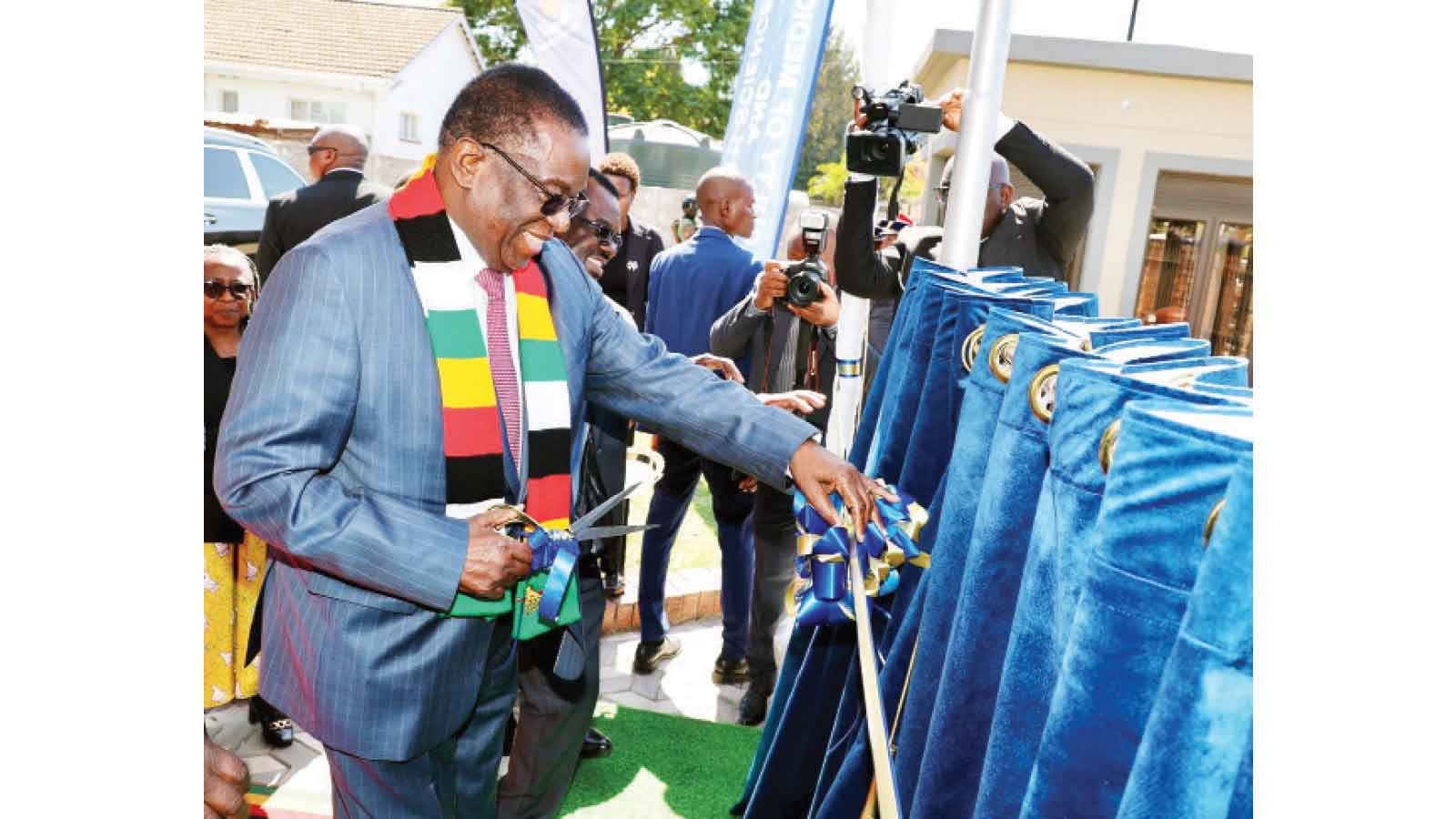
This report was launched in Harare recently.
It has already been launched in Peru, Sudan, Kenya, Bangladesh, Sri Lanka and the UK.


 Online Reporter