Vusumuzi Dube
Elliot Ziwira Senior Reporter
A glimpse into the Registrar-General’s Office
After Independence in 1980, the role of the District Commissioner was taken over by the District Administrator under the Ministry of Local Government, Public Works and National Housing on an agency basis until 1982 when the Registrar-General took direct control of the functions through Provincial and District Registrars.
Every Zimbabwean has a right to a birth certificate, national identity card and passport. To that end, the Civil Registry Department has decentralised the issuing of the vital documents.
In February 2020, the Civil Registry Department announced that the issuing of civil documents will be done at large church gatherings using its mobile units to make it easier for people to access them.
The Department started decentralising mobile registration to provinces and districts that are now required to carry out at least one outreach once in two months at district level.
Churches can now organise and engage the department so that services can be provided wherever they will be gathered.
In the same month, the ministry signed a Memorandum of Understanding (MoU) with Fidelity Printers and Refiners to secure consumables needed to print passports with the view to reduce the backlog then.
Decentralisation: Enter the electronic passport
It is every citizen’s right to have a birth certificate, national registration card and passport as enshrined in Chapter 3 of the Constitution of Zimbabwe. While reasons for acquiring a travel document vary, there was a time when applying for a passport evoked sad memories for scores of Zimbabweans, often exposing them to fraudsters.
It was really a cause for many a bleeding heart, with the backlog at one point hitting 600 000 passports, with some applications going back years.
Thanks to the Second Republic, under the stewardship of President Mnangagwa, all that despondency, chicanery, anxiety and frustration associated with applying for the sought-after document — the passport — is now confined in the past.
In line with the Constitution and the Second Republic’s obligation to the people of Zimbabwe, the Government, among other measures, decentralised registry services to bring them closer to communities.
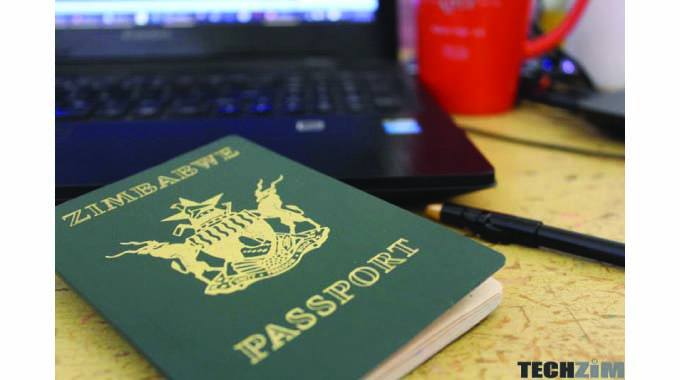
Following the introduction of the e-passport launched by President Mnangagwa at Chiwashira Building in Harare in December 2021, the issuance of travel documents has been decentralised with the ultimate goal of having a facility in each of the country’s 59 districts.
At the moment, 20 e-passport bio-enrolment centres have been commissioned across the country. Some of the centres issuing e-passports are Harare, Guruve, Bulawayo, Gweru, Zvishavane, Chitungwiza, Mazowe, Hwange, Lupane, Marondera, Beitbridge, Bindura and Murehwa. Soon, other districts such as Chipinge and Mbire will have e-passport issuing centres as the Government remains committed to taking critical services to the people’s doorsteps.
Zimbabwe is one of a few African countries producing the electronic passport to keep abreast with the global tilt towards biometric data-based identity and travel documents.
An e-passport contains an electronic chip holding the same information printed on the document’s data page, which includes the holder’s name, date of birth and other biographic information. It also has a biometric identifier.
These security features are designed to safeguard citizens from identity theft. The other advantage of e-passports is that they afford local travellers faster passage through transit at home border posts.
In addition to incorporating globally apt features as recommended by the United Nations, e-passports are cheaper and faster to produce, which has gone a long way in not only reducing the country’s backlog, but bringing smiles on the faces of citizens requiring the crucial travel documents as well.
While it used to take nightmarish hours on end, or even days of queuing, sometimes to no avail, for applicants to submit their forms at the few passport offices in major cities and towns, it is now only a matter of minutes. Collection for the ordinary e-passport is guaranteed within seven working days. Now, that’s an EDelivery par excellence!
On the essence of culture
Since a people’s norms and values are contained in its cultural expectations, cultural heritage is, therefore, crucial to its socio-economic and political growth.
Emile Durkheim (1988) points out that culture is the cumulative deposit of knowledge, experience, beliefs, values, attitudes, meanings, hierarchies, religion, notions of time, spatial relations, concepts of the universe, material objects and possessions acquired by a group of people in the course of generations through individual and group striving.
Culture may be classified as community, national, regional, gender, social and corporate. Colonisation and technological advancements subjected African traditions to immense pressure. The Tonga people, for example, had their own songs, proverbs, idioms and folklores, which were directly linked to the Zambezi Valley — their cherished ancestral abode before the Kariba Dam flooded their area.
Cultural heritage as enshrined in indigenous African languages should be preserved as it is the first step in decolonisation. Cultural beliefs prevalent in African folklore, riddles, idioms and proverbs can only be appropriately enunciated through indigenous languages. Language is a powerful vehicle in the conveyance of a people’s mores in their original form.
Citing Furusa, Chiwome and Mguni (2012) maintain that “(a) search for language should be a search for collective wisdom and sensibility. It should be intended to bend the collective volition into harmony with the demands of social development”. This is so because “language embodies and is a vehicle of expressing cultural values” (Chinweuzu, et al, 1982:7).
Conscious of the quintessence of language ferrying a people’s cultural mores and values, in June 2022, President Mnangagwa officially opened the inaugural National Languages Conference in Victoria Falls.
The three-day conference ran under the theme: “Redefining the role of Zimbabwean languages for national development and beyond”.
Zimbabwe has 16 official languages, namely; Chewa, Chibarwe, English, Kalanga, Khoisan, Nambya, Ndau, IsiNdebele, Shangani, Xhosa, Sign Language, Sesotho, Tonga, Tswana, Venda and ChiShona.
Moreover, alive to the essence of culture, the President launched the National Culture Month in Binga, Matabeleland North Province, in May 2023.
This year’s National Culture Month celebrations were held under the theme, “Promoting Cultural Diversity, Unity and Peace”, with activities involving participants and delegates from Zambia, Mozambique, Malawi, Botswana, South Africa and Namibia.
Hence, Zimbabwe’s culture as embodied in national monuments, shrines and museums should be guarded jealously, for they are repositories of cultural heritage. Indeed, the death of a people begins with the death of their culture.
As such, the Ministry of Home Affairs and Cultural Heritage, with Honourable Kazembe Kazembe at the helm, plays a pivotal role in upholding nationhood and ascertaining that “societies drained of their essence, cultures trampled underfoot, institutions undermined, lands confiscated, religions smashed, magnificent creations destroyed, extraordinary possibilities wiped out” (Cesaire, 1994:21), are restored for the common good.
Conscious of the essence of culture to the African people personified in shrines as emphasised by Cesaire (1994), President Mnangagwa has committed to the preservation and promotion of national cultural heritage as a vital aspect of nationhood.



 Online Reporter