Online Reporter
Sukulwenkosi Dube-Matutu, [email protected]
THE arrival of the Independence Flame at Manama High School yesterday was more than a ceremonial stop — it was an emotional homecoming that reopened a defining chapter of the country’s liberation history.
For many gathered, the moment rekindled memories of a pivotal night in January 1977, when about 400 pupils quietly slipped out of the school under the cover of darkness, embarking on a perilous journey to join the liberation struggle.
Just days into the new school term, the learners — guided by Zimbabwe People’s Revolutionary Army (ZIPRA) guerrillas — crossed into Botswana via the Shashe River en route to Zambia for military training, trading classrooms for the frontlines of the fight for independence.
Among them were future national figures, including the late former Minister of Foreign Affairs and International Relations Dr Sibusiso (SB) Moyo, former Air Force of Zimbabwe Commander Air Marshal (Retired) Elson Moyo, Minister of State for Matabeleland South Provincial Affairs and Devolution Albert Nguluvhe and former Zimbabwe Elections Commission (Zec) chief elections officer, Mr Utoile Silaigwana.
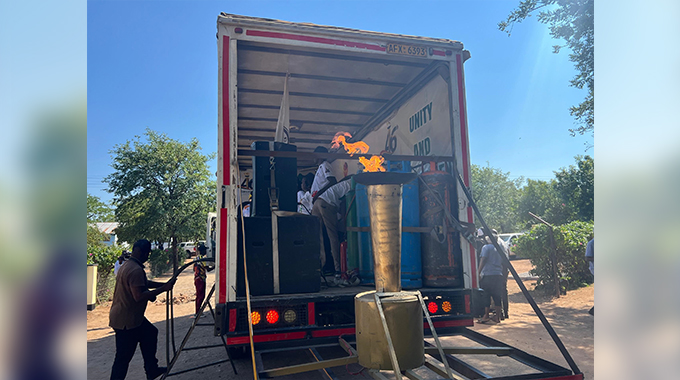
Yesterday, the Independence Flame embarked on an 88km journey from Gwanda Town to Manama High School, which was its first destination in the district.
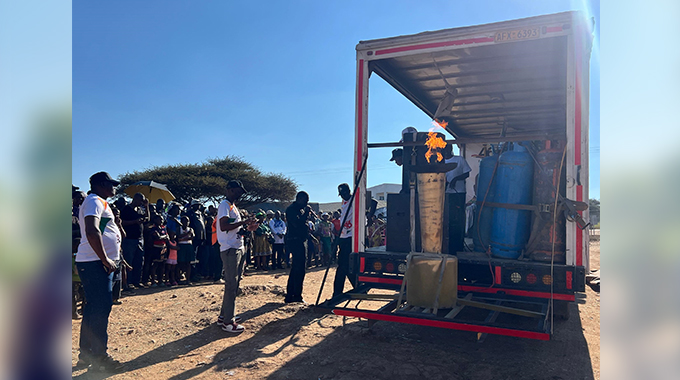
As the flame arrived from Beitbridge, continuing its symbolic journey ahead of the main Independence celebrations in Maphisa, it was met with ululation, song and reflection from villagers, war veterans, church leaders and pupils.
The Independence Flame later travelled back to Gwanda Town, where it was displayed at Phakama Business Centre and Zebrine Complex.
Its route — spanning Beitbridge, Gwanda, Insiza, Umzingwane, Bulilima and Mangwe before culminating in Matobo — reflects the province’s deep-rooted contribution to the liberation struggle.
Veterans of the liberation struggle who once walked that historic path said the flame’s presence at Manama stirred powerful memories.
“To me, Manama High School isn’t just an institution, but a place where we made life-changing decisions that shaped the destiny of our nation,” said Cde Sitshengisiwe Thandiwe Dube, a former pupil who joined the struggle as a teenager.
Cde Dube, whose liberation name was Neutral Moyo, recalled how, at the time, many of them did not fully grasp the magnitude of the decision they were making.
“When I heard the flame would pass through here, I travelled all the way from Plumtree to witness this moment. We identify with this place because it is part of who we are,” she said.
Another veteran, Cde Keabetswe Dube, whose nom de guerre was Sithabile Mtshatshi, said the event brought back memories of comrades who never returned.
“The night we left was the last time I saw some of my closest friends. We went through so much, but it was worth it. Today, we are free because of that sacrifice,” she said.
“To be part of this celebration is memorable and important for me. Today we are liberated because of selfless cadres who sacrificed their lives for the freedom of their people.”
Cde Dumisani Nkala, whose war name was Cyrus Mahlenyika, described the journey as harsh and unforgiving.
“We had to evade the enemy and survive in the bush among wild animals. It was not easy, especially for young people,” he said.
Gwanda District Development Coordinator Ms Nomathemba Ndlovu said the district takes pride in hosting a site that played a pivotal role in the liberation struggle.
“Manama is not just a school, it is a liberation shrine that symbolises the courage and sacrifice of young people who helped shape our nation. The district cherishes the opportunity to behold the Independence Flame,” she said.
Manama Mission is now remembered as a crucial site of resistance, a “liberation shrine” that symbolises the collective and passionate involvement of all sectors of society, including pupils, in bringing about independence.
Speaking on behalf of the Evangelical Lutheran Church in Zimbabwe (ELCZ), presiding bishop Dr Michael Dube commended the Government for recognising the institution’s historical significance.
He said the church played a key role in laying the educational foundation for many cadres.
“We are grateful that this contribution is being acknowledged. As a church, we have always walked side by side with the Government of the day. Even today, we are still walking side by side with the Government and we continue to contribute to the development of the nation,” said Dr Dube.
The Independence Flame, developed and curated by the National Museums and Monuments of Zimbabwe, symbolises unity, remembrance and the enduring spirit of the liberation struggle.
The journey began at Zezani Assembly Point, where it was officially lit by Vice President Dr Constantino Chiwenga on Friday and will proceed through Insiza, Umzingwane, Bulilima and Mangwe districts before reaching Matobo.
A second lighting ceremony is scheduled for Ratanyana in Matobo, to be presided over by Vice President Dr Kembo Mohadi, ahead of the main Independence celebrations in Maphisa.
More than 70 000 people are expected to attend the national event.
@DubeMatutu