Gibson Nyikadzino
Zimpapers Political Hub
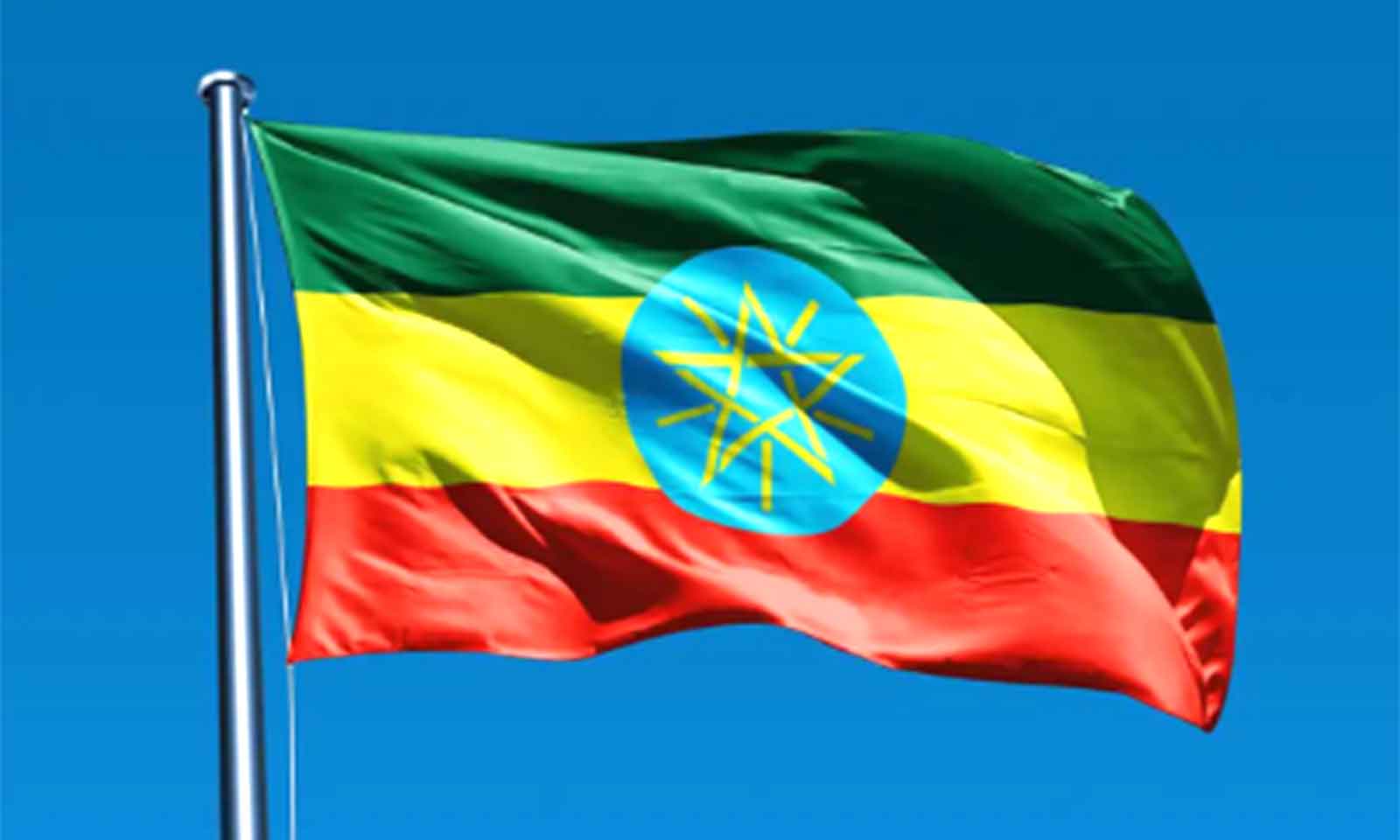
Since a Tigray People’s Liberation Front rebellion against Ethiopia’s Government in late September, there has been a risk of a direct military confrontation between Ethiopia and Eritrea. There have been allegations by the Ethiopian government that Eritrean troops crossed into its northern territory while supporting the TPLF rebellion, accusations the latter deny.
These claims have deepened the rift between Ethiopia and Eritrea, also threatening a fragile peace that has been holding the region. While Eritrea has denied troops incursion in Ethiopia, public domain records indicate some African, United States, and European officials confirming that Eritrean troops recently entered the Tigray region where they are helping rebel fighters in their military confrontation against government.
There is a possibility that if the two states engage in a fight, this could turn into a regional war that will further destabilise the Red Sea, disrupt oil tanker traffic, and drive gas prices up, compounding what Africa has already suffered because of the US-Israeli war in Iran that shut the Strait of Hormuz and disrupted global supply chains.
At the centre of the heightening risk of the Ethiopia-Eritrea war is one thing; the sea — access to the sea.
Colonial legacy
The origins of this animosity can be traced to the legacy of colonialism. Five years after the Berlin Colonial Conference (1884-85), in 1890, when Ethiopia and modern day Eritrea were a united state, Italy turned the strip of the Red Sea coast into a colony, Eritrea.
In 1952, Eritrea was federated with Ethiopia under the United Nations supervision, before it was annexed by Ethiopia’s then Emperor Haile Selassie in 1962.
Eritreans since then fought for 30 years to secede from Ethiopia, and in 1993, at least 99,8 percent of the population voted for independence through a referendum, from which Ethiopia then lost its whole coast, Massawa and Assab. At its closest point, Ethiopia is now about 60 kilometres from the sea.
Why Ethiopia wants sea access?
Africa has 16 landlocked countries, more than any other continent. This means almost one in three African countries have no ports of their own, making everything these countries import cross another country’s border first.
Ethiopia is in this category, yet it is a country of more than 135 million people and Africa’s second most populous nation. It is a country with a navy, but does not have access to the sea. Again, it the most populous country on earth without a coast!
For countries like Zimbabwe, for instance, the nearest seaport is the Port of Beira in Sofala Province, Mozambique, which is 298km from Mutare. For South Sudan, from Juba, the nearest sea is almost 1,300km away. However, for Ethiopia this is a country that used to have a coast.
While for Ethiopia is it important to access the seaports of Massawa and Assab in Eritrea for geostrategic and economic reasons, to Eritrea, Ethiopia is sending a message that they are targeting it because Djibouti is available to them through the rail. Ethiopia cannot also afford to unsettle Djibouti because it hosts Camp Lemonnier, the largest permanent United States military base in Africa.
Economically, the cost of not accessing the sea has a toll on Ethiopia. About 95 percent of its trade goes through its small neighbour, Djibouti, where cargo lands and then travels 750 kilometres by rail to Addis Ababa, at an annual cost of at least $1,5 billion for that route.
Ethiopia’s navy, which had been scrapped after losing the coast in 1993, was rebuilt in 2019 with help from France, which also provided a framework for joint training, military exchanges, and stationed its forces from Djibouti to strengthen Ethiopia’s naval capabilities.
With this might, attention has now shifted to Eritrea’s Assab coastline, which is almost 60 kilometres from the Ethiopian border.
Ethiopia wants survival
Ethiopia current leaders say reaching the sea is “a matter of survival”. In 2024, it signed a deal with Somaliland, where it was leased 20 kilometres of coast for 50 years.
The challenge occurred after Somalia said Somaliland is part of Somalia, and called the deal “null and void”. However, Ethiopia’s Prime Minister Abiy Ahmed has called losing the coastline a “mistake”, and early this year promised that his country will not invade any state, but it will not stop asking for a port.
Having access to the sea is one of the key drivers of global power since a state can control highways for commerce, use it as a domain to project military power, and can also become a basis of vital resources.
As it stands, it is to be seen further actions the two neighbours will take, as they currently make their case with the United Nations, where Eritrea notes Ethiopia is threatening its sovereignty.
For now, the reality is that the most populous landlocked country on earth sits a few kilometres from one of the world’s busiest sea lanes, and a border drawn more than a hundred years ago still decides who gets access to the sea.
What can Africa do?
Some have asked whether the African Union is fit for purpose when it comes to neutralising and de-escalating conflicts. To others, the AU’s biggest challenge is that what it says, what it does and what is done on the ground are normally at variance.
For example, for Egypt to secure its interests, it is showing greater solidarity with the Arab world because it considers Ethiopia a threat to its national interests over the latter’s Grand Economic Renaissance Dam (GERD) project. Also, by showing greater solidarity with the Arab world through entering into military accords with countries like Saudi Arabia and Pakistan, it can be assumed it has a divided loyalty.
Turkey also has its interests in the Horn of Africa, considering its presence in Somalia, from which according to Ethiopia’s interpretations threatens them, as does that Egypt-Somalia dalliance. On the other hand, Israel recognised Somaliland and is part of the development of the port of Berbera.
While all these development seem to be geopolitically confusing, they explain why Ethiopia is in this interesting, yet unique position.