

 admin
admin
Anani Maruta in Luxembourg
A RENOWNED British lawyer, Hugh Mercer QC, on Thursday told the European Union Court of Justice sitting in the court’s Third Chamber in Luxembourg that EU sanctions on Zimbabwe were not dissimilar to US action at Guantanamo Bay where the American spy agency the CIA used rendition on prisoners of war.
Rendition, outlawed under US human rights law, is the use of torture to extract evidence from accused persons. Interestingly, this comes at a time when the US Congress is demanding full disclosure from the CIA on what happened and is going on at Guantanamo Bay.
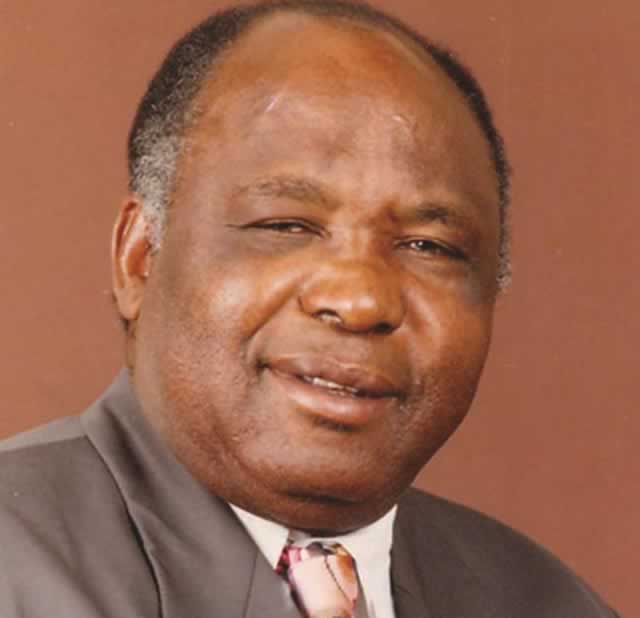
Appearing for former senator and businessman, Trinity Engineering boss Aguy Georgias at the long awaited oral hearing of his case challenging his inclusion on the EU sanctions list on Zimbabwe, Mercer assisted by barrister Iain Quirk asserted that the use of “absolute discretion” by the EU to punish Zimbabwe Government officials listed under travel ban in essence constituted a breach of the EU’s own standards of justice and human rights law.
“What the EU is saying is that we will protect human rights and uphold the rule of law in Europe, but we will deny the same to the Government leaders in Zimbabwe where we will exercise absolute discretion to punish them,” he said.
Mercer told the court that Georgias had been wrongfully listed and adjudged “guilty by association” by the EU for his acceptance of appointment as both a senator and deputy minister in the Government of Zimbabwe.
At law, Mercer argued, in the EU justice system, absolute discretion is not acceptable.
In imposing the so-called restrictive measures on Zimbabwe, Mercer stated, the EU had exercised absolute discretion in that only the EU itself determined who to include or to remove from the sanctions list without affording listed persons their rights to any other recourse of remedy, not even the right to reply to allegations levelled against them.
The EU action on Zimbabwe, said Mercer, constituted a manifest disregard for due process and in Georgias’ case was an “abuse of power” because the EU as an organisation had the institutional capacity to carry out due diligence to ascertain whether in fact Georgias had “engaged in actions undermining democracy and the rule of law in Zimbabwe” other than merely being a member of the Government before effectively barring him from conducting business in Europe.
He posited that the asset freeze and the restrictions barring European financial institutions from conducting business with Zimbabwe had a negative effect in general in relation to international banking transactions for his business.
Mercer questioned why the MDC-T leader Morgan Tsvangirai was not listed when he became Prime Minister, if according to the EU only being a member of the Zimbabwean Government was the “necessary and sufficient” condition for inclusion on the travel ban list.
He said the EU action constituted a violation of Georgias’ rights in that it had proceeded to punish him in a way the EU standards of justice would not allow and as a result Georgias had suffered in terms of stress, deterioration of his health condition, loss of business and being cut off from members of his family in Europe, damages for which the EU was liable.
EU Commission legal advisor Bart Driessen, appearing in defence of the Commission, countered that Georgias had wilfully accepted appointment to Government with the full knowledge that he would be subject to EU restrictions and should therefore have declined.
Minas Konstantinidis appearing for the EU Council averred the same that Georgias invited the EU action upon himself and should not cry foul.
Mercer QC refuted this saying to do so would have been improper and not consistent with democratic practice as he was chosen to represent a minority group that in itself does not constitute a significant voting group to be able to elect its own representative and that, in any case, he was not the leader of the coloured community in Zimbabwe and did not, as a deputy minister, have executive power in Government as was later noted by the EU in dropping him from the list in 2011.
The presiding judge, Dimitrios Gratsias, who is also the Judge President of the EU Court of Justice’s Third Chamber, asked the EU lawyers to give reasons why Georgias remained on the list when the EU used its discretion to remove the late Vice President Joseph Msika from the list in 2010.
Driessen said the EU was using “a carrot and stick” approach on Zimbabwe to encourage reform, admitting in the process that there has been “a vast improvement” in Zimbabwe’s human rights record over the years including the formation of the “coalition government” in 2009.
Judge Gratsias, sitting together with judges Mariyana Kancheva and Watter told the court in ending the hearing that he will in due course announce his judgment, which will be communicated to Georgias through his London solicitors, Bates Wells and Braithwaite.
Georgias, who travelled to Luxembourg for the hearing, has effectively made the first claim ever for damages against the EU in its history for imposing sanctions on any country or persons.
In legal parlance, Georgias and Others versus EU is likely to set a precedent.



 Online Reporter